This morning I felt a wave of excitement and decided to write about Fogo.
The reason was simple. In blockchain, most discussions focus on speed. People compare how fast networks process transactions or how quickly blocks are confirmed. But when real usage begins, another factor becomes more important. Stability.
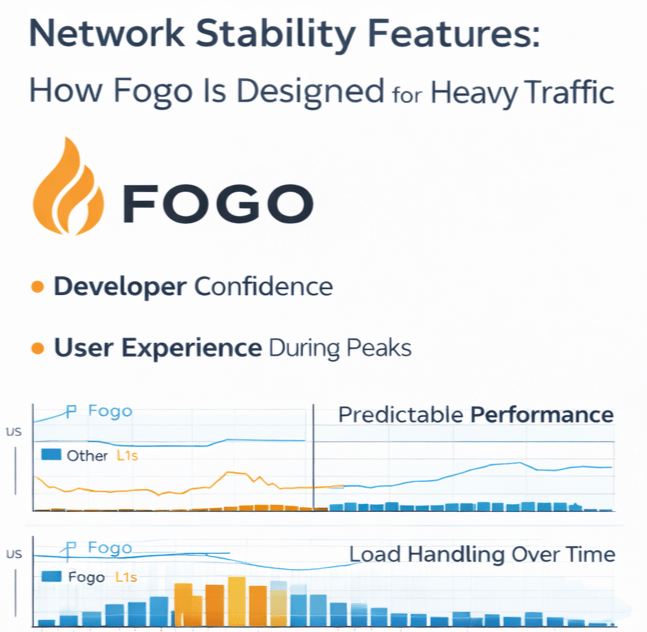
Fogo is interesting to me because it is not only about fast execution. It is about how the network behaves when traffic increases. Any system can look strong when activity is low. The real test comes when thousands of users interact at the same time.
Heavy traffic changes everything.
When more applications run together and more transactions enter the network, weaknesses start to appear. If the infrastructure is not prepared, delays increase. Transactions may fail. Execution becomes inconsistent. Even small issues become visible when the system is under pressure.
Fogo’s design focuses on handling this kind of load in a controlled way. Instead of only aiming for high peak performance in perfect conditions, the goal is steady execution during real world usage. That means maintaining predictable behavior even when demand rises.
For developers, this matters a lot.
When building on Fogo, teams need to know that performance will not suddenly drop when their application becomes popular. They want confidence that growth will not create technical chaos. Stability allows developers to focus on product improvement instead of constantly troubleshooting network behavior.
Testing also becomes easier when the network behaves consistently. If execution speed and confirmation times remain stable under load, developers can better understand how their application performs. This reduces confusion and speeds up development.
Users also benefit from this approach.
Most users do not understand blockchain architecture. They do not think about virtual machines or network layers. They only notice whether an app works smoothly. If transactions confirm quickly during busy hours, they feel comfortable. If things slow down during peak times, they lose trust.
Trust is built through consistent experience.
Fogo’s focus on execution performance, influenced by Solana VM principles, supports this idea. Efficient execution helps maintain responsiveness, but stability ensures that responsiveness continues even when activity increases.
There is an important difference between being fast and staying reliable. A network might show impressive speed during testing. But real strength appears when usage grows unexpectedly. Popular applications can bring sudden spikes in traffic. Networks that are not prepared struggle during these moments.
Designing for heavy traffic shows long term thinking.
It means the network expects adoption. It plans for scale instead of reacting after problems appear. That mindset is important for any ecosystem that wants to grow sustainably.
In the end, speed attracts attention, but stability keeps builders and users committed. Fogo’s direction suggests that execution performance is not just about numbers. It is about creating an environment where applications can grow without breaking under pressure.
Heavy traffic is not a threat. It is a sign of success.
But only networks built for that success can truly benefit from it.
If you were building a long term application, what would matter more to you
the highest speed possible, or a network like Fogo that aims to stay stable under heavy traffic?