
There is a quiet exhaustion in the world of Web3. You can feel it in the cautious eyes of newcomers, in the skeptical tone of gamers who have seen too many broken promises, in the brands that tried to experiment once and walked away confused. Blockchain was supposed to be liberation. Instead, for many, it felt like homework. Complicated wallets. Forgotten seed phrases. Gas fees that changed like moods.
And somewhere inside that noise, Vanar began building with a different question in mind.
Not “How do we impress developers?”
Not “How do we outscale everyone?”
But “How do we make this feel human?”
Because at the end of every transaction is not a node. It’s a person.
A gamer who just wants to win a rare skin and actually own it.
An artist who wants her work to live beyond the platform that hosts it.
A fan who wants to feel closer to the brand they love.
Vanar feels like it was designed for those moments — the small, emotional ones that most infrastructure forgets.
The team behind it comes from gaming and entertainment — industries where attention is fragile and loyalty is earned, not assumed. In those spaces, you do not get second chances. If a loading screen spins too long, the user leaves. If a purchase flow confuses them, they close the app. If technology interrupts the magic, the magic is gone.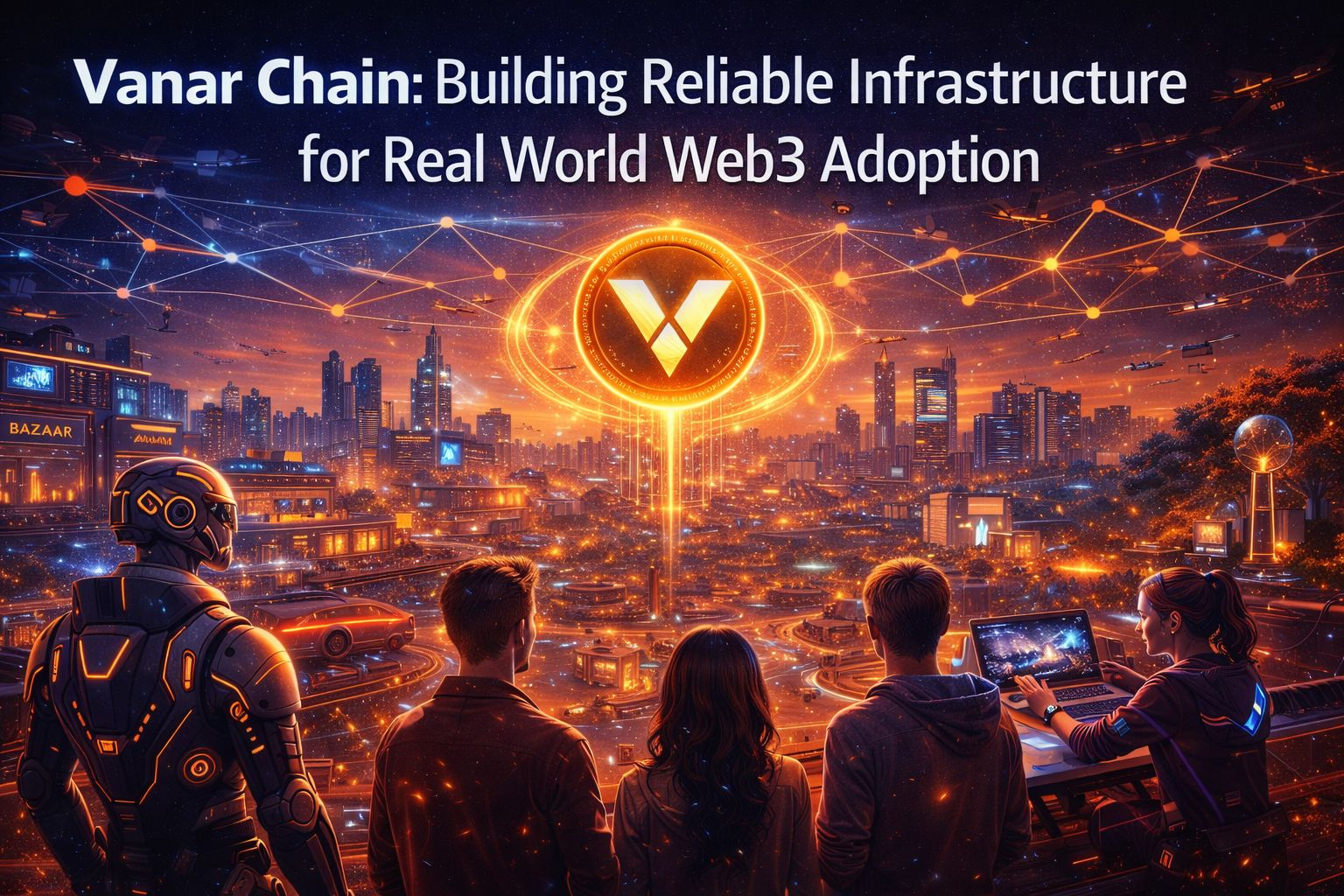
So Vanar built its foundation around flow. Around invisibility. Around the idea that blockchain should feel like electricity — powerful, essential, but unseen.
Technically, it is a layer-1 blockchain, EVM-compatible, structured for performance and scalability. Emotionally, it is trying to remove the anxiety from ownership. The native token, VANRY, powers transactions, staking, and governance. But beneath the tokenomics and validator incentives lies something more delicate: trust.
Trust that when you buy something digital, it’s truly yours.
Trust that you won’t be punished by unpredictable fees.
Trust that the system won’t collapse under its own ambition.
Ownership has always been a deeply emotional concept. When a child clutches a toy, when a collector frames a poster, when a gamer unlocks a legendary item after hours of effort — it’s not just possession. It’s pride. It’s proof. It’s memory. Blockchain promised to protect that feeling in the digital world, but too often it wrapped it in complexity.
Vanar seems to understand that ownership must feel effortless to feel meaningful.
Through Virtua Metaverse, digital assets are not abstract tokens floating in a wallet dashboard. They become objects you can see, display, trade, and experience. They become social. They become expressive. When someone steps into Virtua, they are not stepping into a financial instrument. They are stepping into a space where identity and creativity intertwine.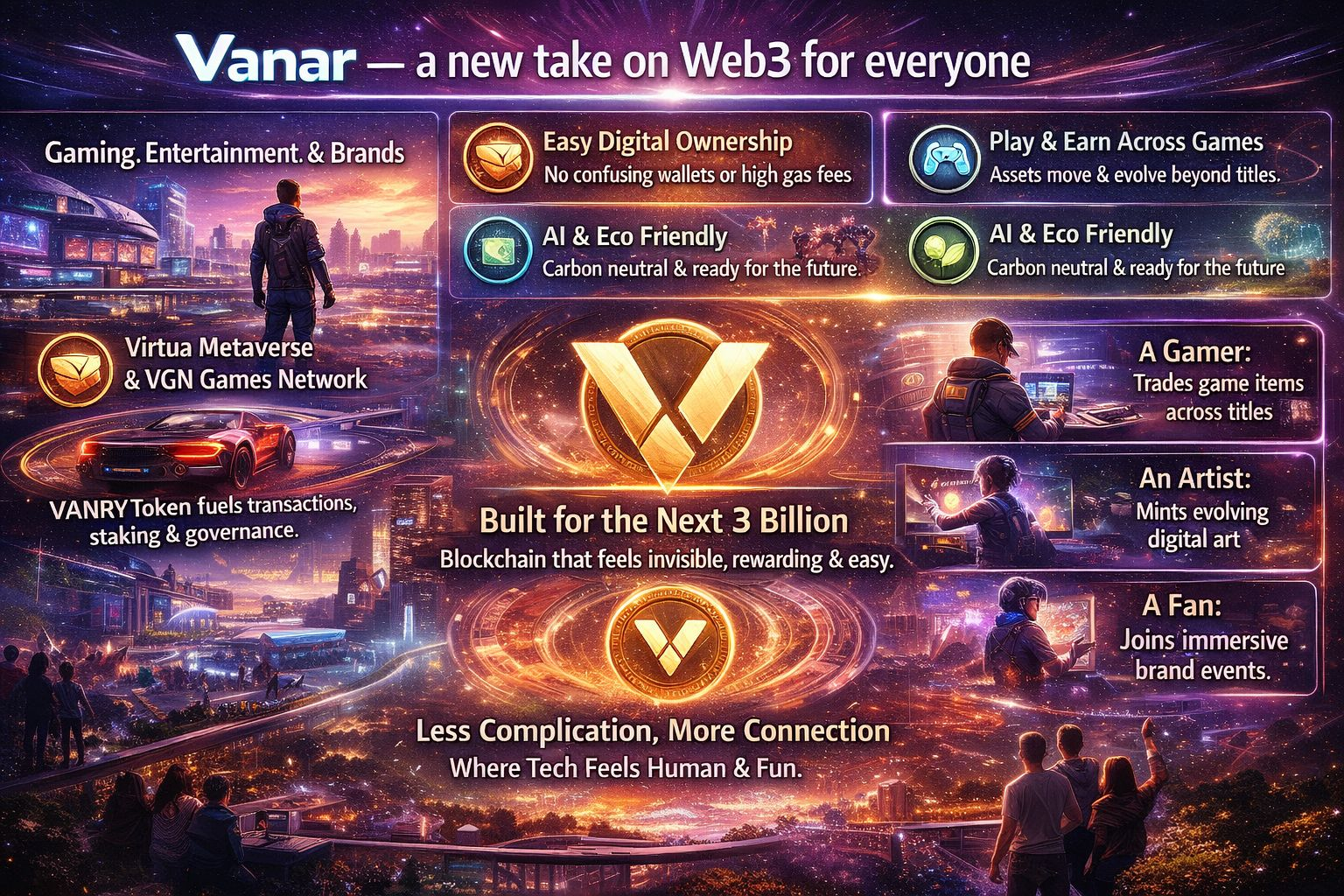
And with VGN games network, the idea stretches even further. Games have always been emotional ecosystems — victories, rivalries, friendships forged at midnight. But traditionally, everything earned inside a game stayed trapped there. Hours of effort dissolved the moment servers shut down.
Imagine instead a world where your digital achievements follow you. Where your in-game asset carries weight beyond a single title. Where effort has continuity. That is not just technical interoperability. That is emotional continuity.
Vanar’s architecture hints at preparation for a future where AI and blockchain intersect — where data-heavy interactions and intelligent agents can operate efficiently on-chain. But even that ambition feels less about hype and more about anticipation. The world is changing quickly. AI is reshaping creativity, automation, and identity. If blockchain is to stay relevant, it must support that evolution gracefully.
There is also something quietly reassuring in Vanar’s emphasis on carbon neutrality. In an era where environmental impact cannot be ignored, building infrastructure responsibly is not just ethical — it’s necessary. Adoption cannot come at the cost of the planet.
Of course, none of this is guaranteed. Every blockchain promises speed. Every whitepaper sketches elegant diagrams. The difference will lie in execution — in whether the onboarding truly feels invisible, in whether developers find it intuitive, in whether users stay because the experience feels natural.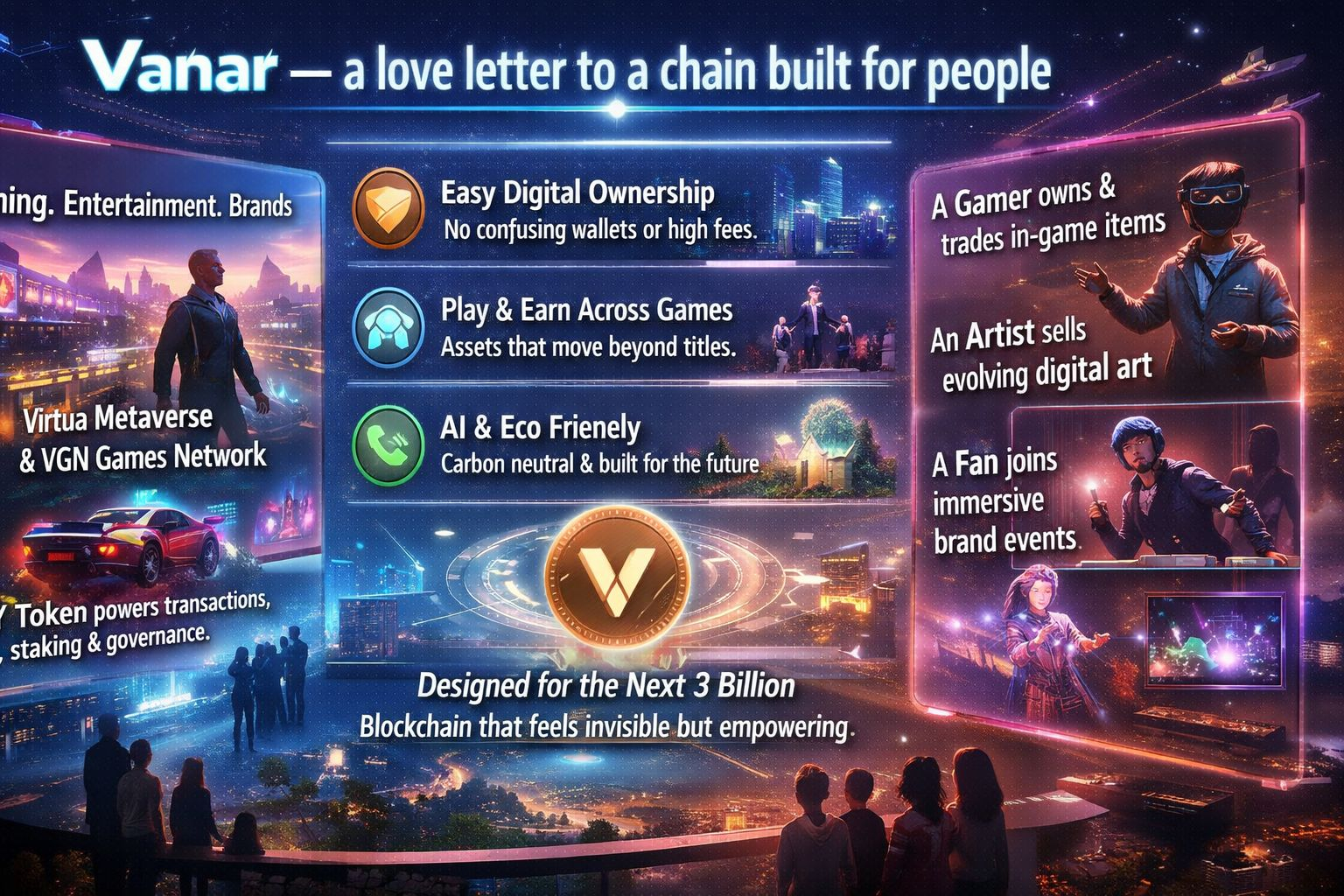
But what feels different about Vanar is not the architecture alone. It is the posture.
It does not feel like it is shouting for attention.
It feels like it is preparing for people.
Preparing for the next 3 billion individuals who may never call themselves “crypto users,” but who will play games, attend virtual concerts, collect digital memorabilia, and interact with brands in immersive spaces. They will not care about consensus algorithms. They will care about simplicity.
If blockchain is ever going to disappear into daily life, it will not happen through technical manifestos. It will happen through moments so seamless that people forget they are using blockchain at all.
A gamer clicks “claim reward” and it just works.
A fan buys a limited digital collectible and doesn’t panic about fees.
A brand launches an interactive campaign without asking its audience to understand private keys.
That is the quiet revolution Vanar seems to be chasing.
And maybe that is what Web3 needs most right now — less noise, more empathy. Less obsession with being revolutionary, more commitment to being usable. Less friction, more feeling.
Because technology, at its best, does not overwhelm us. It empowers us. It protects our memories. It amplifies our creativity. It disappears behind the joy it enables.
If Vanar succeeds, people won’t talk about it in technical forums. They’ll simply live inside experiences built on it. They’ll trade, play, create, and connect — unaware of the infrastructure beneath their feet.
And perhaps that is the most human ambition a blockchain can have.
