When I dig into new chains, I usually look for one thing first: what did they optimize for?
Not what they claim in posts, not the logo, not the vibes. The design choices. The parts you can’t easily change later.
That’s why FOGO caught my attention.
It didn’t build around Ethereum’s EVM, which is the default for most new projects. It chose the Solana Virtual Machine (SVM) instead.
And that single choice tells you a lot about what FOGO is trying to become.
From my vantage point, FOGO isn’t trying to be the chain that hosts everything. It reads more focused than that.
FOGO describes itself as a Layer 1 built for DeFi apps that need high throughput and low latency. The examples it points to are very trading-shaped: on-chain order books, real-time auctions, tight liquidation timing, and reducing MEV where possible.
I’ve watched networks try to be “one chain for all apps.” What usually happens is simple. Everyone fights for the same block space. Things slow down right when demand is highest. Fees jump. Traders get annoyed first because timing hurts them immediately.
FOGO feels like it’s saying, “let’s build around trading behavior from day one.” I like that clarity, even if it’s a hard road.
I’m not here to do the “my VM is better than yours” thing. But the difference matters, so here’s the clean version.
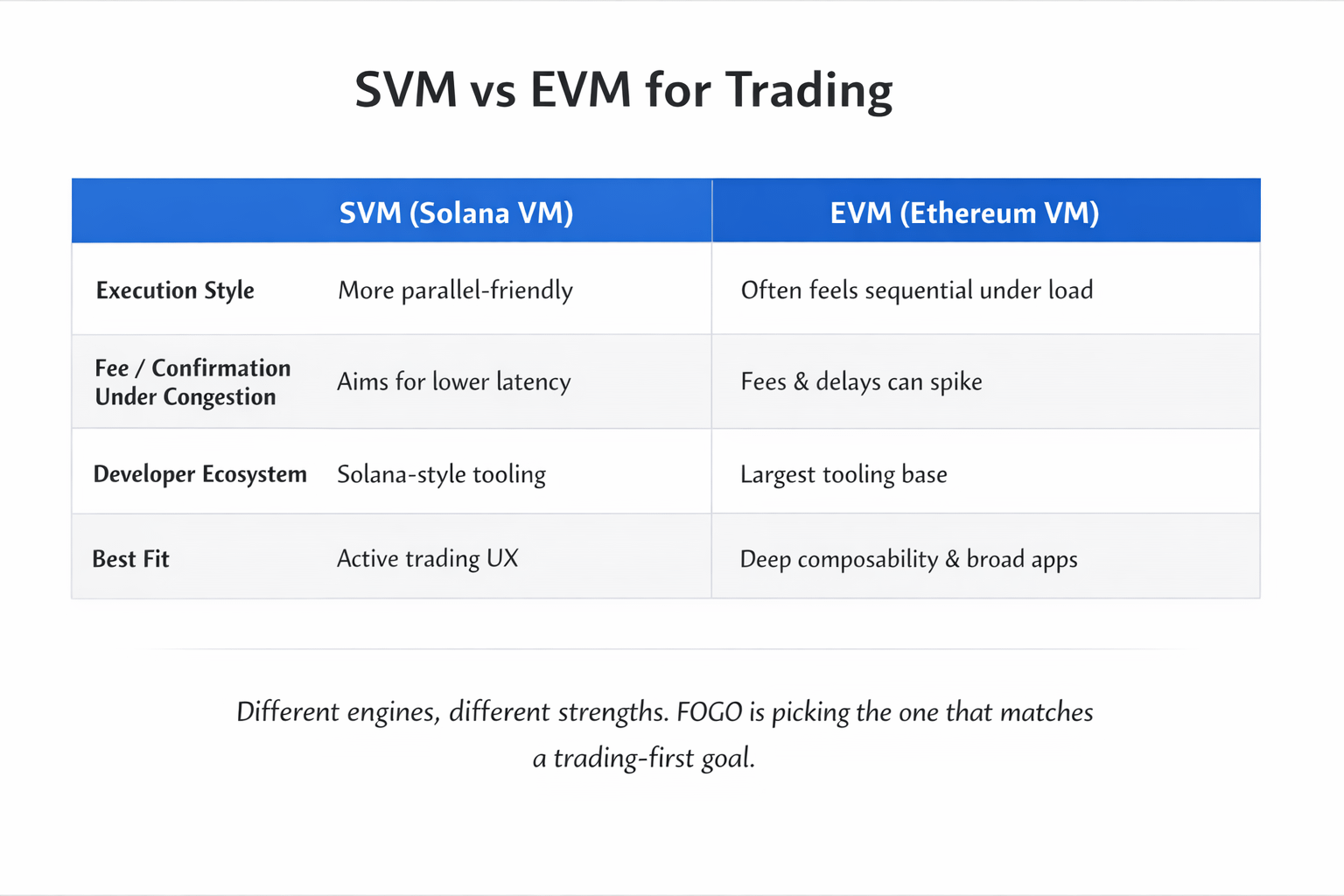
The EVM is the standard smart contract environment. It’s proven. It has a giant developer base, mature tooling, and deep liquidity.
That part is real.
But when activity spikes, execution often feels like a single-file line. Confirmation timing becomes less predictable, and fees can rise fast.
If you’re just holding positions, maybe you shrug.
If you’re trading actively, it can get ugly.
The SVM model is built around a different mindset. Parallel execution is part of how it’s designed, and it’s known for chasing lower latency when the system is set up for it. FOGO keeps compatibility with the SVM execution layer, which means Solana-native tooling and programs can move over with less friction.
So when I compare them, I don’t see “good vs bad.” I see two engines built for different jobs.
What keeps pulling me back is latency.
Not “TPS bragging” latency.
Real latency.
The kind that decides whether a trade lands clean or lands late.
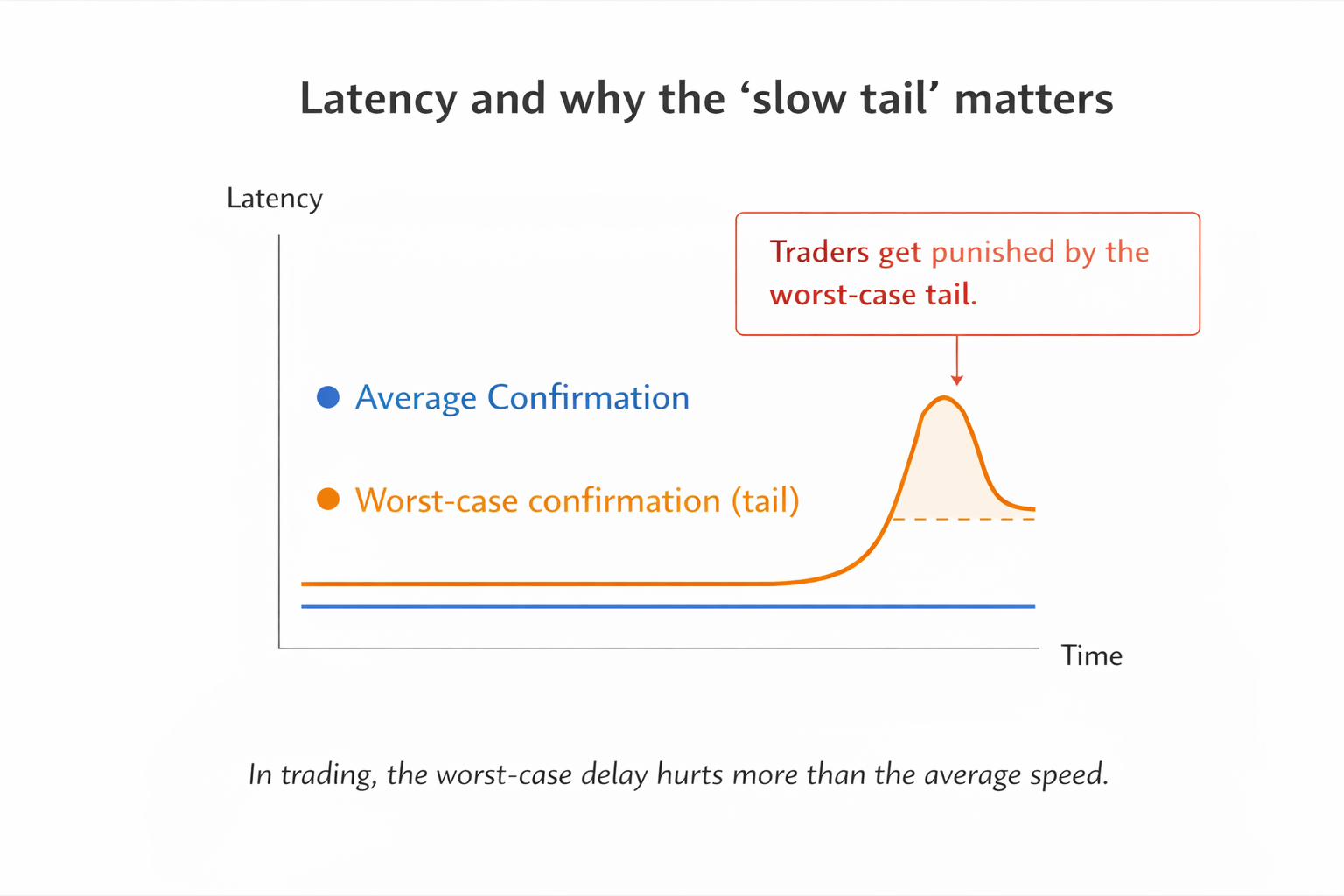
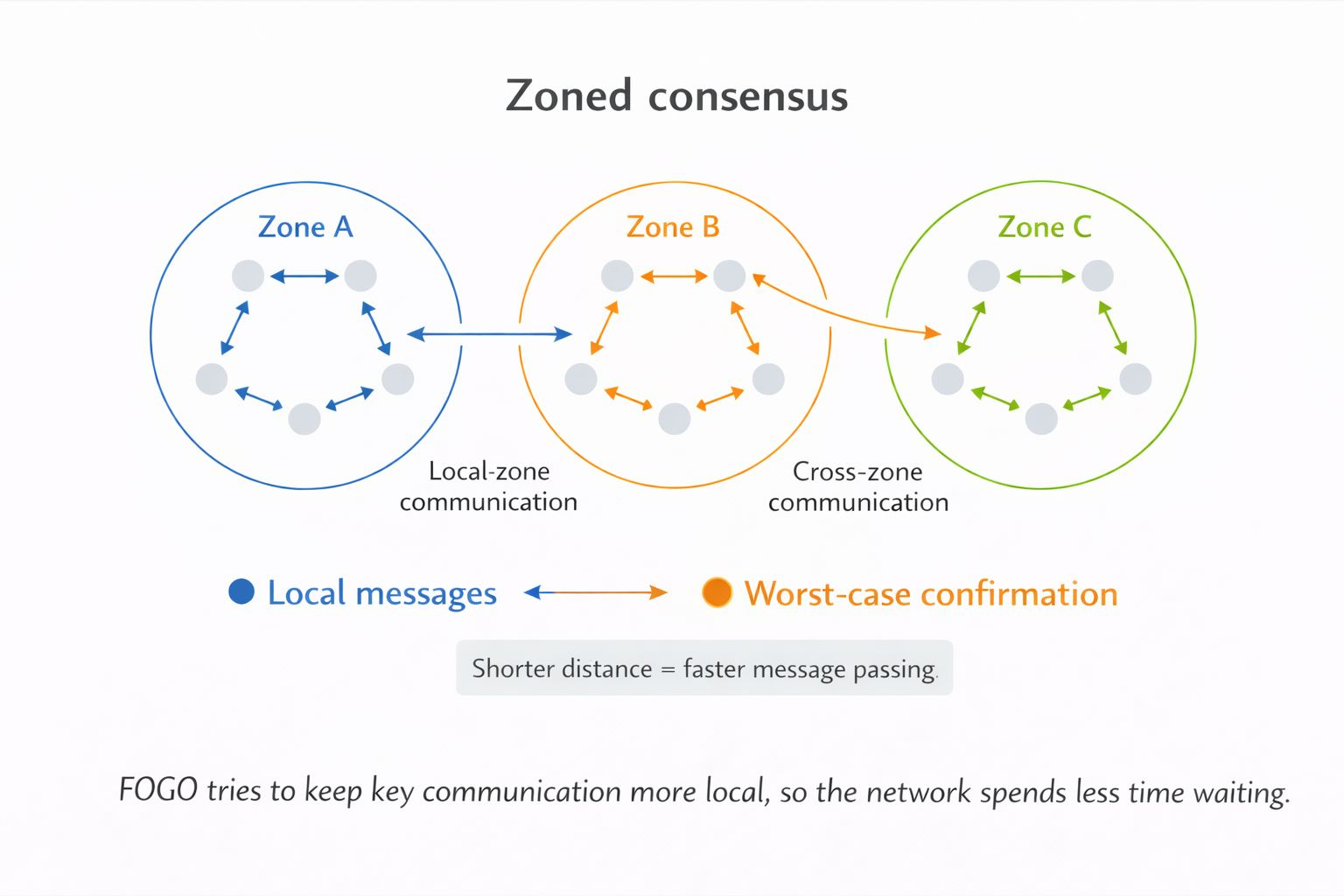
FOGO’s litepaper talks about how distributed systems get limited by the slowest edge, not the average. That idea sounds nerdy, but it’s real. Markets punish the tail. FOGO’s approach includes localized (zoned) consensus to cut down how far key messages need to travel, plus stricter standards around validator performance.
It also builds around a high-performance client that stays compatible with SVM, drawing from the Firedancer approach.
I’ve watched networks promise speed before, so I’m not blindly sold. Still, the design choices match the intent.
EVM has the biggest builder base. Solidity is everywhere. Auditors are everywhere. Infrastructure is mature. Liquidity is sticky.
SVM ecosystems can be strong, but they’re different.
The development model feels different, and teams may need to adjust. So FOGO made a bet: prioritize performance architecture over maximum EVM compatibility.
Bold move. Not risk-free.
If FOGO delivers what it’s designed for, the upside is practical.
Faster trade execution.
More predictable confirmations.
Cleaner liquidations in volatile moments.
Less “why did my transaction land so late?” frustration.
The FOGO token is positioned for gas, staking, and governance, so network performance ties directly to what the token does. And when I step back, I keep coming back to the same impression: FOGO isn’t trying to win every narrative. It’s trying to win one lane, high-performance on-chain trading.
Finally the architecture matches the mission and I trust projects more when they don’t fight their own design.