
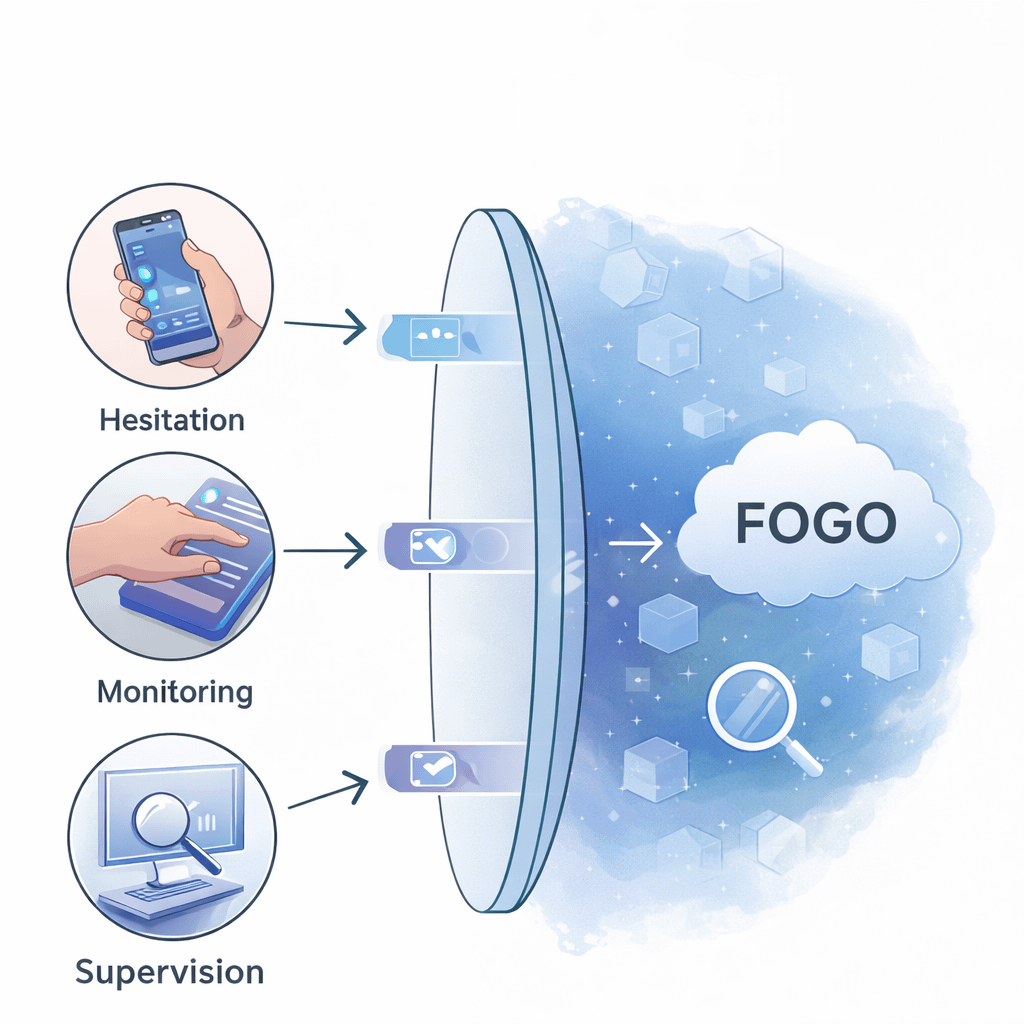
A while ago I realised I rarely think about whether a chain is fast anymore. I notice whether I feel comfortable moving on right after using it, because the difference shows up in behaviour more than in numbers. A transaction completes, yet the hand stays on the screen for a moment. Sometimes the wallet opens again just to feel certain the outcome has settled before continuing.
That small pause explains more than latency ever did, since delay mainly costs time while uncertainty reshapes habits. When results feel dependable people move fluidly, and when they feel situational the flow breaks into cautious steps, gradually teaching people to act carefully.
 We have seen this outside crypto as well:
Early internet pages loaded yet people refreshed them anyway.
Files uploaded to cloud storage yet copies stayed on local drives, until eventually the checking faded and attention moved to the task itself.
A technology usually matures right when users stop monitoring it.
Blockchains seem close to that point. Capability is largely there but attention is still attached, so improvement now feels tied to removing the need to watch what already happened. FOGO fits as part of that direction, aiming for interaction that feels ordinary enough not to demand observation.
In practical terms this reads less like chasing headline metrics and more like shaping user expectation. The network is presented around keeping interaction behaviour consistent across normal use, so the experience people build habits around does not depend on watching conditions. The point is not to demonstrate how much can happen at once, but to make repeated use feel predictable enough that attention shifts to the application rather than the chain.
With repeated use the idea becomes clearer. The same input should carry the same expectation each time so the user proceeds naturally instead of predicting outcomes. The experience starts resembling background infrastructure rather than an event.

Once systems reach that stage behaviour changes quietly. Interfaces simplify, applications flow without staged pauses, and the network fades behind the activity itself.
The point where users stop checking is usually the point where usage starts growing.
Early performance proved a network could run. Mature performance removes the need to check if it ran. The moment usage continues without attention, the system stops feeling like software and starts feeling like environment. That shift is what reliability really measures, and FOGO points toward networks being experienced as something present rather than something operated.