

When I look at a project like Vanar, I try to understand it the same way I would study any system that aims to operate in the real world. Not by focusing on its claims or its positioning, but by asking a simpler question: where does it fit into how people already live, work, and spend their time? Technology tends to succeed when it adapts to human behavior rather than trying to reshape it overnight. That’s why I find the focus on gaming, entertainment, and brands more interesting than the underlying technical labels. These are industries that already have global audiences, established habits, and emotional engagement. Building around them feels less like an attempt to create something entirely new and more like an effort to attach new infrastructure to existing patterns.
In traditional systems, adoption doesn’t happen because people suddenly become interested in the mechanics. Most people don’t think about payment rails when they use a debit card, and they don’t consider data structures when they stream a movie. The infrastructure is there, but it stays out of the way. If an L1 network is designed with mainstream users in mind, the real challenge isn’t making the technology impressive. It’s making it stable, predictable, and almost invisible. That shift in focus — from innovation to usability — feels like a more grounded way to think about long-term growth.

When I think about a network that connects gaming, virtual environments, AI tools, and brand engagement, I see something that resembles how large consumer platforms have always worked. In the offline world, industries rarely operate in isolation. Entertainment blends into advertising. Gaming overlaps with social interaction. Brands position themselves inside cultural spaces where attention already exists. If a blockchain system wants to become part of everyday life, it probably has to follow a similar path, sitting quietly behind experiences people already understand rather than asking them to learn something new from scratch.
But there’s a practical side to this that often gets overlooked. When a system tries to support multiple industries at once, the complexity increases. It has to handle different types of activity, different expectations, and different risk levels. In traditional infrastructure, this is where structure becomes more important than speed. Systems that manage money, identity, or digital ownership don’t survive because they are exciting. They survive because they are consistent. People trust them to keep working the same way tomorrow as they do today.
This is why I tend to pay attention to the less glamorous parts of any network. Settlement reliability, transparency, and the clarity of incentives matter more than the visible features. If a player earns something in a game, it needs to remain secure. If a brand builds a presence in a virtual environment, it needs to feel stable enough to justify the investment. These things sound basic, almost dull, but they are the foundation of any system that hopes to last. In finance, in logistics, in media — the systems that endure are the ones that quietly handle pressure without breaking.
The presence of existing products around the network, like virtual worlds and gaming ecosystems, suggests an effort to build something that isn’t purely theoretical. In the real world, infrastructure grows alongside use. Roads are expanded where traffic already exists. Platforms develop tools where people are already active. The idea of linking technology to entertainment and brand experiences feels like an attempt to follow that same logic. Instead of expecting users to come for the technology, the technology is placed where users already are.
At the same time, I think there are trade-offs that deserve attention. When a network is tied closely to consumer-facing industries, it becomes more sensitive to trends. Entertainment shifts quickly. User interests change. What feels engaging today can feel outdated in a few years. That creates a constant need to adapt. Stability and flexibility have to exist together, and that balance is not easy to maintain. Traditional companies deal with this by separating their core infrastructure from the parts that experiment. Whether a blockchain ecosystem can do the same over time is still an open question.
The role of a token in a system like this also raises interesting questions. In theory, it helps coordinate activity and align incentives across different participants. In practice, it can sometimes pull attention away from actual usage and toward speculation. The challenge is making sure the system has real activity that stands on its own. In traditional businesses, value is tied to products, services, and consistent demand. If a digital ecosystem is going to feel grounded, it likely needs the same kind of connection to real engagement.
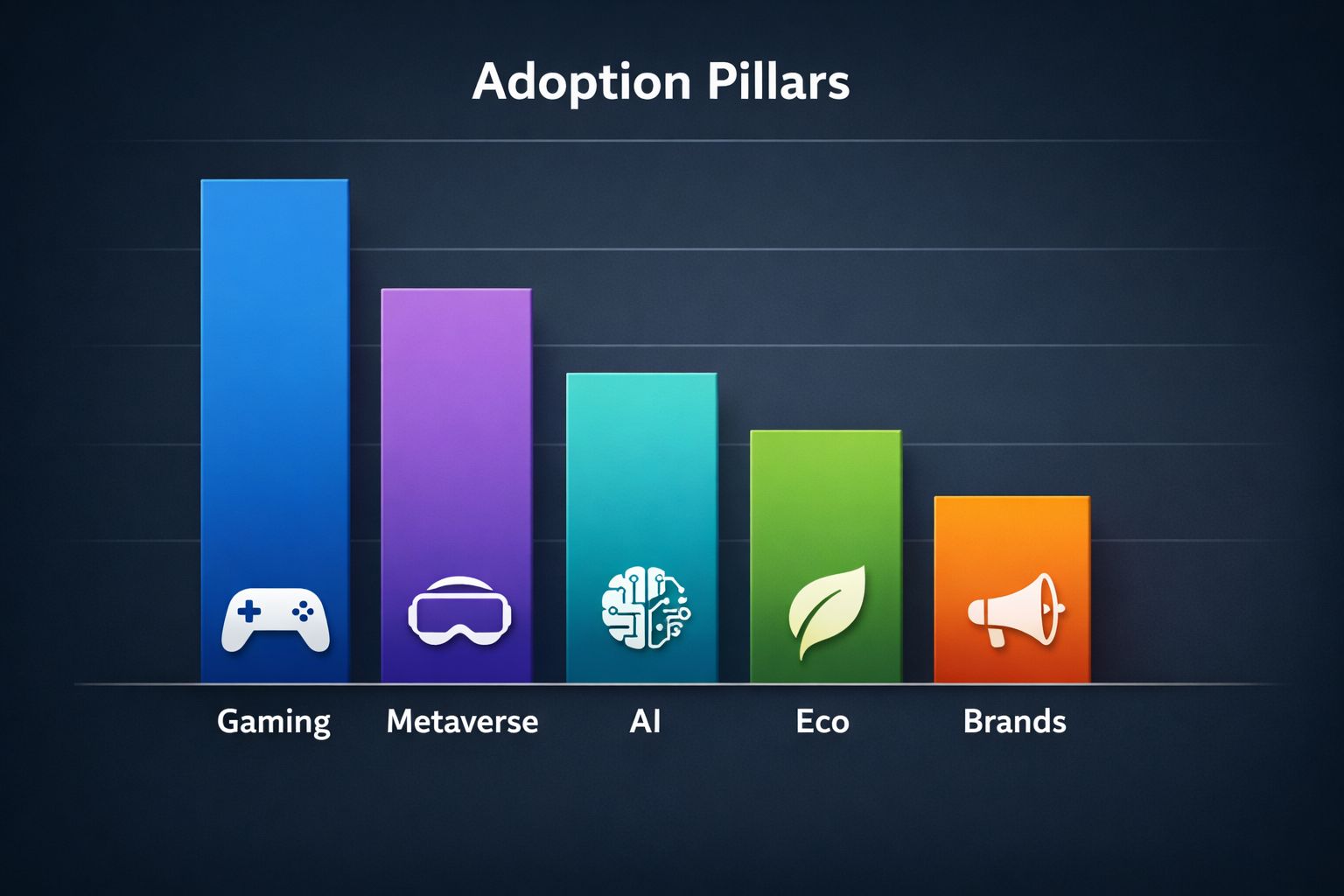
What I find most telling is the underlying assumption that the next phase of growth won’t come from explaining blockchain better, but from making it less noticeable. That’s not a technical insight as much as a social one. Most people don’t want to learn new systems unless they have a clear reason. But they are open to new experiences, new forms of entertainment, and new ways to interact with brands. If the technology sits behind those experiences without getting in the way, it has a chance to become part of everyday routines.
Still, I find myself thinking less about the vision and more about the practical questions that follow. Can a single network support multiple mainstream industries without becoming too complex to manage? Will the infrastructure remain steady as usage grows, or will it struggle under the weight of real demand? And perhaps most importantly, will people even notice the system behind the experiences they use, or will it simply fade into the background the way successful infrastructure usually does?
These are the kinds of questions that seem more important than any single feature or roadmap. Real adoption is slow, uneven, and often invisible while it’s happening. If a platform is meant to support real-world activity, it has to earn trust over time through consistency and usefulness. Whether this kind of ecosystem can quietly become part of daily digital life is something that only time and actual usage will answer.
