
Being around crypto for a certain amount of time has gotten me to recognize a pattern. The business shows great love for transparency. They have created an entire philosophy for it. Every transaction is visible. Every balance is trackable. Every interaction recorded permanently in a public ledger. In the beginning, this was a revolutionary concept. The ability for people to have trust without institutions was amazing. This was a system that could literally be checked by anyone.
I thought that was a brilliant concept at the time.
Now, after watching this space evolve from the outside, I have begun to ask the question of whether we perhaps took transparency too far.
With the emergence of crypto, it was believed that as long as everything is visible, the system stays honest.
There was to be no hidden manipulation, no secret accounting, no middlemen that could quietly change the records.
The blockchain was the witness, and the public ledger was the proof.
I believe that this principle still holds significance.
When everything is public, everything is exposed. This is the part that we didn’t fully think through.
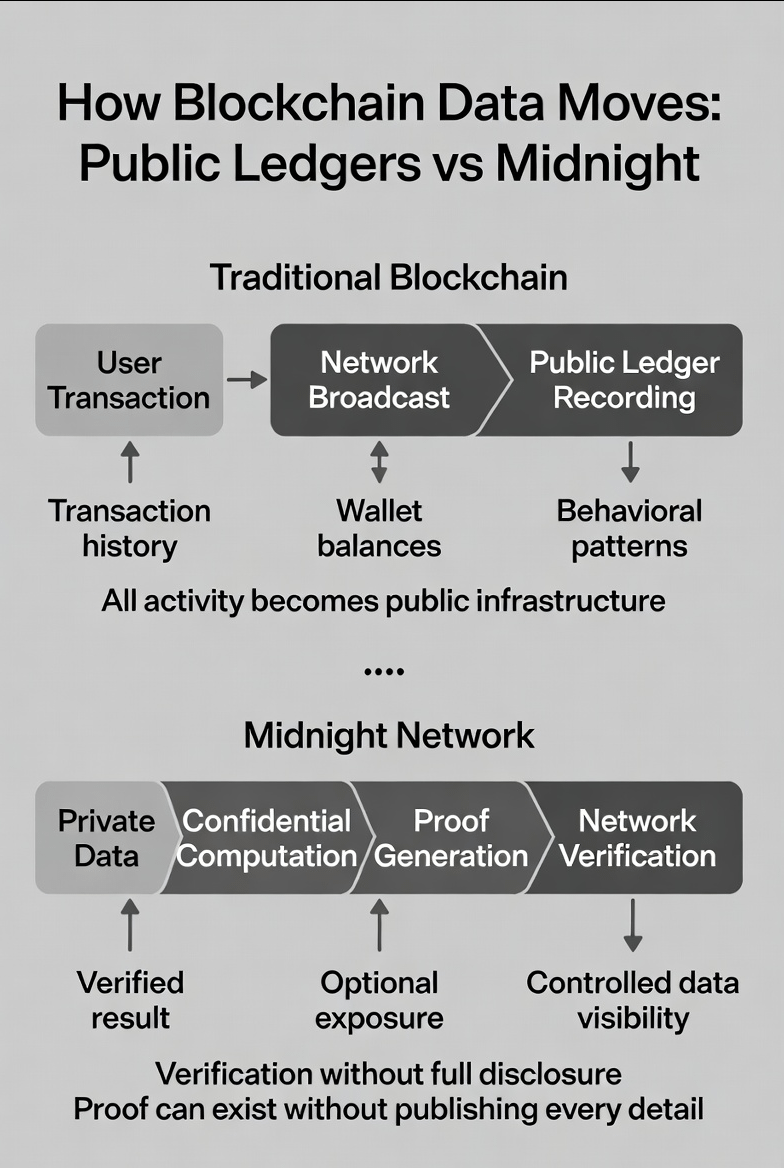
As time went on, open ledgers began showing more than simple transactions. They began showing patterns, behaviors, and relationships involving wallets, even whole economic activities that anyone patient enough could map. For individuals, that could mean lasting financial histories linked to digital identities. For companies, it could mean exposing strategies, operational frameworks, and negotiations that were meant to remain private.
The world does not work like that.
When it comes to their internal flow of finances, companies never reveal it. Likewise, companies never share their processes on public networks. People also expect some level of privacy regarding their finances, their identity, and their credentials.
This was the first instance in which I contemplated the price of cryptocurrency's privacy.
Cryptocurrency's primary attribute is transparency. In contrast, other systems rely on confidentiality.
Most of the design tension in blockchain systems has been a contrast between transparency and confidentiality. For systems to be effective, some things must be private, and other aspects of the system must offer ways to verify that confidentiality. Most blockchain systems don't offer effective solutions to this problem.
This is the main reason I've been engaged with what the Midnight Network is attempting.
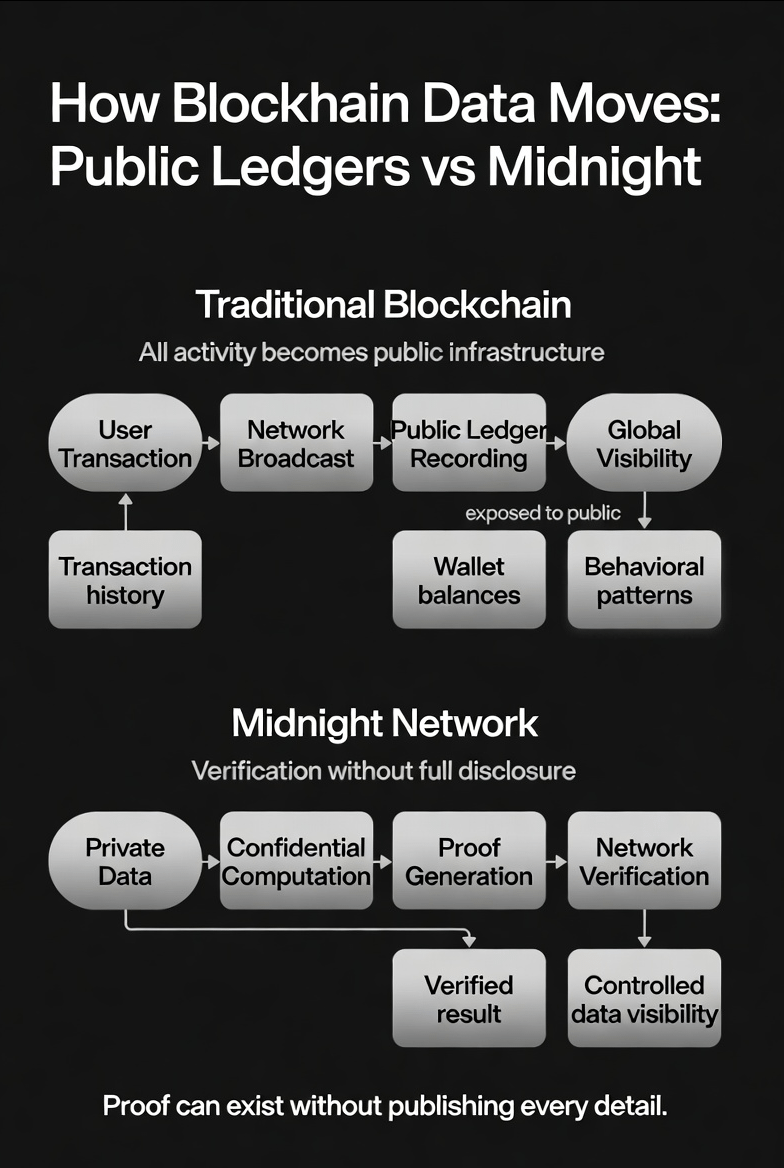
The Midnight Network seems to be the first to shift the design philosophy of blockchain systems. Midnight's approach to design doesn't mean that system transparency is disregarded. In a sense, the Midnight Network limits transparency more than other blockchain systems to create a system of privacy that also ensures the system remains verifiable. Other blockchain systems approach design with the assumption that all system data will be uploaded to the blockchain's public ledger, or will be left unverified. Midnight, instead, limits system transparency so system data can be verified without exposing everything.
I can show proof of my qualifications without revealing my whole identity. If a company has to validate a transaction, they do not need to show all of the details of the transaction. Verification and confidentiality can coexist.
At least in theory.
Each new project that claims to “solve” a true foundational problem in the blockchain space makes me feel uneasy. I have witnessed too many neat ideas fail once they encounter real world usage. In the world of crypto, there are countless perfect looking systems until they are actually built upon and used, and the users abuse them in unforeseen ways.
This same test is to be applied to Midnight as well.
This is not a test of whether or not the idea is good. This is a test of whether or not it actually functions as intended. This is a question of whether or not it functions as intended when the the applications begin to rely on it. This is a test of whether or not it actually functions when the networks begin to expand and the economic pressure increases.
I do have a great deal of respect for Midnight’s efforts to explore a question that the rest of the industry seems to be trying to avoid.
The crypto industry has created a public world of great transparency.
I suspect that this is just the first stage. The second step may be systems that do not require transparency, but still require systems to be built that are based on trust.