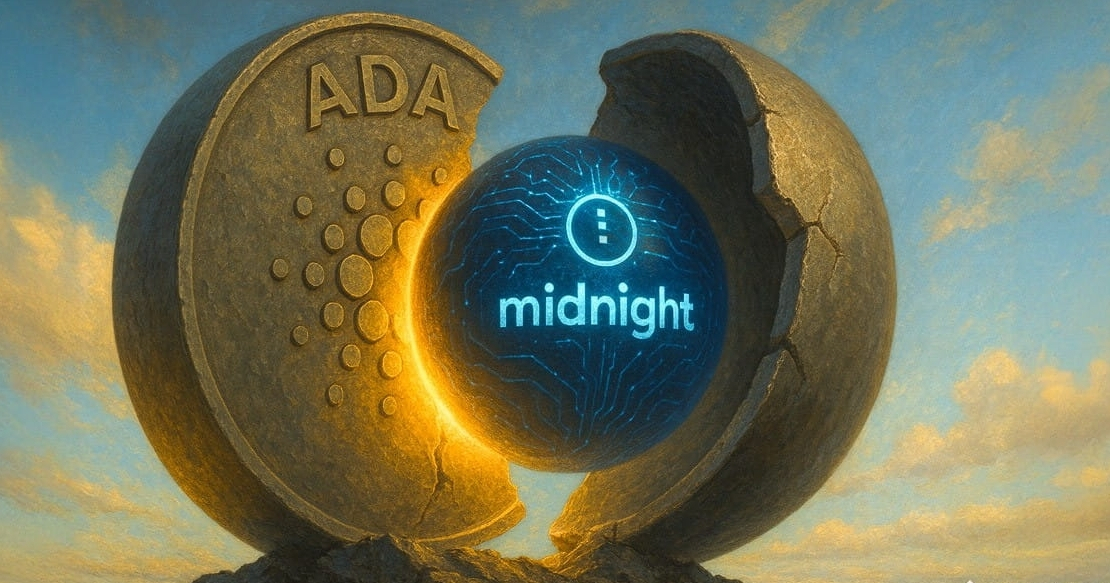
Spending enough years around crypto changes the way you look at new projects. In the beginning everything feels exciting. Every whitepaper looks like the start of something big. Every new chain claims it has solved the problem the last generation couldn’t.
After a while, though, the excitement fades into something closer to pattern recognition.
You start noticing that most cycles follow the same script. One year the conversation revolves around speed. The next year it’s about scaling. Then fees become the problem that everyone suddenly needs to fix. The language changes, the diagrams look more polished, but the deeper structure of the industry rarely shifts as much as the headlines suggest.
That’s why I tend to pay more attention when something touches a problem the space has quietly carried for years.
Midnight Network caught my attention in that way. Not because it’s loud or particularly flashy, but because it seems to be circling around an uncomfortable question the industry never fully addressed: what happens when transparency becomes too much of a good thing?
Crypto made a very strong choice early on. Everything would be public. Every transaction, every wallet interaction, every piece of activity would exist on a visible ledger that anyone could inspect. At the time, that felt revolutionary. Compared to the opacity of traditional financial systems, radical openness sounded almost philosophical.
And for a while, people celebrated it.
But ideas that feel elegant in theory sometimes become complicated once they start touching real behavior. Transparency works differently when an ecosystem is small. When only a limited number of users are experimenting with a system, the visibility feels manageable.
As the ecosystem grows, though, that same transparency begins to reveal something else.
Patterns.
Wallets become traceable. Transaction histories start telling stories about people’s financial habits, investment strategies, and connections. With enough patience and analysis, it becomes surprisingly easy to map out how value moves through the system.
Crypto doesn’t hide that information. In fact, it preserves it permanently.
For researchers and auditors, that’s incredibly useful. For individuals and businesses, it can feel less comfortable. Ownership on a public ledger often comes with a strange side effect: everything about that ownership becomes visible to anyone who cares enough to look.
For years the industry mostly ignored that tension.
Instead of rethinking the design, new layers were added on top. Faster networks. Lower fees. More efficient consensus systems. The infrastructure improved, but the core assumption remained untouched: that transparency should always come first.
Midnight seems to question that assumption.
Not by rejecting transparency entirely, but by introducing a different idea about how information moves through a network. Instead of exposing everything behind an interaction, the system tries to make it possible to prove something without revealing every detail underneath it.
That might sound abstract, but the concept is actually simple when you step back.
In most everyday systems, proof and disclosure are separate things. You can confirm you own something without publishing the entire history of how you acquired it. You can verify identity without revealing every personal detail attached to it.
Blockchain, oddly enough, merged those concepts together.
Verification automatically became full visibility.
Midnight appears to be exploring whether those two ideas can exist independently again.
The technology behind that approach involves zero-knowledge proofs, which have been discussed in crypto circles for a long time. But technology alone rarely determines whether a system works in practice. Plenty of impressive cryptographic tools have struggled to become usable in real-world applications.
What matters more is whether the system can absorb real users without collapsing under its own complexity.
Privacy systems have a habit of becoming difficult very quickly. The more sophisticated the cryptography becomes, the harder it can be for developers to integrate it into applications people actually want to use. If building on a network requires constant technical gymnastics, most teams eventually drift toward simpler environments.
Developers are often the first group to reveal whether infrastructure truly works.
Midnight will eventually face that test. Not through documentation or theory, but through the practical experience of people trying to build on top of it. If the privacy mechanisms feel natural to work with, the network has a chance to grow. If they feel heavy or confusing, the system may struggle no matter how strong the underlying ideas are.
User experience adds another layer of uncertainty.
Crypto has never been particularly gentle with its users, even in relatively simple systems. Wallet management, transaction fees, network confirmations—these are already hurdles for newcomers. Introducing privacy logic into those interactions risks making things even more complicated.
And people rarely adopt technology that feels like a puzzle.
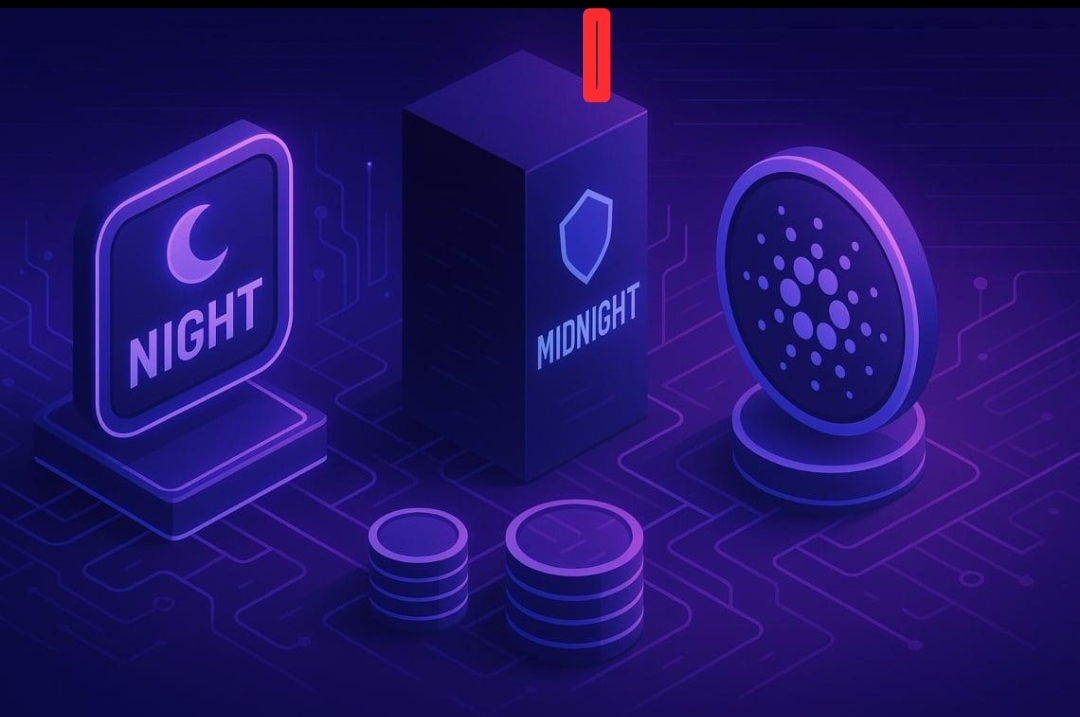
Another interesting piece of Midnight’s design is its dual-token structure. Instead of relying on a single token for every function, the network separates responsibilities. One token, NIGHT, handles governance and security, while another unit, called DUST, is used for transactions and network execution.
On paper, the reasoning makes sense.
Anyone who has watched blockchain networks for long enough has seen what happens when a single token tries to do everything. Market speculation drives volatility. Fees become unpredictable. The same asset ends up serving two very different purposes at once, and the tension between them often creates strange behavior in the system.
Splitting those responsibilities could help reduce that pressure.
But token economics rarely behave exactly the way designers expect. Incentives shift once real money enters the equation. What looks balanced in a controlled environment can change quickly when traders, users, and developers begin interacting with the system simultaneously.
So the real test of Midnight won’t come from the elegance of its design.
It will come later, when the network has to live.
That stage is where many blockchain ideas transform from clean diagrams into messy reality. Infrastructure meets unpredictable human behavior. Developers discover the limitations of tools that once looked perfect on paper. Token systems encounter economic pressures their creators didn’t anticipate.
It’s also the stage where the most interesting lessons appear.
Midnight is slowly approaching that moment. Which is probably why it feels more intriguing than most new projects passing through the space. Not because it promises a revolution, but because it seems to be working on a problem that has been quietly sitting in the background of crypto for years.
Transparency helped build trust in early blockchain systems. But the same transparency also created a world where participating in the network means exposing a permanent financial trail.
That trade-off might have been acceptable in the early days. As blockchain systems move closer to real economic activity, the balance starts to look less stable.
Businesses don’t always want their operational flows visible to competitors. Individuals don’t always want their financial history mapped publicly. Identity systems, payment networks, and ownership records carry sensitivities that pure transparency doesn’t always respect.
Midnight appears to be asking whether a different balance is possible.
Not complete secrecy. Not radical openness. Something in between.
Finding that middle ground may turn out to be much harder than it sounds. Privacy systems can easily become too opaque for regulators and too complex for users. Transparency systems can expose more information than participants are comfortable sharing.
Navigating between those pressures is not just a technical challenge. It’s a social and economic one as well.
That’s part of what makes the project interesting to watch.
After years of observing the crypto industry repeat its familiar cycles, it’s rare to see a network focusing on a structural question instead of simply competing for better performance metrics. Midnight isn’t trying to win the speed race or the fee race. It’s exploring whether the basic design of blockchain transparency might need to evolve.
Maybe it works.
Maybe the complexity proves too difficult to manage once real users arrive.
Maybe the demand for privacy in blockchain systems turns out to be smaller than some people expect.
All of those outcomes remain possible.
But even if Midnight ends up struggling, the question it raises is probably going to follow the industry for a long time.
Because the deeper crypto moves into real-world applications, the harder it becomes to ignore the tension between ownership and exposure.
For now, Midnight sits in that uncertain stage where ideas are still being tested against reality. It hasn’t proven anything yet. It hasn’t failed either.
@MidnightNetwork #night $NIGHT
NIGHTUSDT
Perp
0.05032
+1.65%