
For a while, I honestly stopped paying much attention to new crypto promises. Everything started to sound the same big words, polished narratives, and endless hype. Then I came across Midnight. What caught my attention wasn’t excitement or flashy claims, but a quiet feeling that someone might actually be trying to solve a real problem.
In most on-chain systems today, trust comes with a trade-off: transparency. The idea is simple if everything is visible, then everything can be verified. But the more I think about it, the more that trade-off feels too extreme. A wallet address isn’t just a random string of numbers. Over time it becomes a record of behavior, connections to other wallets, and even a rough signal of someone’s financial position.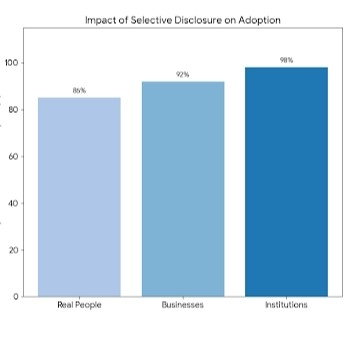
That’s what made Midnight interesting to me. It doesn’t try to hide everything. Instead, it focuses on something much more realistic selective disclosure. In real life, we rarely reveal our entire identity just to prove one thing. If you want to enter a building, you prove you’re authorized. If you make a payment, you prove the transaction is valid. You don’t hand over every personal detail just to confirm a single requirement.
Midnight seems to be applying that same logic to Web3. Instead of forcing people to expose everything just to build trust, the idea is to prove only what needs to be proven. Nothing more.
When you think about it, this touches something deeper about ownership. In crypto we often talk about owning assets, but ownership should also include control over information about ourselves. Who can see it, when they can see it, and how much they actually need to know. Without that control, the idea of digital ownership feels incomplete.
What I also find interesting is that Midnight isn’t trying to package itself as something flashy for quick attention. Infrastructure rarely works that way. The most important layers are usually the least visible and the hardest to explain in a tweet. Most users only realize the problem of transparency when they feel it directly when their transactions are tracked too closely or when using a service means exposing more personal context than they’re comfortable with.$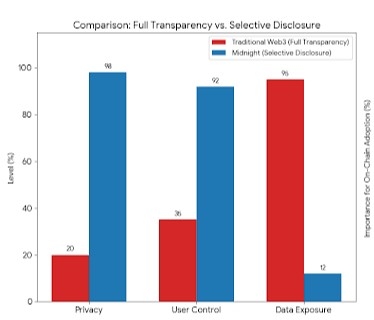
For builders, the idea becomes even more practical. Many teams want to bring larger organizations, institutions, or real-world applications on-chain. But they hit the same obstacle again and again: the data involved is too sensitive to make completely public. Midnight seems to be exploring another route, where trust can exist without forcing total exposure.
Of course, having the right idea doesn’t guarantee success. Crypto has seen many strong concepts struggle to turn into products that developers can easily use and communities can build around. This kind of infrastructure takes time, and it requires patience from everyone involved.
So when I look at Midnight today, I don’t see it as another loud promise in the market. I see it more as a test. A test of whether Web3 is finally ready to evolve beyond the idea that trust must always come from total transparency.
If digital systems are going to grow and support more serious real-world use, there will have to be a balance between verification and privacy. Midnight seems to be standing right at that intersection. And if it continues building in that direction, the real question may not be whether it’s loud enough to capture attention but whether the industry is finally ready to appreciate systems that protect the parts of a person that should remain private.
#night @MidnightNetwork $NIGHT
