
While the thoughts are still fresh, I’ll jot down a few reflections on my recent reading of The Transparency Trap.
I can easily visualize what a glass house would look like— with my walls transparent, my salary, medical history, and even my recent Amazon purchases are now visible to my neighbors. It’s unnerving. The essay explains this is how blockchains work today and I like how the author used a glass house metaphor to give me that perspective. It’s common to hear a Bitcoin maximalists describe the value of 'transparency', but as a metaphor, this is a nightmare.
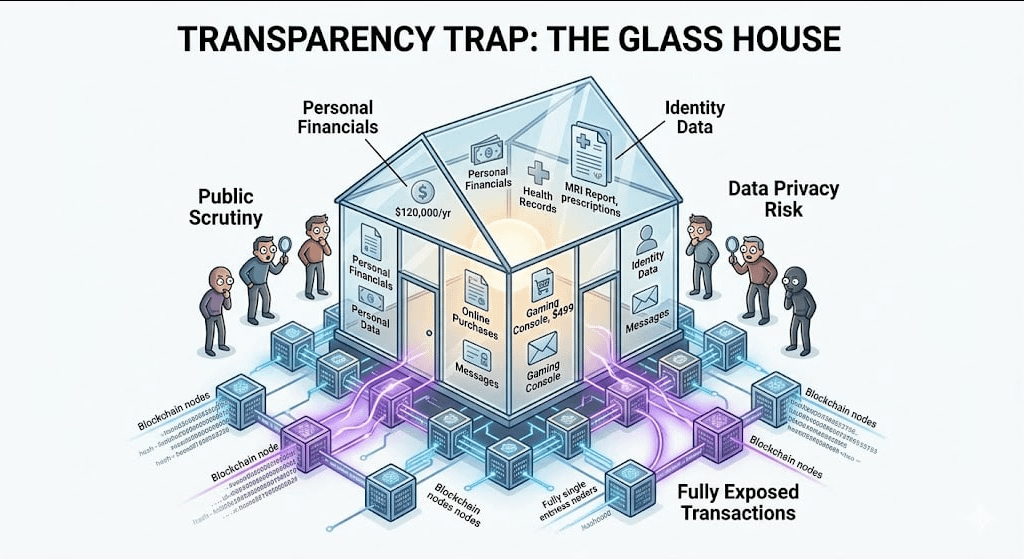
I was completely stopped by the hospital example. Banks can’t use blockchain and of course, this is why hospitals can’t either. I’ve heard of "blockchain will revolutionize everything" for years and this is the first time I hear someone explain why it hasn’t happened. The $1 trillion number is a lot of locked-out economy and it’s been years since I’ve seen a citation point for a claim.
Simple, and memorable. Night and Dust are nice.
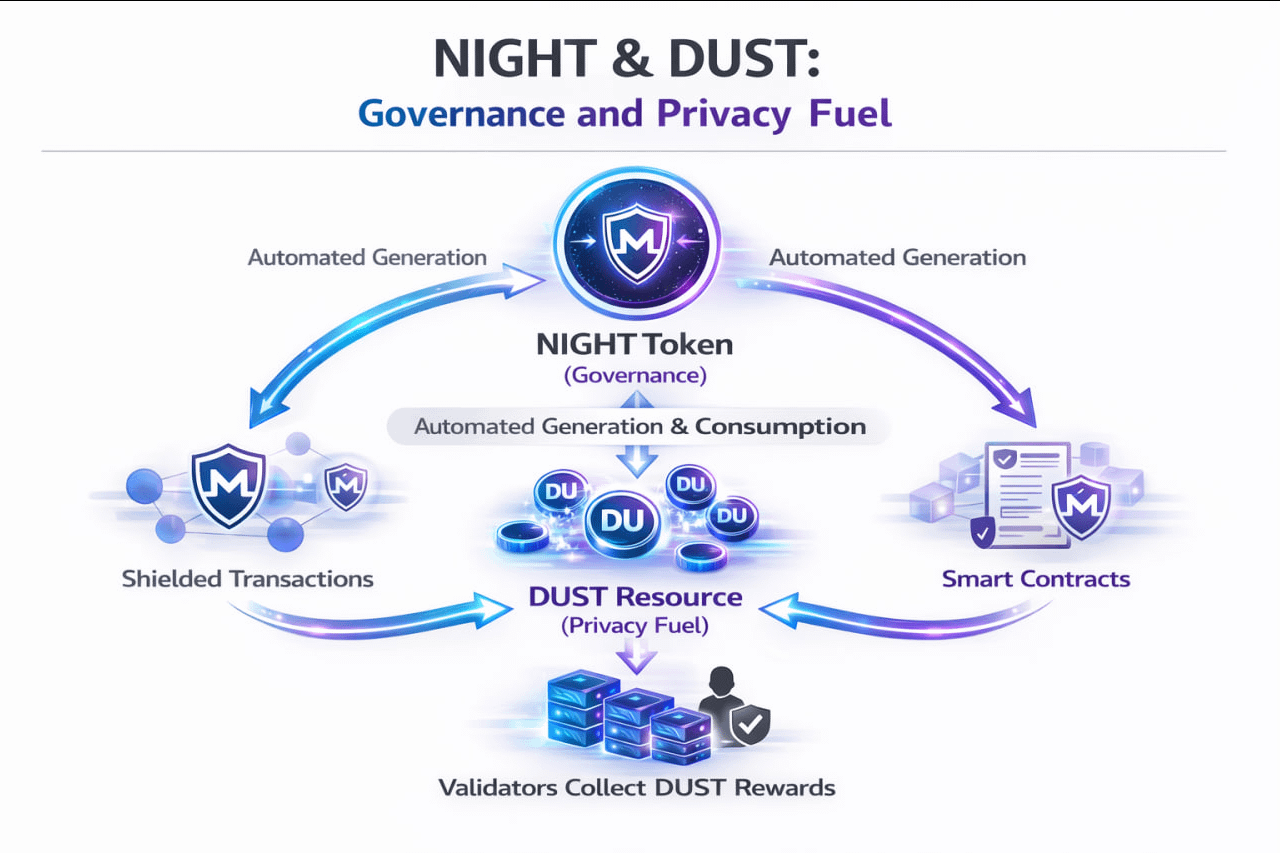
Your description of a governance token generating a fuel token is quite clever. I immediately thought of credit card rewards where holding an asset produces something you can spend, but unlike credit card rewards that feel like funny money, DUST actually does something.
The essay states: if you hold NIGHT you receive automatic DUST, and you never have to worry about fees.
I had one moment of complete confusion. When the essay states, “unlike Ethereum where you have to spend ETH for everything,” I thought wouldn’t that be a good thing? Wouldn’t having one token to spend be simpler? But I realized with Ethereum, when the ETH price crashes, you have to pay a lot to make a transaction. If ETH goes up, then you won’t be able to make transactions. With this model, DUST generation stays the same regarding the amount you have. You eliminate the fee volatility issues which is a huge improvement.
Alice’s Story Helped
Alice’s story helped with the four-step mechanism. She’s proving her age without showing her birth date, I can picture that. Her wallet generates DUST automatically, the proof consumes it, validators earn it. Circle closes.
The explanation of the validator’s incentives was helpful. They want DUST to be in demand because that is how they earn their rewards. So they want to keep the network active. Everyone is aligned. Good system design.
The Competitive Part Lost Me Slight
Aleo? Aztec? I have heard the names but I couldn’t explain what they do. This comparison relies too much on context I do not have. The “reduces friction by 100%” sounds like a tagline with no substance to back it up.
Is 50-100 daily transactions good? Bad? Average? Without a baseline I have nothing to compare this to. I suppose an essay saying it is impressive is enough for me to accept it.
Outcomes Made Sense Again
I'm thinking of financial institutions, health care, supply chains. I can envision a banker being relieved to finally participate. I can see a hospital confirming patient eligibility without attorneys worrying about HIPAA.
The most surprising part was the regulations. An auditor’s dream of getting a verification without a data dump is true. With the data dump, the draft is closed without exposure. That’s privacy, and more importantly, it’s practical privacy. Compliance officers will sleep soundly.
This Stuck With Me
"Privacy is not the opposite of transparency. Instead, it is the prerequisite of trust." I actually said, "huh" out loud. It completely changed the focus of my thinking.
I appreciated the glass house analogy and thought it was well done. To end with "trust is the only currency that matters" is a feel earned, not corny.
Improvement
I came with no knowledge of Midnight and I left with an intimate understanding of the problem, a clear understanding of the solution, and an emotional understanding of the stakes involved. I focus more on the competitive analysis, especially for newcomers like me, and I’d like to have real data with context. But the core message was clear: it’s not privacy for hiding things, it’s privacy for participating.
I'd read more. I'd probably check if NIGHT is available anywhere. That's the test, right?