
The Problem Most People Don’t Notice
Sometimes the most important problems are the ones people rarely talk about.
In the crypto world, conversations almost always revolve around speed. Everyone wants faster block times, higher throughput, and bigger transaction numbers. New networks compete to prove they can process more activity than the systems that came before them.

But when something actually breaks inside a blockchain ecosystem, the cause usually isn’t speed.
It’s authority.
A private key that carried too much power.
A permission that stayed active longer than anyone remembered.
A wallet approval that quietly existed in the background until something went wrong.
I’m realizing that many of the largest failures in crypto didn’t come from slow networks. They came from systems where access wasn’t clearly controlled.
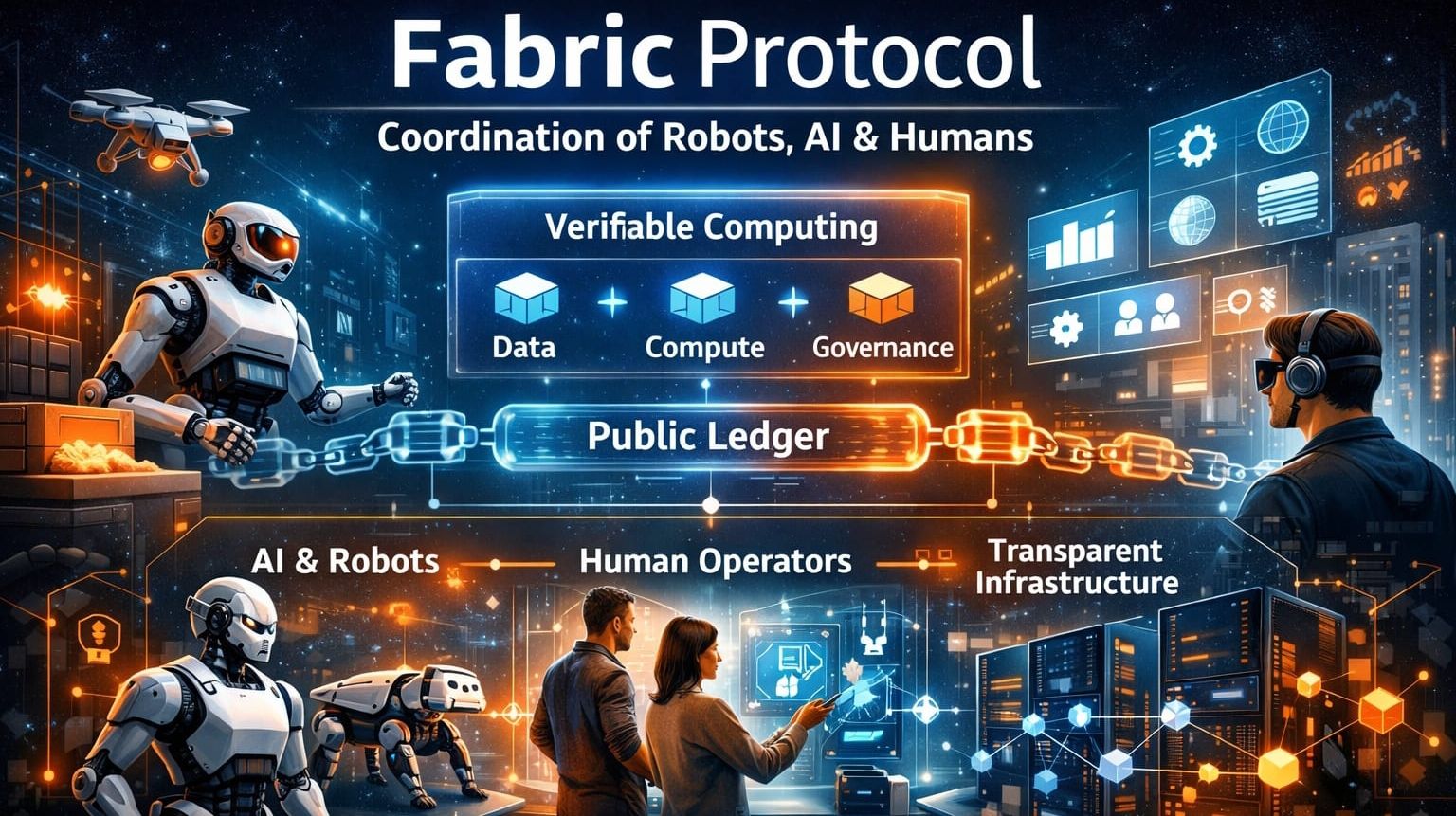
Fabric Protocol begins with that observation.
Instead of focusing only on how fast a blockchain can move, the project focuses on who should have the power to act and how long that power should exist.
It sounds simple, but that shift in thinking changes the entire design philosophy.
Where the Idea Comes From
The Fabric Foundation started with a broader vision than most blockchain projects. The team recognized that artificial intelligence and robotics are slowly moving from research labs into the real world.
Machines are beginning to work in factories, logistics networks, agriculture, and even city infrastructure.
If that future continues to grow, these machines will need systems that allow them to coordinate tasks, verify actions, and exchange value.
Centralized systems can handle some of that coordination today, but they come with limitations. They create single points of control and single points of failure.
Fabric proposes a different model.
Instead of relying on one organization to manage machines and digital agents, the network provides an open infrastructure where machines, developers, and organizations can interact through transparent rules.
I’m starting to see Fabric less as a typical crypto project and more as an attempt to build a digital coordination layer for the emerging machine economy.
How the System Works Internally
At its core, Fabric Protocol is designed as a layered blockchain architecture.
The foundation of the network acts as a settlement layer. Its main job is to record final outcomes, enforce rules, and protect the integrity of the ledger. It behaves more like financial accounting infrastructure than experimental software.
Above that base layer sits the execution environment where applications and interactions happen. Developers can build tools, automation systems, and machine coordination platforms without risking the stability of the underlying ledger.
This separation is intentional.
When systems mix everything together in a single layer, they often become flexible but fragile. Fabric’s design keeps the core network conservative while allowing innovation to move quickly above it.
Another important concept inside the protocol is temporary authority.
Instead of giving permanent control to wallets or systems, Fabric introduces the idea of sessions. A session allows a system to perform a specific task within a limited time window. Once the task is complete or the time expires, the permission disappears automatically.
I find that idea surprisingly powerful.
Authority becomes something temporary and measurable rather than something that quietly accumulates over time.
The Role of the ROBO Token
Every decentralized network needs a mechanism that aligns incentives between participants. In the Fabric ecosystem, that role belongs to the ROBO token.
ROBO supports staking, validator participation, and governance decisions across the network. Validators help secure the ledger and maintain the integrity of transactions, while token holders participate in shaping the direction of the protocol.
The token also plays a functional role in supporting machine interactions. As robots, AI systems, and applications operate within the ecosystem, economic activity flows through the token layer.
This design ties the value of the token to the usefulness of the network itself rather than purely speculative demand.
If the ecosystem grows and real machine activity increases, the token becomes part of the infrastructure that supports that activity.
How Growth Can Be Measured
For a project like Fabric Protocol, success will not be measured only by market price.
The real indicators of progress are deeper signals within the ecosystem.
One of the most important metrics is the number of developers building applications on top of the network. A strong developer community often determines whether a blockchain becomes infrastructure or simply another experiment.
Another signal is the amount of activity generated by machines and automated systems interacting with the network. As more intelligent systems begin coordinating tasks through Fabric, the network’s utility becomes more visible.
Governance participation also matters. If token holders actively engage in shaping the future of the protocol, the ecosystem becomes more resilient over time.
We’re seeing early signs of interest, but the long term picture will depend on how the community evolves.
Challenges the Project Must Face
Even the most thoughtful architecture cannot eliminate uncertainty.
Fabric Protocol faces several challenges that could shape its future.
The first challenge is adoption. Building infrastructure for robotics and AI coordination is ambitious, but those industries are still developing. Convincing developers and companies to build around a new protocol will take time.
Another challenge lies in bridging the physical and digital worlds. Robots generate massive amounts of data, and blockchains cannot store everything directly. The system must carefully balance on chain verification with off chain data processing.
There is also the broader reality of the crypto market itself. Many promising ideas struggle to survive long enough to reach real world adoption.
Fabric will need to demonstrate that its infrastructure solves real problems rather than theoretical ones.
Looking Toward the Future
Despite the challenges, the long term vision behind Fabric Protocol is difficult to ignore.
The project imagines a future where machines are not just tools but economic participants. Robots could request tasks, complete work, verify results, and receive payment through decentralized systems.
In that world, the network becomes a coordination layer connecting humans, machines, and digital assets.
They’re building something that looks less like a traditional blockchain platform and more like an operating system for autonomous systems.
If the machine economy continues to grow, infrastructure like Fabric could become quietly essential.
A Final Thought
For years, the blockchain industry chased a single goal.
Speed.
Faster transactions. Faster blocks. Faster everything.
But durability may come from something else entirely.
Systems that survive for decades usually share a different trait. They know when to limit power, when to enforce boundaries, and when to say no.
Fabric Protocol quietly builds those ideas into its architecture.
And if the future really does include billions of intelligent machines working alongside humans, that quiet philosophy may turn out to be one of the most important design choices of all.
#Robo @Fabric Foundation $ROBO
