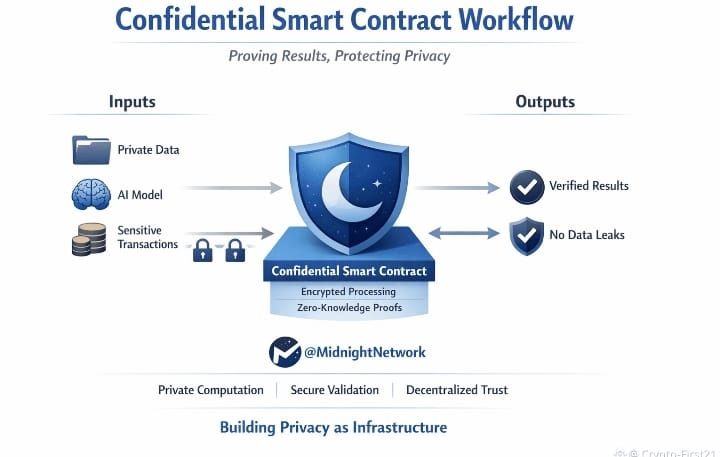
I have noticed that conversations about privacy in crypto tend to arrive in cycles. Every few years the topic suddenly feels urgent again. People start questioning how much information should really live forever on public ledgers. Then attention drifts toward the next big narrative and the discussion quietly fades into the background.
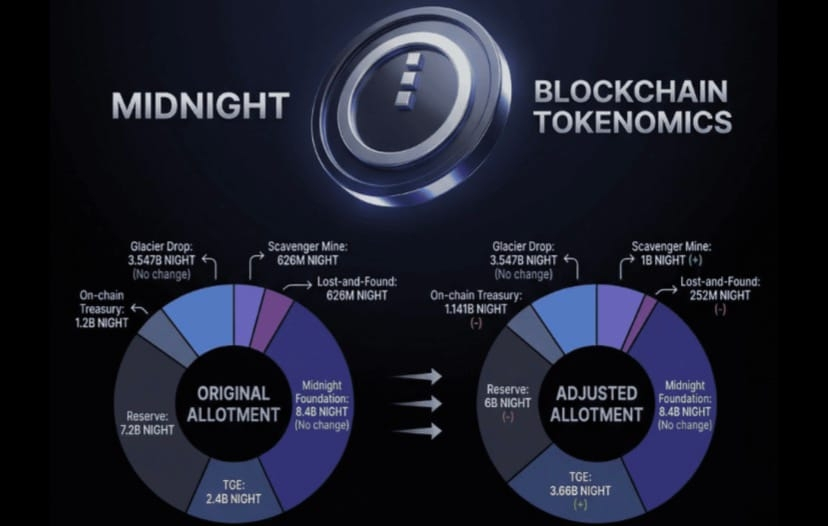
Yet the problem never actually goes away.
Blockchains are remarkable at recording activity in a permanent and transparent way. That transparency is part of the reason people trust the system. Anyone can verify transactions and follow the flow of assets across the network. At the same time this openness creates an unusual tension. When every movement of value is visible the concept of financial privacy becomes complicated.
I have spent some time thinking about that contradiction. Crypto was originally imagined as a tool that gives individuals more control over their financial lives. But when every transaction leaves a public trail it can slowly reveal patterns about a person over time. Wallet histories become stories about behavior even when the wallet owner never intended to share those details.
Recently I started noticing more conversations around Midnight Network and the token called NIGHT. The idea behind the project appears to focus on privacy inside Web3 rather than simply faster transactions or cheaper fees. That direction feels interesting because it touches one of the deeper questions in blockchain design.
From what I have seen the network is connected with the broader Cardano ecosystem yet it approaches things from a slightly different angle. Instead of focusing purely on smart contract speed it looks at how sensitive data can exist within decentralized systems without becoming public information forever.
What stood out to me is the idea of programmable privacy. Traditional blockchains usually present a simple choice. Information is either public or hidden. Midnight seems to explore something more flexible where certain details remain confidential while proof of validity can still exist on chain.
That concept opens some unexpected possibilities. Imagine systems where identity can be verified without revealing personal details. Or applications where organizations can prove compliance without exposing internal data. Those ideas start to push blockchain technology closer to real world use cases.
From what I have observed privacy in crypto is slowly evolving beyond the early concept of private transactions. In the past the conversation focused mostly on hiding transfers between wallets. Now developers appear more interested in protecting data itself inside decentralized applications.

This shift feels important. As blockchain technology expands into areas like identity digital ownership and enterprise infrastructure the need for controlled information sharing becomes more obvious. Not every piece of data should exist permanently in the public eye.
It also reflects how the crypto space is maturing. Early culture around blockchain celebrated radical transparency. Everything visible everything verifiable. That philosophy made sense in a young ecosystem focused on trust and decentralization.
But as new types of users arrive the expectations begin to change. Businesses institutions and everyday individuals often require some level of confidentiality. Without that protection many real world systems simply cannot operate.
Midnight appears to experiment with that balance between openness and privacy. The goal does not seem to be hiding everything but rather allowing users and developers to choose what becomes public and what remains protected.
Behind this idea sits a range of advanced cryptographic tools. Technologies like zero knowledge proofs allow networks to confirm that information is correct without revealing the underlying data. The first time I read about this concept it felt almost abstract yet it is slowly becoming practical infrastructure.
What interests me most is how privacy might shape the next phase of Web3. The last few years focused heavily on scaling networks and launching new applications. The coming years might focus more on how digital systems manage identity ownership and data protection.
In that larger picture Midnight Network feels like part of a broader exploration rather than a final solution. Projects like this test ideas that may eventually influence how future blockchains handle sensitive information.
Of course the path forward will not be simple. Privacy technology often raises regulatory questions and technical challenges. Finding a balance between personal control and legal transparency will take time experimentation and probably a few failed attempts along the way.
Still the direction itself feels meaningful. Crypto began as a movement built around financial freedom and individual sovereignty. Privacy is naturally connected to those values even if the technology required to support it is complex.
When I step back and think about the bigger story it feels like the industry is still searching for equilibrium. Pure transparency solved certain problems yet it introduced new ones that were not obvious at the beginning.
Networks like Midnight are part of the process of exploring that middle ground. Maybe they will become foundational infrastructure or maybe they will simply inspire new approaches from future builders.
Either outcome has value.
Because the future of Web3 will probably not be completely public and it will not be completely private either. It will likely exist somewhere in between shaped by tools that allow people to decide what parts of their digital lives remain visible and what parts stay personal.