I’mwaiting.I’mwatching.I’mlooking.I’vebeenseeingthesamequestiononloop:Okay,buthowmuchcanitreallyhandle?Ifollowthenumbers,butIalsofollowthesilences—thepausesbetweenblocks,thelittleRPChesitations,themomenttradersstartretryingandpretendit’snormal.Ifocusonwhatstayssteadywhenit’smessy,notwhatlooksprettywhenit’squiet.
Lately I’ve been spending time observing Fabric Protocol from that exact angle. Not the marketing side, not the promise slides—just the behavior of the network when things are actually happening. The idea behind it is unusual compared to most chains. Instead of building purely for financial activity, Fabric is trying to coordinate machines—robots, automated agents, and systems that act on their own—through a verifiable computing layer. That shifts the pressure points immediately. When a robot depends on a confirmation, delay is not just annoying; it changes how real-world tasks flow.
The first thing I notice when watching a chain like this is that throughput is never just one number. Everyone loves quoting TPS, but TPS is only meaningful when you ask: sustained or burst? A network can cruise comfortably with small amounts of activity and look perfectly stable. The real test arrives when multiple things happen at once. Automated agents submitting proofs, verification tasks completing, contract calls firing at similar moments. In that scenario, the difference between theoretical capacity and practical capacity becomes obvious.
Fabric’s rhythm appears to revolve around roughly a couple-second block cadence. That sounds fast, but blocktime is only the heartbeat of the system. The real workload sits inside each block. If a block arrives every two seconds but contains heavy execution—verification tasks, contract calls, and signature checks—the validators are doing far more than simply agreeing on the next block. They are validating signatures, executing code, sharing state updates, and pushing data across the network simultaneously.
And execution pressure rarely comes from one source. Networking delays, signature verification, scheduling decisions inside the runtime, and shared state access all stack together. Machines interacting with a chain behave differently from humans. A trader might hesitate, cancel, or change strategy. Robots don’t hesitate. They execute instructions exactly when programmed. That predictability can create concentrated bursts of activity around specific contracts.
Once that happens, something familiar appears: hot accounts. Multiple agents touching the same contract state at the same time. Parallel execution starts to shrink because the system has to serialize certain operations. Transactions begin to retry. RPC responses become slightly inconsistent depending on which node you query. Nothing looks catastrophic on the surface—the chain keeps producing blocks—but the edges begin to feel strained.
That’s where the reality of decentralized systems shows itself. Even a network designed for robotics eventually runs into the same dynamics that financial chains face: bots competing for priority, sudden bursts triggered by oracle updates, and shared-state collisions where several actors race for the same opportunity. It stops looking like an elegant architecture diagram and starts behaving like a busy intersection where everyone wants to move first.
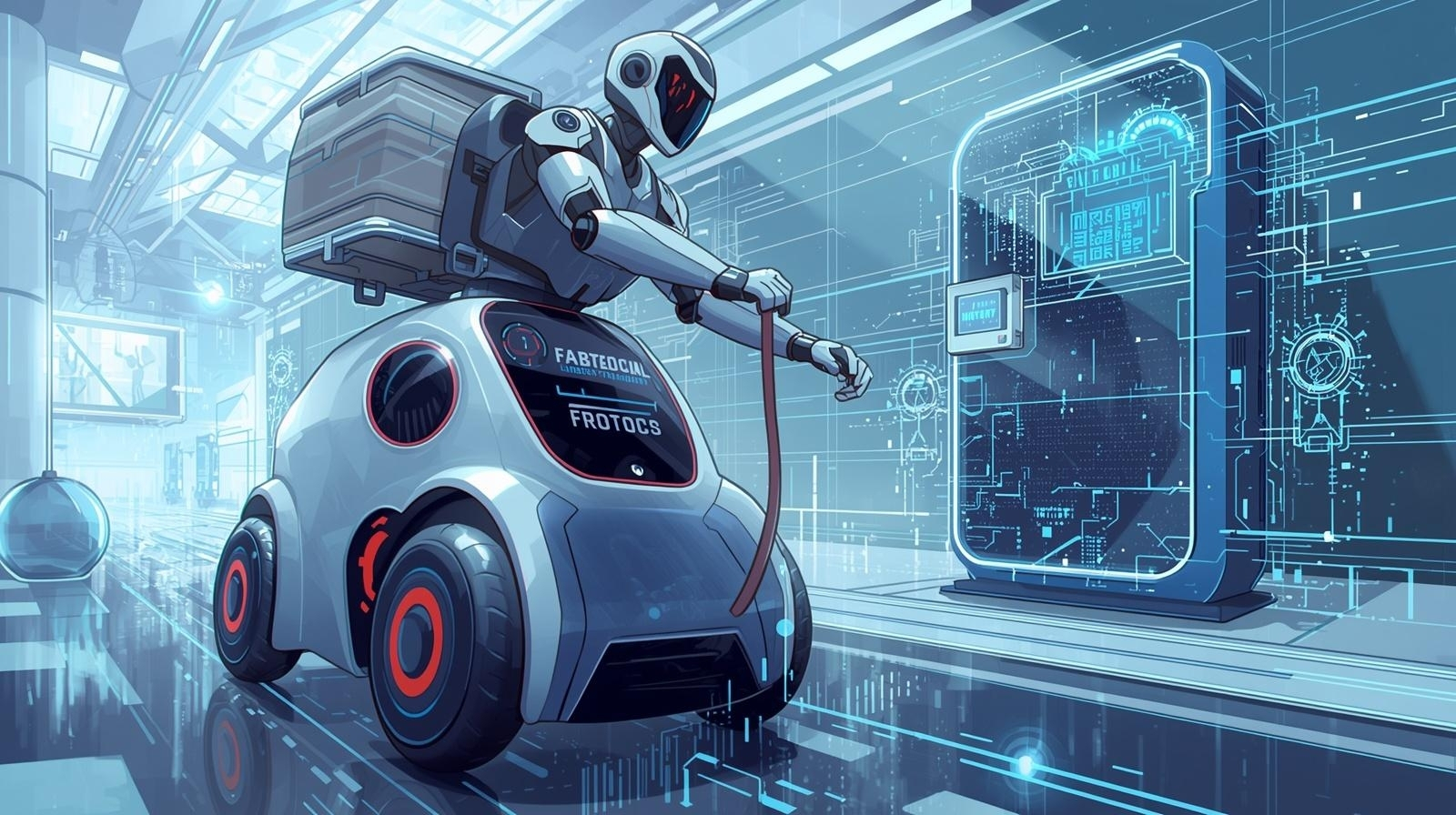
#Fabric seems to lean toward keeping validator communication tight and efficient. Lower latency between nodes helps when machines are waiting for confirmations. But those decisions also shape the network’s structure. Infrastructure tends to cluster around high-performance environments. That can improve responsiveness, yet it also means certain regions or operators carry more influence in the system’s operation. Every performance improvement tends to shift the decentralization balance slightly.
For builders, the interesting part isn’t theory but what they can actually interact with today. Public RPC endpoints, wallet confirmations, how fast explorers reflect new blocks, how indexers keep up during bursts. Those pieces define everyday developer experience. If an RPC endpoint starts timing out during high activity, developers notice instantly. If indexers drift behind the chain tip, applications begin showing stale information. These are small signals, but they reveal a lot about how healthy a network really is.
Bridges and external tools are another place where pressure shows early. Cross-chain transfers depend on multiple systems working together. If the base chain slows even slightly during bursts, relayers start recalculating fees or waiting longer for confirmations. To the user it looks like bridge friction, but underneath it’s usually the network absorbing more work than usual.
What makes Fabric interesting is that its traffic pattern could evolve differently from purely financial networks. Instead of endless token swaps, activity may come from machine coordination—verification tasks finishing, robots submitting telemetry, agents settling micro-payments for completed work. The shape of congestion changes, but the mechanics underneath remain the same. Shared state, limited execution windows, and networking constraints still define the ceiling.
Capacity problems rarely begin inside consensus itself. They start at the edges—RPC nodes struggling to keep up, indexers falling behind, wallets showing transactions that seem stuck even though the chain is still progressing. Those small cracks are the first signs that the system is being pushed harder than usual.
Over the next few weeks there are a few signals I’ll keep watching closely around Fabric Protocol. The first is RPC stability during bursts of activity. If nodes continue responding quickly while automated workloads grow, that’s a strong signal that the networking layer is solid. The second is indexer synchronization. When indexers remain only a few seconds behind the chain tip, it means the data infrastructure around the network is keeping pace. And the third signal is fee behavior under contention. If priority fees rise gradually but smaller transactions still clear reliably, the execution scheduler is doing its job.
Confidence in a chain doesn’t appear overnight. It builds quietly through repeated observation—watching how the network behaves when conditions aren’t perfect. #FABRİC ’s vision of coordinating machines through a decentralized ledger is ambitious, but ambition alone isn’t what matters. What matters is whether the network stays predictable when activity spikes, when agents collide over the same contracts, and when the system is asked to carry real workloads instead of theoretical ones.
If those signals remain steady as usage grows, trust will build naturally. Not because someone claimed the network could scale, but because the chain showed—block by block—that it can handle the kind of messy, unpredictable activity that real systems always produce.
@Fabric Foundation #ROBO $ROBO