
I’m watching the idea of machines working together without a central controller, and I keep thinking how strange it once sounded. Now it feels less strange and more like the next problem engineers are quietly trying to solve. Fabric Protocol sits in that space. It is not loud about what it wants to do. It simply tries to build a system where machines can act, compute, and prove what they did.
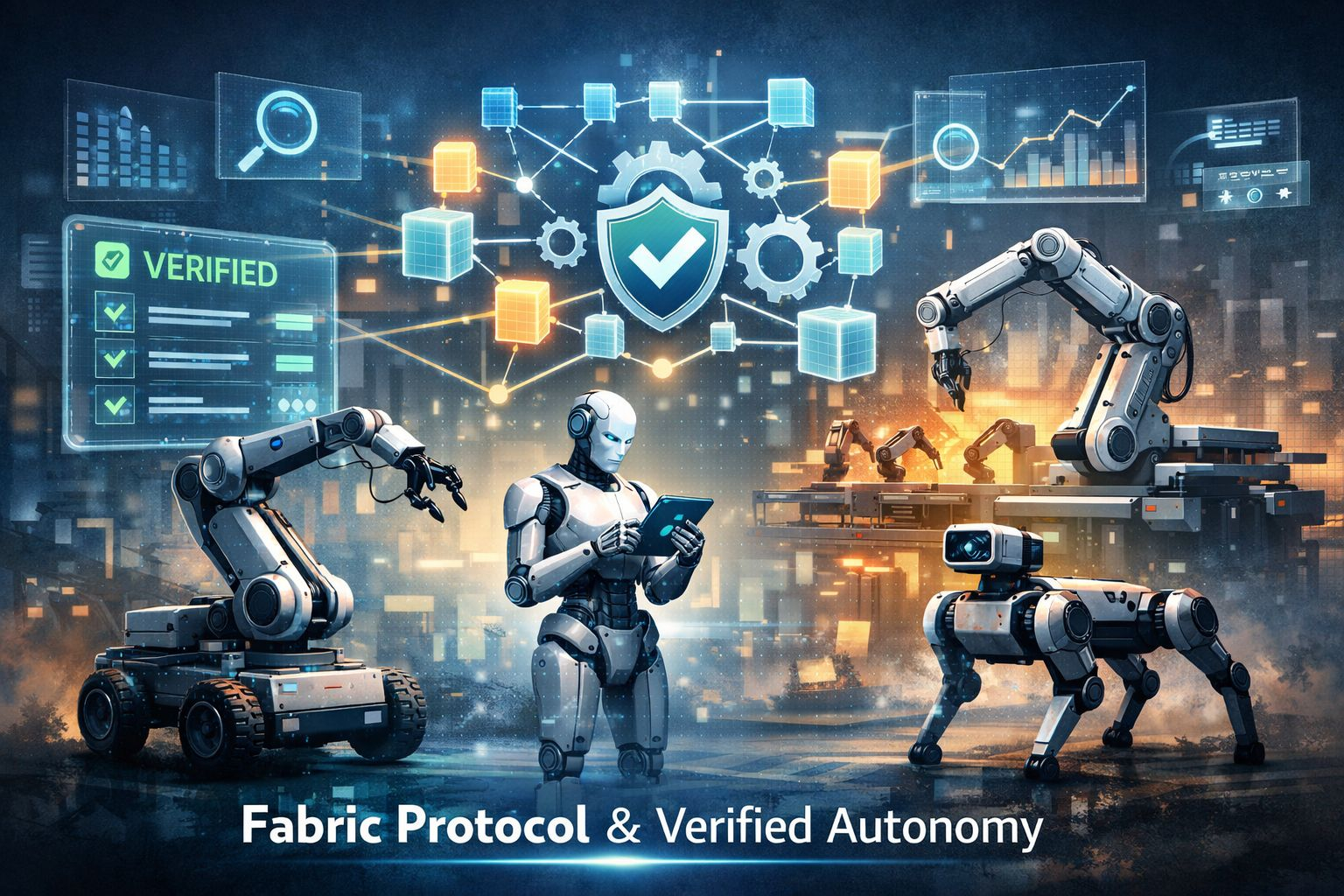
Robots have always been impressive alone. A single machine can follow instructions with incredible accuracy. But the moment many machines need to cooperate, things become complicated. One robot depends on another, data moves through networks, and suddenly the question is no longer speed or intelligence. The question becomes trust.
Fabric approaches this problem in an interesting way. Instead of asking humans to supervise every step, it tries to create a shared system where actions and computations can be verified. A machine performs a task, the result can be checked, and the network records what actually happened. It sounds simple, but the implications are bigger than they first appear.

Still, I find myself thinking about the messy reality outside the diagrams. Robots do not operate in perfect conditions. Sensors drift. Networks slow down. Timing matters. Verification creates trust, but it can also add friction. That quiet tradeoff between reliability and speed is something engineers will always wrestle with.
What keeps my attention is the shift happening underneath all of this. For years we focused on making machines smarter. Now the conversation is slowly moving toward something else: making their actions provable. Intelligence without verification eventually breaks down when systems grow large
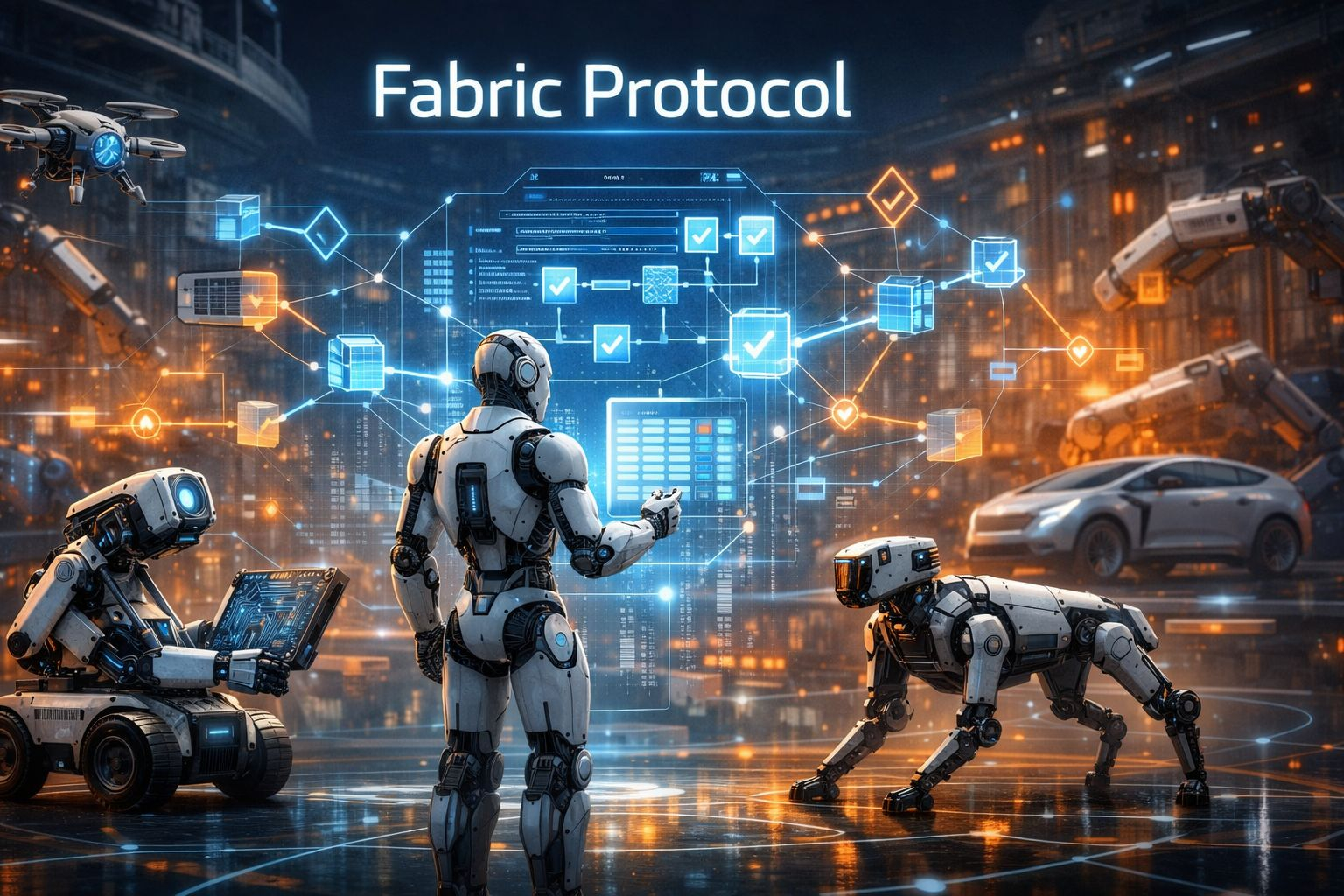
Maybe Fabric becomes an important piece of infrastructure. Maybe it struggles before the idea finds its right form. Technologies like this rarely move in straight lines. They evolve slowly, shaped by real-world pressure and adoption.
But the question it raises stays in my mind. If machines are going to coordinate, learn, and make decisions together, we will eventually need systems that allow those actions to be trusted. Not because someone says they are correct, but because the system itself can show the proo