Lately there has been a lot of talk about AI agents and robots becoming part of everyday life. You already see robots working in warehouses, delivering packages, helping in factories and even assisting in hospitals. But here is the thing most people don’t notice. Almost all of these robots live inside closed systems owned by one company. They cannot easily interact with other robots from different networks.
This is where Fabric Protocol comes in with a pretty interesting idea.
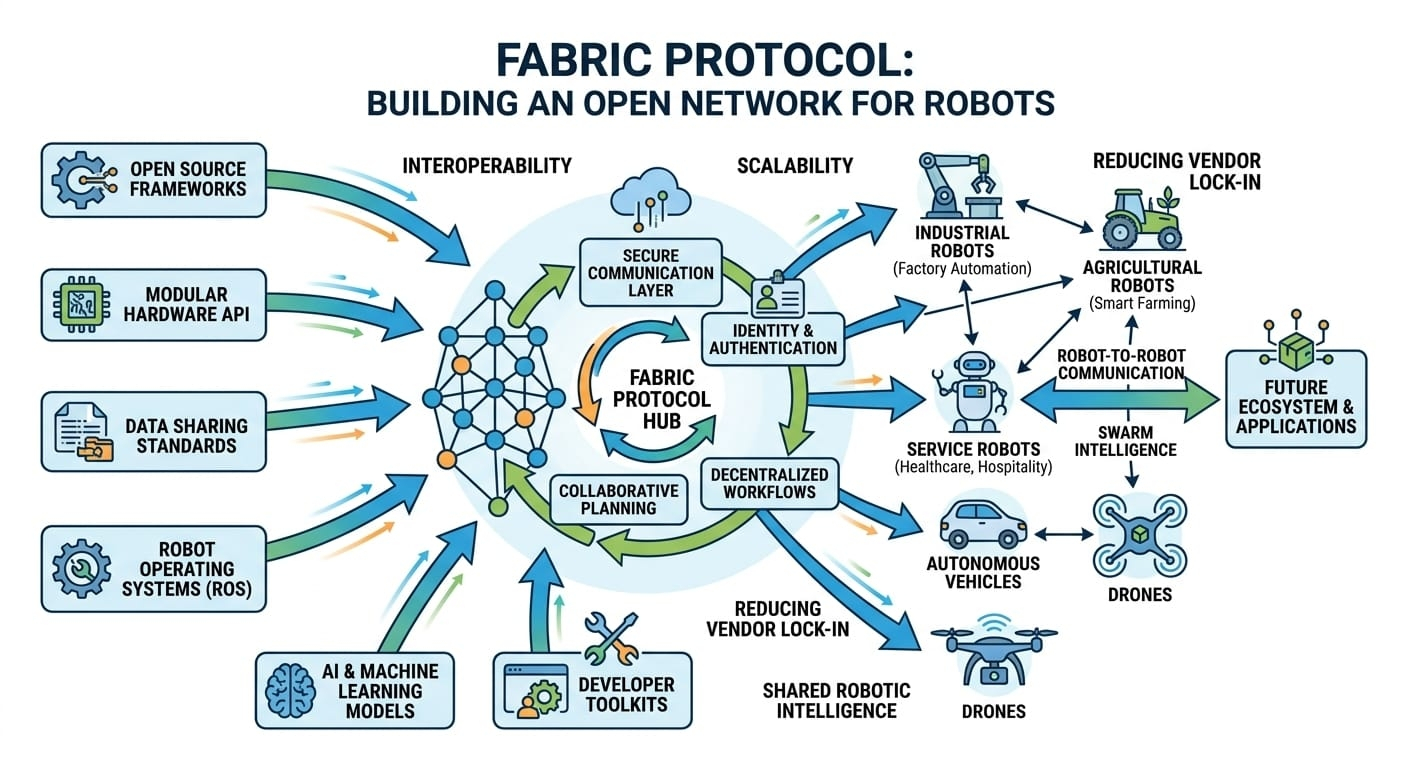
Fabric Protocol is trying to build an open global network where robots, AI agents and humans can interact in a shared ecosystem. Think of it like the internet but designed for machines. Instead of every robot working alone inside a private company system, they could connect to a decentralized network where they can prove their identity, perform tasks and even earn value.
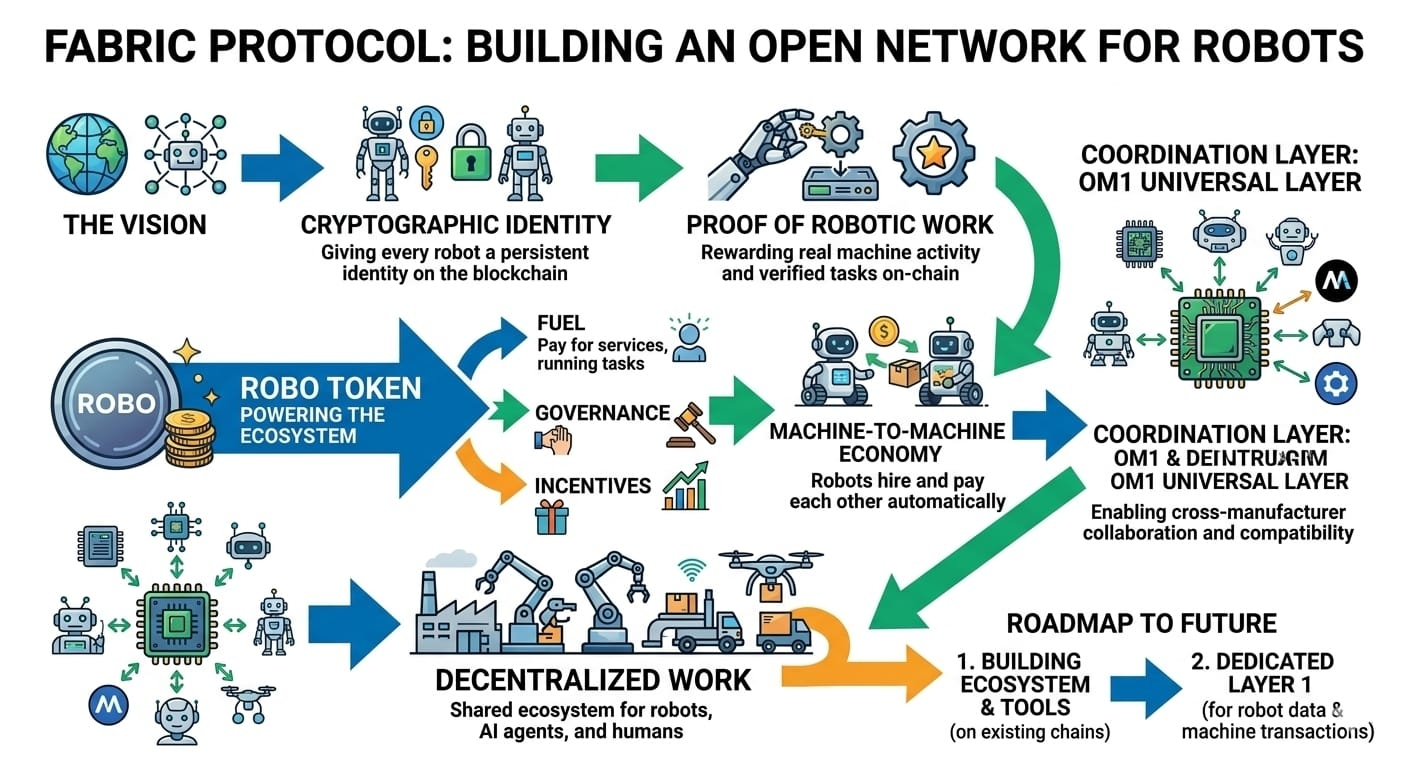
The core idea is simple. If robots are going to work in the real world they need trust and identity. A machine needs to prove it is the same machine over time. Not just a random device with a temporary ID. Fabric tries to solve this by giving every robot a cryptographic identity on the network. That identity keeps track of what the robot has done, who owns it and what tasks it has completed.
Once robots have identity the next step is coordination. Fabric provides a system where robots from different manufacturers can communicate and work together. Instead of separate fleets owned by separate companies you could see machines collaborating across a shared network.
Behind the scenes the technology mixes robotics infrastructure with blockchain systems. The protocol uses an operating environment called OM1 which acts like a universal layer for robots. It helps different machines run compatible applications and connect to the Fabric network without needing completely different software for every device.
Another interesting concept in this system is something called Proof of Robotic Work. Instead of rewarding people just for holding tokens, the idea is to reward real activity done by machines. If a robot completes a verified task that work can be recorded and rewarded on chain. In theory it connects digital incentives with real world work.
The token that powers this whole system is called ROBO. It acts as the fuel of the network. Robots or operators can use it to pay for services, register devices, run tasks or interact with other machines. It also works as a governance token so holders can vote on upgrades and decisions about how the protocol evolves.
One of the bigger ideas behind Fabric is the machine to machine economy. Imagine a robot needing a repair or extra help with a task. In this type of system the robot could actually hire another robot or service automatically and pay for it using tokens. Machines coordinating and paying each other without humans having to step in every minute.
If that sounds futuristic it probably is but the direction makes sense when you look at how fast robotics and AI are growing.
The project itself is supported by the Fabric Foundation along with the robotics infrastructure company OpenMind. OpenMind focuses on the technical side especially the systems that connect physical robots to the blockchain layer.
There is also serious funding behind it. In 2025 OpenMind raised around twenty million dollars from major crypto investors including Pantera Capital Coinbase Ventures Digital Currency Group Ribbit Capital and several others. When that level of capital shows up it usually means people believe the idea has long term potential.
As for the token itself the total supply of ROBO is fixed at ten billion tokens. A big portion is reserved for ecosystem growth and community incentives while other parts go to investors team members and foundation reserves. Most of those allocations unlock slowly over time which is meant to keep the project focused on long term development instead of quick hype.
ROBO started gaining attention after appearing on several exchanges including Binance Alpha Coinbase and a few others. Trading activity picked up quickly especially because anything connected to AI robotics or automation is getting a lot of attention in the crypto space right now.
But like most early stage crypto projects it is still very experimental. The idea is big but real adoption will take time. Building a network where robots from different manufacturers actually cooperate is not something that happens overnight.
The roadmap shows the team first focusing on building the ecosystem and tools on existing blockchain infrastructure. Later the plan is to move toward a dedicated Layer 1 chain optimized for robotic data and machine transactions. That would make the network more efficient when large numbers of machines start interacting.
Looking at the bigger picture Fabric Protocol sits at the intersection of three huge trends. Artificial intelligence robotics and blockchain networks. Each of those industries is already massive on its own.
If they actually manage to connect them in a meaningful way the result could be something completely new. A decentralized economy where machines can prove who they are perform work and exchange value.
It still sounds like science fiction to some people. But a few years ago AI writing code or generating images also sounded like science fiction.
Now it is normal.
Fabric Protocol is basically betting that robots will need their own economic infrastructure one day. And if that future really happens networks like this could end up becoming the backbone of the robot economy.