
When we talk about a future robot economy, many people tend to imagine machines simply replacing human labor. But if we look more closely, such an economy would actually be the result of many different participants operating together within a shared system. This is the kind of vision that platforms like Fabric Protocol are trying to explore: not just robots themselves, but an entire labor market where both robots and humans play a role.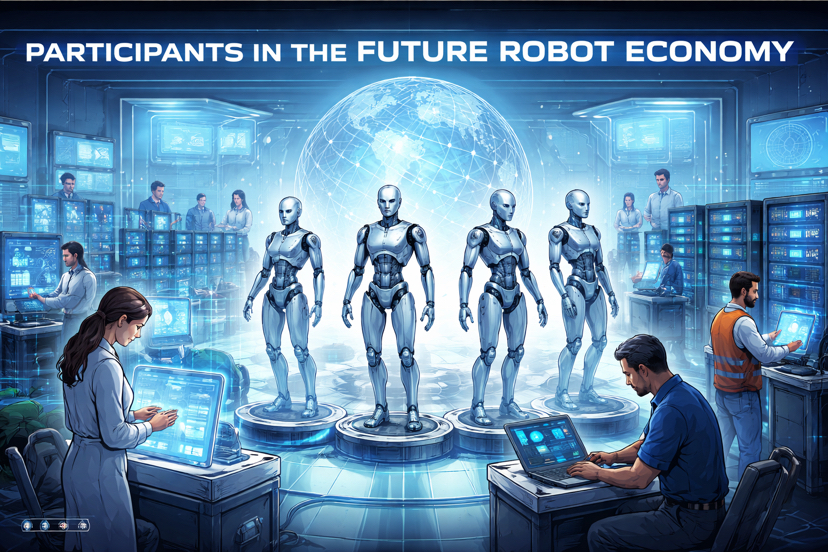
In this system, robots may gradually become part of a global workforce. They could transport goods, maintain infrastructure, manage farms, or assist with dangerous and physically demanding tasks. But behind every robot is more than just hardware and artificial intelligence. There is also a network of people and systems contributing to the robot’s ability to function effectively.
One of the most important groups consists of those who provide data and training skills. Robots do not naturally know how to perform tasks. They must be trained through datasets, models, and real-world experience. In an open network, individuals or organizations that contribute training data could be rewarded through the system’s token, such as $ROBO
Another group includes operators of computational infrastructure. Processing data, training models, and coordinating robots in real time requires a significant amount of computing power. Participants who run nodes within the network can provide that computational capacity and receive economic rewards from the system. This creates a foundation where AI infrastructure can be built in a decentralized way and scaled globally.
A third essential component is robot and software developers. These are the people who create new skills for robots, ranging from climbing large construction structures and assembling industrial equipment to caring for crops in agriculture. Once a robot learns a new capability, that skill can be shared across the network. Over time, the entire robot workforce could improve collectively as each incremental innovation spreads throughout the system.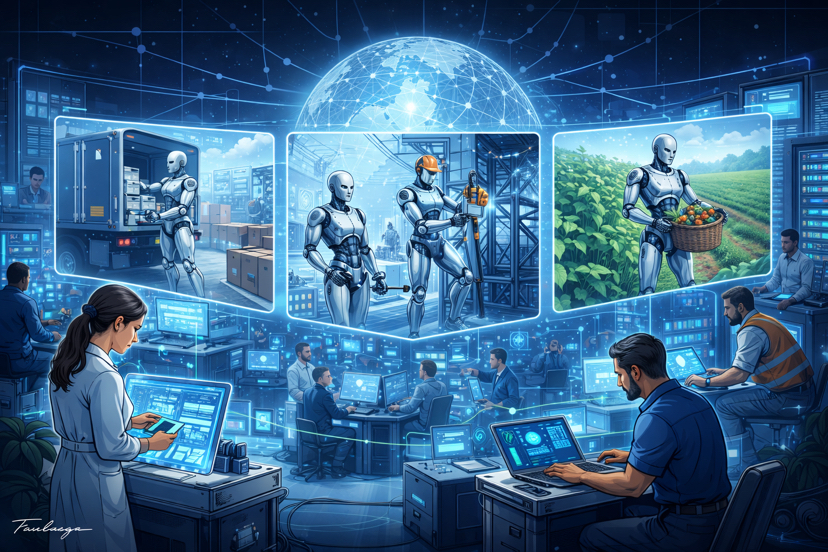
Imagine a simple scenario in everyday life. A shop owner needs to repair the electrical system in their warehouse while also arranging for new inventory to be delivered from a distribution center. Through an application connected to the robot network, two robots are dispatched: one responsible for transporting goods and another performing the technical repair. Once the work is completed, the shop owner pays directly using a digital currency within the network that coordinates the robot economy. The reward is then distributed among several participants: the robot operator, the skill developer, and the nodes that provided computational support.
In this picture, robots are no longer isolated machines. They become economic agents capable of receiving tasks, sharing skills, and participating in a global labor market. Humans, meanwhile, are not removed from the system. Instead, they become the trainers, builders, and operators who sustain the robot economy.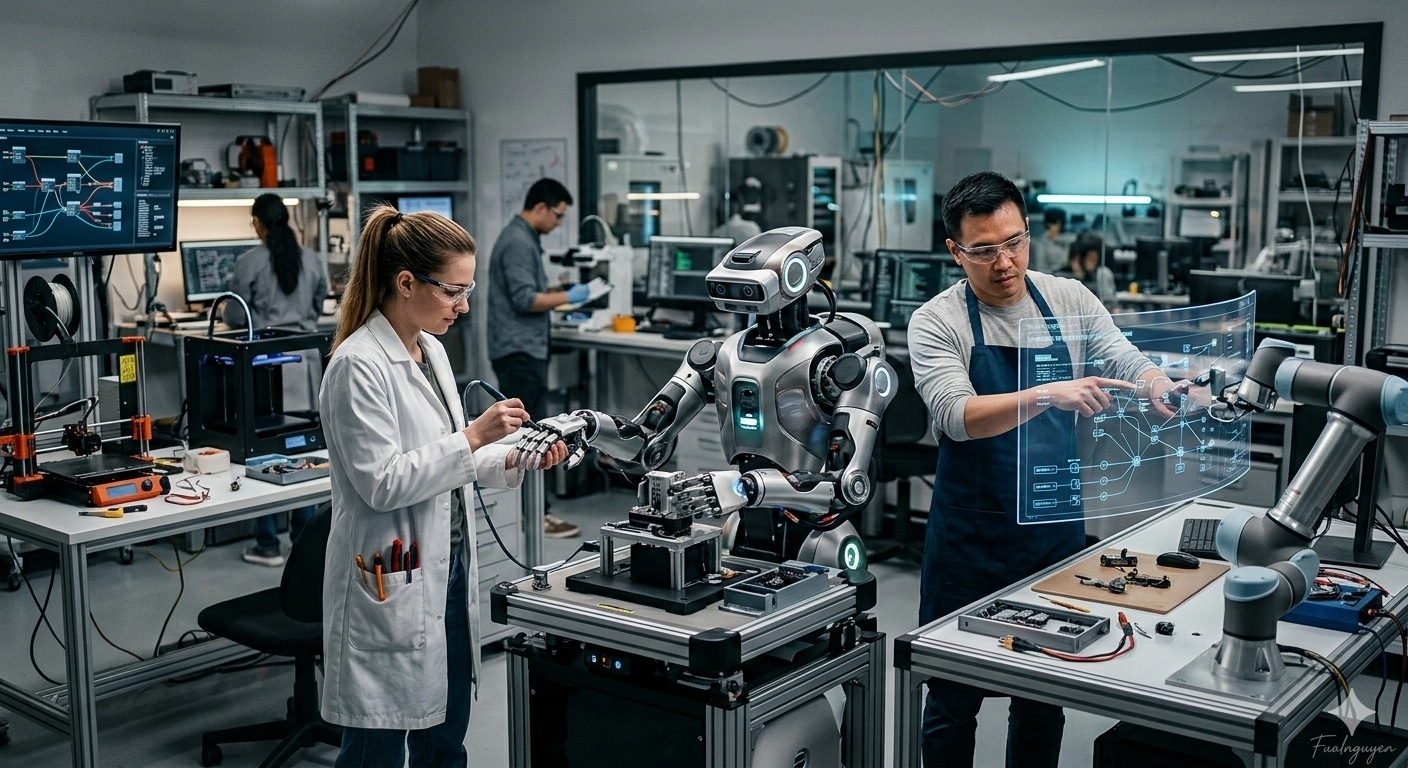
If this vision eventually becomes reality, the robot economy may not simply represent automation. It could instead resemble a network where humans and machines continuously contribute value, share knowledge, and participate together in a transparent economic system supported by protocols like Fabric.
In the end, the robot economy might look similar to today’s digital economies - not a world run entirely by machines, but a network where human knowledge and machine capability constantly reinforce one another.
If you had the opportunity to participate in such an ecosystem, which role would you choose: training robots, running nodes, or building new robot skills? It could be a surprisingly interesting choice 👍🏼