
As we move deeper into 2026, the initial hype surrounding AI has shifted toward a more critical question: How can we trust what a machine tells us? While Large Language Models have become incredibly powerful, they are still prone to "hallucinations"—confidently stating facts that are simply untrue. This is the exact problem that @Mira - Trust Layer of AI is solving.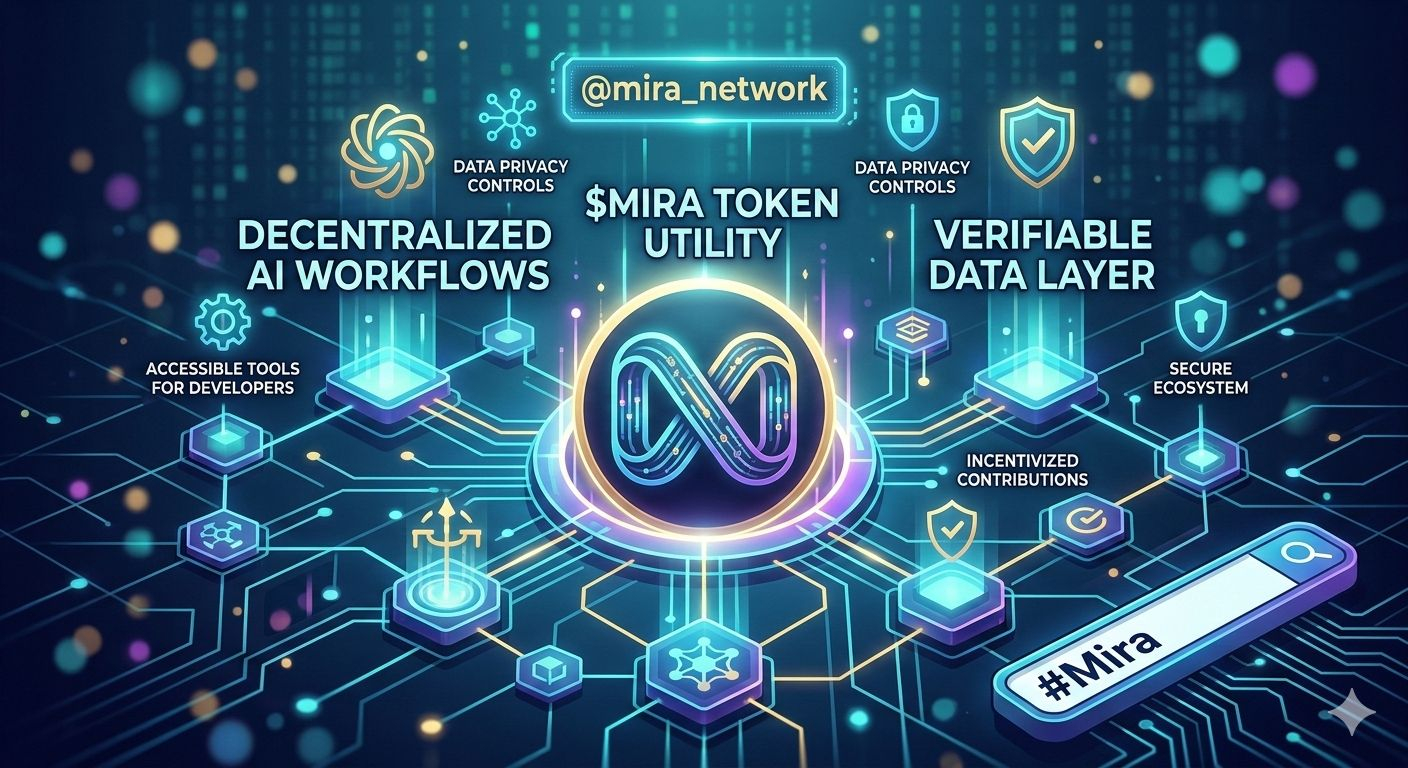
The Architecture of Trust
What sets mira_network apart is its decentralized approach to verification. Instead of relying on a single centralized entity to check AI accuracy, Mira breaks down AI outputs into "atomic claims." These claims are then distributed across a global network of independent verifier nodes.
Through a sophisticated consensus mechanism, the network validates these claims, achieving an accuracy rate of over 95%. This turns probabilistic AI guesses into verifiable, on-chain data. For industries like DeFi, healthcare, and legal services, this "Trust Layer" isn't just a luxury—it's a requirement.
The Role of the $MIRA Token
The $MIRA token serves as the economic engine driving this entire ecosystem. It isn't just a speculative asset; it has three core functions:
* Security & Staking: Validators must stake mira to participate in the network. This ensures they have "skin in the game," with slashing mechanisms in place to penalize dishonest behavior.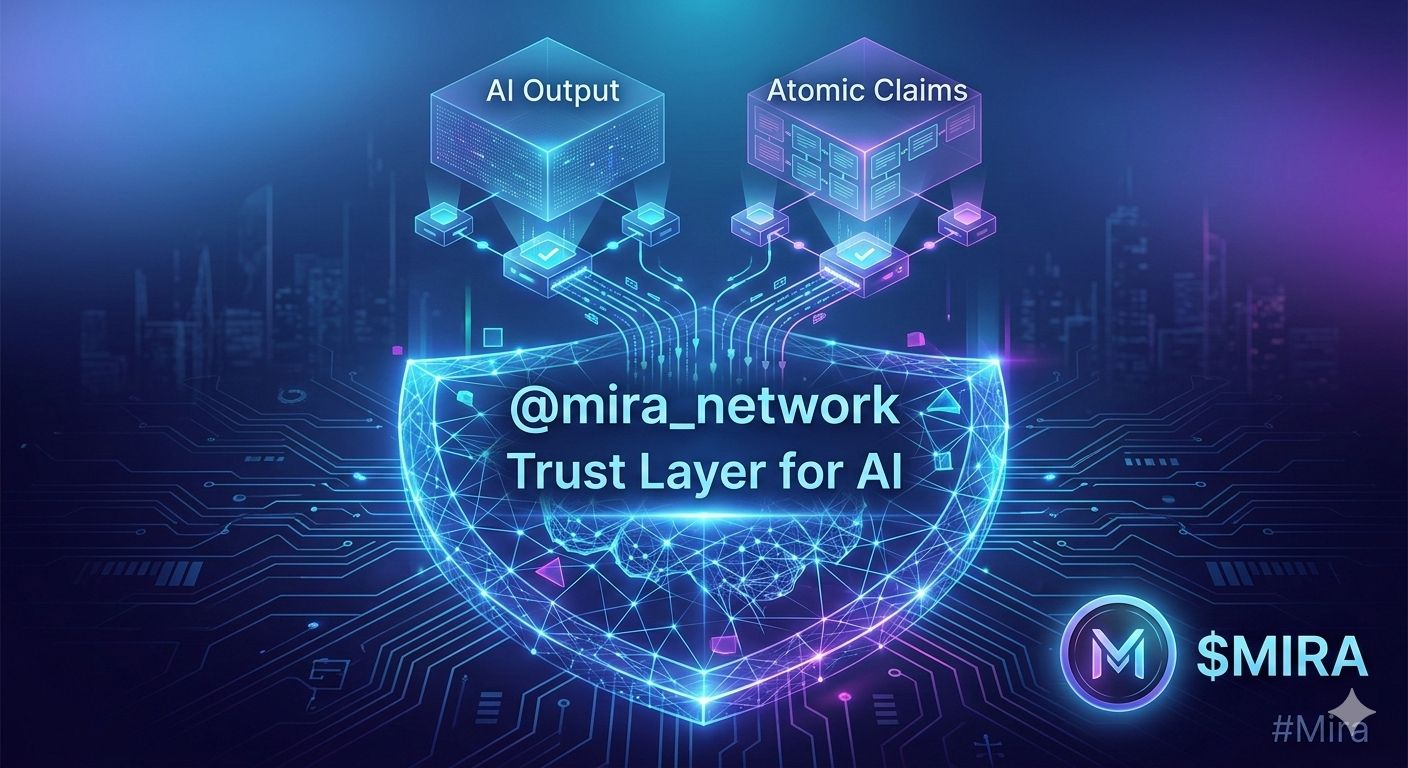
* Payment Utility: Developers and enterprises pay fees in mira to access the Mira Verification API, creating a constant demand loop as AI adoption scales.
* Governance: Token holders help shape the future of the protocol, from technical upgrades to ecosystem grant distributions.
Why the Future is Verifiable
With a fixed supply of 1 billion tokens and a growing list of integrations (like the Klok app), Mira is positioning itself as the foundational infrastructure for the next generation of autonomous AI agents. As we witness the 2026 AI boom, the projects that provide the infrastructure for trust will be the ones that endure.