
🔥 U.S. Deploys Laser Weapon in Combat for the First Time
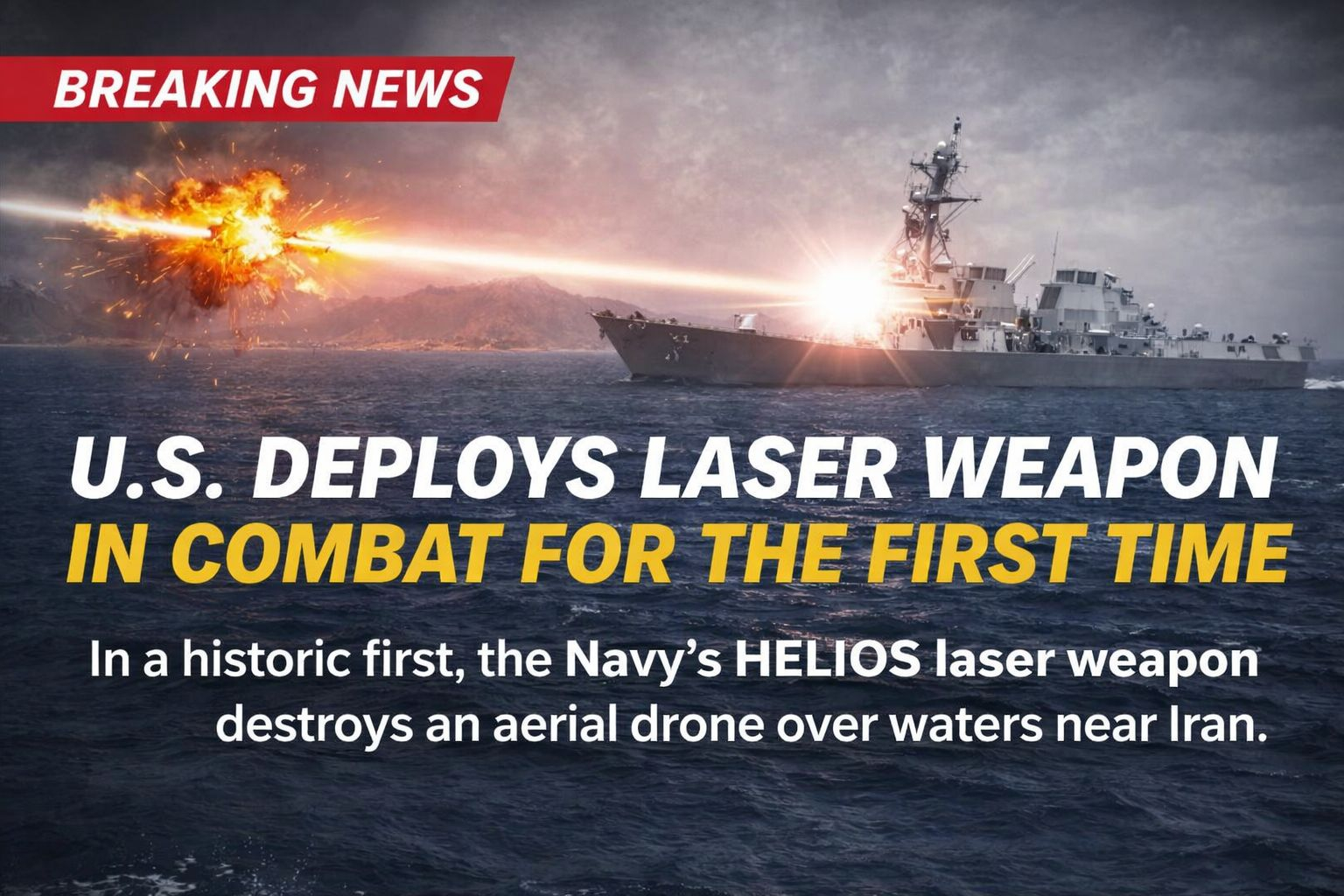
In a development that could reshape modern warfare, the United States Navy has reportedly deployed a powerful laser weapon system in active combat for the first time. The weapon, known as HELIOS laser weapon system (High Energy Laser with Integrated Optical-dazzler and Surveillance), was seen in footage released by United States Central Command operating aboard a U.S. destroyer in waters near Iran.
The footage appears to show the laser weapon firing concentrated beams of light to intercept and destroy aerial drones mid-flight marking what many analysts describe as a historic milestone in military technology.
## The Strategic Problem
For years, low-cost drones have created a major challenge for advanced militaries. Nations and armed groups have increasingly relied on inexpensive attack drones, including the widely discussed Shahed drone family developed in Iran.
The economic imbalance has been stark:
* A single Shahed drone can cost roughly $20,000–$30,000
* A Patriot missile system interceptor can cost $3–4 million
* A Terminal High Altitude Area Defense (THAAD) interceptor may cost around $10 million
This meant that defenders often spent millions to stop attacks that cost only thousands to launch.
In several regional conflicts, including attacks targeting Gulf nations such as the United Arab Emirates, hundreds of drones and missiles have been intercepted — costing billions of dollars in defensive systems.
Military analysts often described this imbalance as “winning the math”: force an enemy to spend far more money defending than the attacker spends launching the attack.
## The Laser Solution
The HELIOS system could fundamentally change that equation.
Unlike missile defense systems, HELIOS uses directed energy rather than physical interceptors. The system generates a focused beam of light capable of burning through drone components or disabling their sensors.
Key advantages include:
* Extremely low cost per shot — essentially the price of electricity
* No missile reloads required
* Near-instant engagement speed (light speed)
* Potentially unlimited firing capacity
Because the weapon does not rely on physical ammunition, it eliminates the logistical challenges of reloading missile systems or transporting additional interceptors during extended engagements.
## A Potential Turning Point in Drone Warfare
If directed-energy weapons like HELIOS prove reliable at large scale, the implications could be significant.
Drone-based attack strategies have largely depended on overwhelming defenses through large numbers of cheap systems. But a laser weapon capable of firing repeatedly at minimal cost could reverse that advantage.
Instead of defenders spending millions per interception, the cost could fall dramatically — potentially to only a few dollars or less per shot.
That shift could force militaries around the world to rethink drone warfare strategies that rely on mass-produced low-cost systems.
## The Future of Directed-Energy Weapons
While HELIOS has been tested for several years, this reported combat deployment represents a major step forward in operational use.
Defense experts say directed-energy weapons could eventually be used not only against drones but also against:
* missiles
* surveillance equipment
* small boats
* electronic sensors
However, questions remain about how effective laser weapons will be in bad weather, long-distance engagements, or large-scale conflicts.
## A New Era of Warfare?
For decades, directed-energy weapons existed largely in research labs and experimental programs. If HELIOS performs successfully in real combat conditions, it could signal the beginning of a new era in military technology.
The introduction of practical battlefield laser systems may ultimately redefine how air defenses work — and how future wars are fought.

🌍 As militaries around the world watch closely, one thing is clear: the age of laser warfare may have just begun.
👍👍👍 Please follow me, repost, like this post and comment. If you follow me then you will get back 💯% 👍👍👍