
While thinking about the future of robotics, I kept coming back to work and discussions around @Fabric Foundation and the ideas explored by @Fabric Foundation . It made me realize that one of the biggest limitations in robotics today is not mechanical capability but economic infrastructure.
$ROBO #ROBO
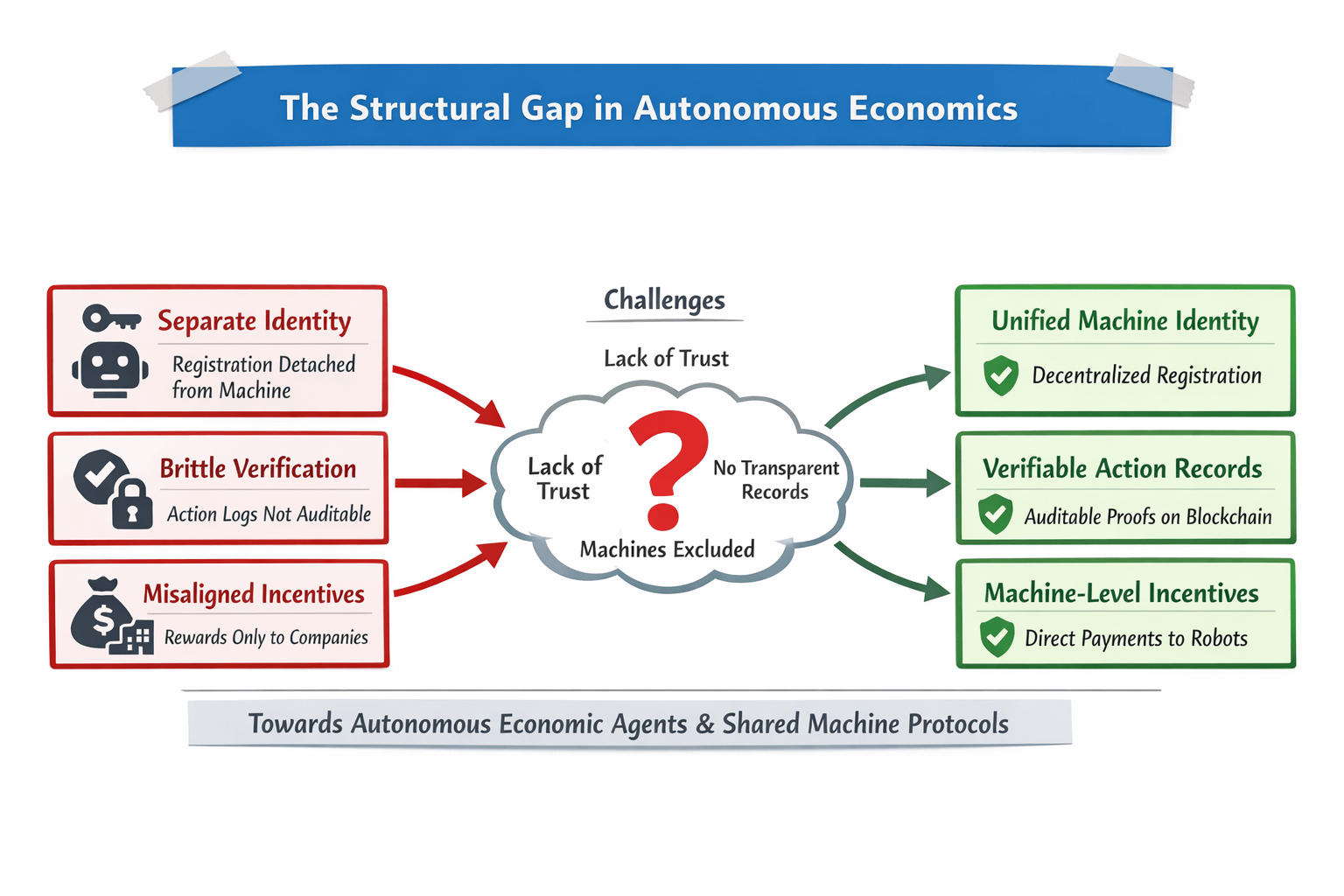
Autonomous robots perform tasks reliably in many settings yet they lack a native economic identity. Payments flow to companies or operators instead of to the machines that carried out the work. Action records are often trapped in private logs that are not independently auditable. There is no shared coordination layer that allows machines to register a public truth about what they did and when they did it. This structural gap matters for accountability safety and equitable value distribution.
The problem has several facets. First registration and identity are separate from the physical machine. That separation leaves a gap when coordination or trust is needed across organizations. Second verification of actions is brittle. A single operator can claim an outcome and that claim is hard to test without independent evidence. Third incentives are misaligned. If the economic reward is only payable to firms then there is little basis for machines to participate as autonomous economic agents or for communities to build shared protocols that rely on machine level staking or reputation.
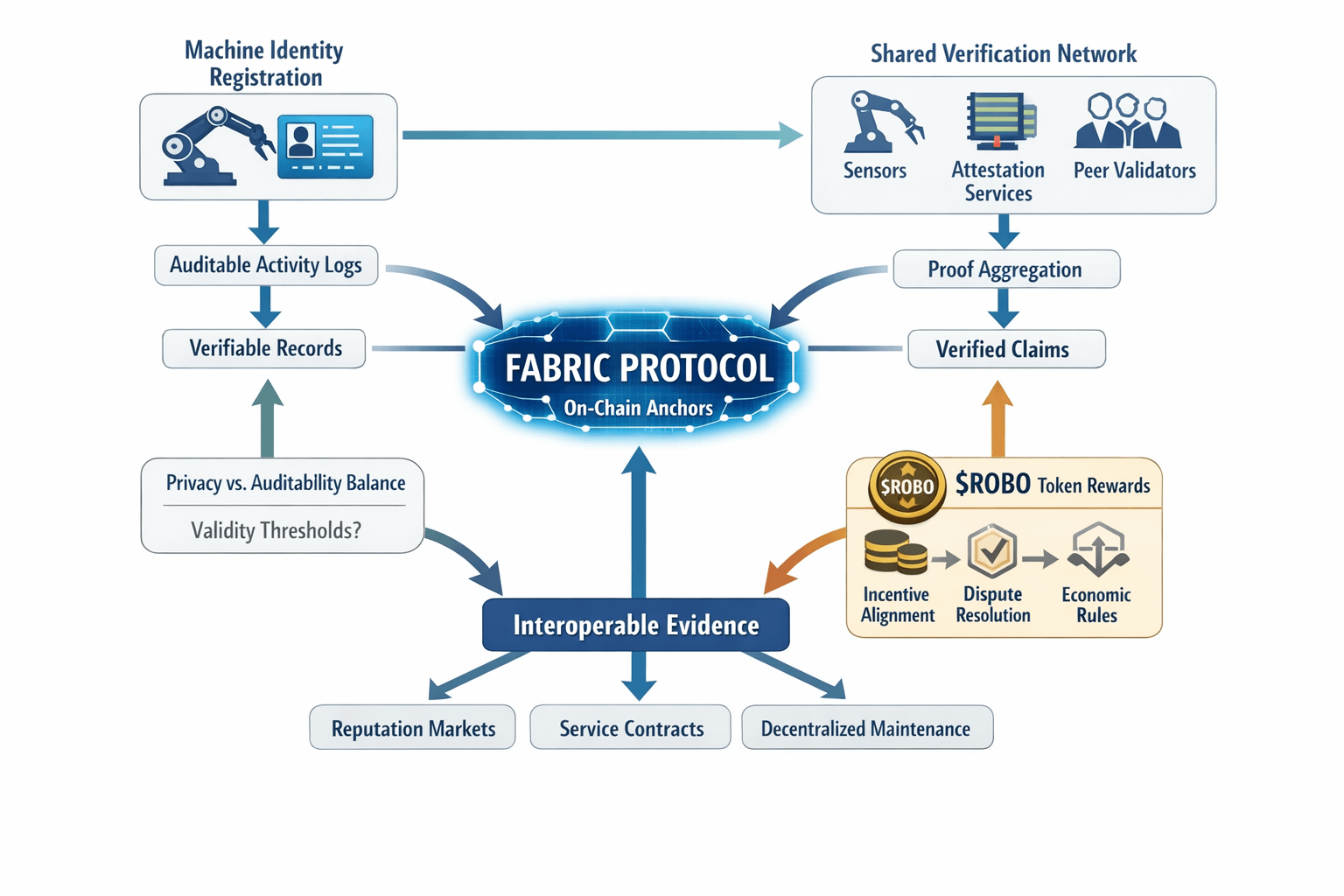
Fabric Protocol addresses these issues as a structural layer. The protocol allows cryptographic identities to be registered on chain for machines. Those identities can be used to anchor auditable activity logs so that actions generate verifiable records. A shared verification network can aggregate proofs from sensors attestation services and peer validators to move claims from private assertions into verifiable entries. A token based coordination mechanism using $ROBO can align incentives across operators validators and machine owners so that verification work is rewarded and so that disputed claims can be remedied through predefined economic rules.
Technically the approach is not a panacea. On chain anchors do not eliminate sensor error and they raise new governance questions about who decides validity thresholds. Privacy must be balanced against auditability. Yet building a common infrastructure offers a pragmatic way to shift from siloed claims to interoperable evidence. It also opens new design spaces for machine level reputation markets service level contracts and decentralized maintenance economies.
If autonomous machines are to become economic actors then the missing layer is not just technical. It is institutional. The choices made now about identity verification incentives and data governance will shape whether robot economies are transparent fair and resilient. #ROBO