


We talk a lot about AI and robots these days. People get excited about automation, smarter machines, and how work might change. But one big question rarely comes up.If robots start handling real tasks in the real world, how do we trust them?Who checks what they actually did? Who really owns them? How do we keep track of their past performance?Fabric Protocol aims to fix exactly that.Fabric is creating a blockchain network made for robots and AI systems. The core idea is straightforward.
Every robot on the network gets its own on-chain identity. Picture it as a digital passport stored on the blockchain.This identity logs key details like the owner, completed tasks, and reliability over time.Instead of relying on the company running the robot, anyone can check the robot's history directly on the chain.Did it finish the job? Did it deliver accurate data? Has it performed well in the past?Everything stays transparent and verifiable.This matters a lot as machines take on more everyday work.Today, most robotic systems stay locked in centralized setups. Data lives on private servers, and outsiders see almost nothing.Fabric changes that by building an open network.
Robots, developers, and operators interact through shared blockchain tools.A cool part is how rewards work. Fabric uses a system that pays for actual robotic work.Rather than rewarding people just for holding tokens or staking, the network gives out rewards based on verified tasks robots complete.If a robot finishes a job like gathering data, making a delivery, or providing a service, that effort gets checked and recorded. Then rewards flow through the system.This shifts blockchain incentives toward real activity instead of speculation.The token that runs everything is called ROBO.ROBO handles network fees for tasks, identity checks, transactions, and governance.
Developers building robot apps use it to join and interact. Operators rely on it to register and manage machines.Technically, Fabric started on Base, Coinbase's Ethereum Layer-2 chain. That keeps things fast and low-cost during early growth.The long-term plan includes moving to a custom blockchain optimized for machine interactions.As more robots join, possibly thousands or millions, the system needs to manage huge amounts of data and transactions smoothly.In the real world, this opens practical possibilities.Think of delivery robots grabbing jobs from a decentralized marketplace. Once done, payment hits instantly on-chain.Or robots scanning areas for mapping, research, city planning, or tracking the environment. Their contributions get verified and paid.Service robots in warehouses, hospitals, or hotels could run with clear performance records anyone can see.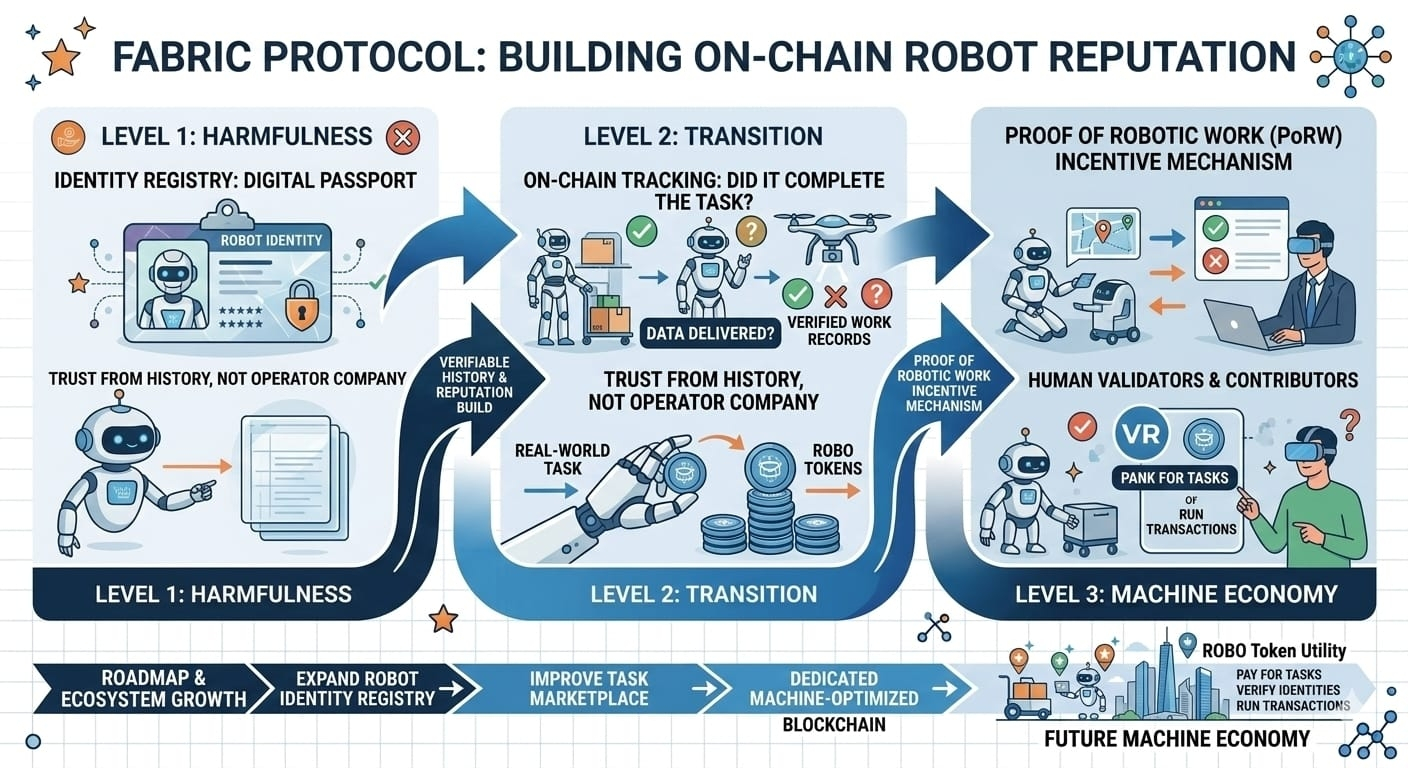
Humans stay involved too. People can validate tasks, add data, or help refine the AI guiding the robots.Early tests already include many robots and a big group of human helpers testing and checking the setup.The network works as a bridge between people, machines, and AI.Of course, this project is still young. Building the full thing will take years.The roadmap includes growing the robot identity system, building a better task marketplace, and launching that dedicated blockchain for robot coordination.The idea stands out though.Blockchain folks have long discussed decentralized finance, storage, and social platforms.Fabric pushes into new territory: a decentralized robot economy.A setup where machines do more than follow orders. They join markets, earn rewards, build reputations, finish jobs, and use decentralized tools.It feels futuristic, but with automation speeding up, something like this could turn essential.When robots handle serious physical work, trust is the foundation.Fabric's main bet is clear.Trust should not depend on companies alone.It should come from clear, on-chain records everyone can check.Every robot gets an identity.Every task leaves a trace.