

The first time I really thought about this problem wasn’t while reading about robotics or AI. It was while watching how automated systems interact inside modern infrastructure.
Machines today can already perform complex tasks on their own. Autonomous systems monitor networks, process large volumes of data, and coordinate operations across logistics and computing environments. In many cases, they operate faster and more consistently than humans.
But something interesting happens the moment these machines need to interact with other systems.
They may be intelligent enough to complete their own tasks, yet the system around them still struggles with a simple question:
Can this machine be trusted?
When Machines Start Working With Other Machines
Inside a single organization, machines usually operate within controlled environments. Permissions are managed internally. Identity is tied to internal infrastructure. Trust is assumed because the system is closed.
But the picture changes once machines start interacting across different networks.
Imagine autonomous delivery systems accessing charging stations owned by other companies. Or software agents requesting computing resources from independent providers. Or infrastructure monitoring systems exchanging data across networks they do not directly control.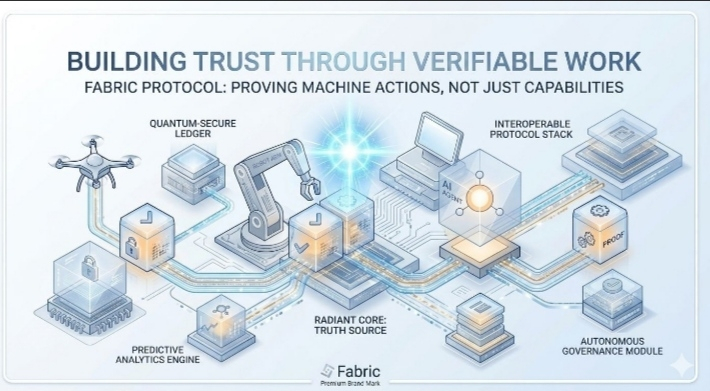
In those situations, machines are no longer operating inside a single trusted environment.
They are interacting with other machines they may have never encountered before.
And suddenly the question of trust becomes important.
Why Identity Alone Is Not Enough
One obvious solution is identity. If machines can have verifiable digital identities, systems can at least confirm who or what they are interacting with.
But identity only answers part of the problem.
Knowing who a machine is does not necessarily tell you how reliable it has been in the past.
Has the system behaved honestly?
Has it completed tasks correctly?
Has it interacted safely with other infrastructure?
These questions start to resemble something very familiar in human systems.
They resemble reputation.
Reputation in a Machine Economy
Human economies rely heavily on reputation.
Service providers build trust over time. Financial institutions assess reliability through historical behavior. Even online platforms use reputation systems to determine which participants are trustworthy.
If autonomous systems begin interacting economically with each other, something similar may emerge for machines.
Instead of trusting a machine simply because it exists, networks may start evaluating how that machine has behaved historically.
Did it complete transactions accurately?
Did it follow protocol rules?
Did it cooperate reliably with other participants?
Over time, those signals could form a reputation layer that helps machines evaluate each other before interacting.
Infrastructure for Machine Reputation
This is where infrastructure designed for machine identity becomes important.
If machines are going to build reputation over time, they first need persistent identities that allow their behavior to be tracked across interactions.
Without stable identity, reputation becomes impossible.
Every interaction would appear to come from a new participant.
Protocols exploring machine identity, like the infrastructure being developed around ROBO and the Fabric Protocol, begin to create the foundation for something like this.
If machines can hold verifiable identities within digital networks, those identities could eventually accumulate history.
And history is what allows reputation to form.
The Trade-Offs Behind Reputation Systems
Of course, reputation systems introduce their own challenges.
Machines could attempt to manipulate reputation signals. Bad actors might try to spoof identity or simulate trustworthy behavior. Networks would need mechanisms to prevent reputation from being gamed.
There is also the question of governance.
Who determines how reputation scores are calculated? How quickly should reputation change after mistakes or failures?
These questions are not trivial.
But they are the kinds of challenges that tend to appear whenever new economic systems begin forming.
A Quiet Shift in Machine Coordination
What makes this development interesting is how quietly it is happening.
Autonomous systems are already interacting with digital infrastructure every day. Software agents coordinate workflows, manage computing resources, and execute tasks without direct human supervision.
As these systems expand, the need for trust between machines will likely grow.
Identity helps machines recognize each other.
But reputation may help them decide whether they should cooperate.
If the robot economy continues developing, reputation systems might eventually become as important to machines as credit scores are to human financial systems.
And once machines begin evaluating each other through reputation signals, the infrastructure supporting those identities could become one of the most important layers in the emerging machine economy.