

Imagine a world where robots aren’t just tools, but teammates—collaborators that learn, grow, and even contribute to the economy alongside us. That’s the kind of future Fabric Protocol is quietly building. It’s not about flashy gadgets or sci‑fi promises; it’s about creating the invisible infrastructure that lets intelligent machines and humans work together in a way that feels natural, safe, and fair. At its core, Fabric is a global open network, supported by the non‑profit Fabric Foundation, designed to help people build, govern, and evolve general‑purpose robots using verifiable computing and agent‑native infrastructure.
One of the things that stands out is how the protocol treats robots less like appliances and more like participants. Instead of locking them into closed ecosystems, Fabric gives them a kind of digital identity—on‑chain, transparent, and traceable. This doesn’t mean robots are suddenly running the world; it means their actions can be checked, their decisions can be understood, and their contributions can be recognized. When you know that a robot’s behavior is backed by cryptographic proofs recorded on a public ledger, it becomes easier to trust it with real‑world tasks, whether that’s handling deliveries, assisting in caregiving, or supporting disaster response.
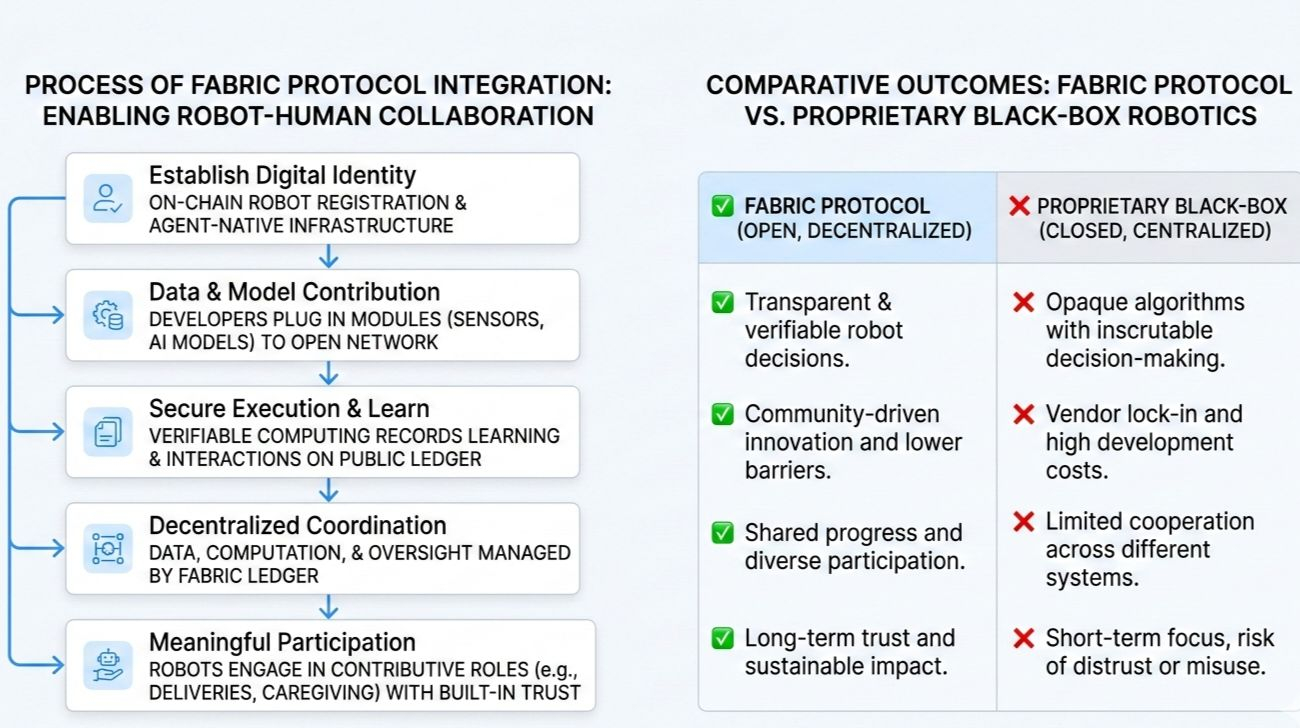
The role of the Fabric Foundation here is subtle but powerful. It’s not trying to control every detail of the network; instead, it’s focused on stewardship—shaping governance, setting standards, and encouraging collaboration. It works with researchers, developers, and even policymakers to make sure the technology evolves in ways that are inclusive and aligned with human values. That kind of long‑term thinking is refreshing in a space where many projects chase short‑term hype rather than sustainable impact.
What really strikes me is how Fabric turns coordination into a shared responsibility. Instead of one big company or institution deciding how robots should behave, the protocol coordinates data, computation, and oversight through a decentralized public ledger. Developers can plug in different modules—sensors, AI models, safety filters—knowing that the system is designed to keep things running smoothly across different applications. It’s like having a common language for robots and the humans who build them, making it easier to experiment, share insights, and iterate without starting from scratch every time.
From a practical standpoint, this kind of openness can lower barriers to innovation. Building robots today often means navigating a tangled web of proprietary software, incompatible hardware, and limited access to real‑world data. Fabric flips that script by encouraging a more open, interoperable environment. Smaller teams, independent creators, and even communities in underserved regions can participate in shaping how robots behave, what they learn, and how they’re used. That kind of grassroots involvement can lead to solutions that are more creative, more grounded, and more attuned to real human needs.
There’s also a quiet optimism embedded in the way Fabric approaches safety and governance. Instead of relying on black‑box systems where decisions are hard to interpret, the protocol emphasizes verifiability. Every action, every learning step, every policy update can be recorded and reviewed. This doesn’t eliminate complexity, but it makes it easier to understand what went right, what went wrong, and how to improve. In a world where people are increasingly wary of opaque AI systems, that kind of transparency can be a quiet win—one that builds trust slowly but steadily.
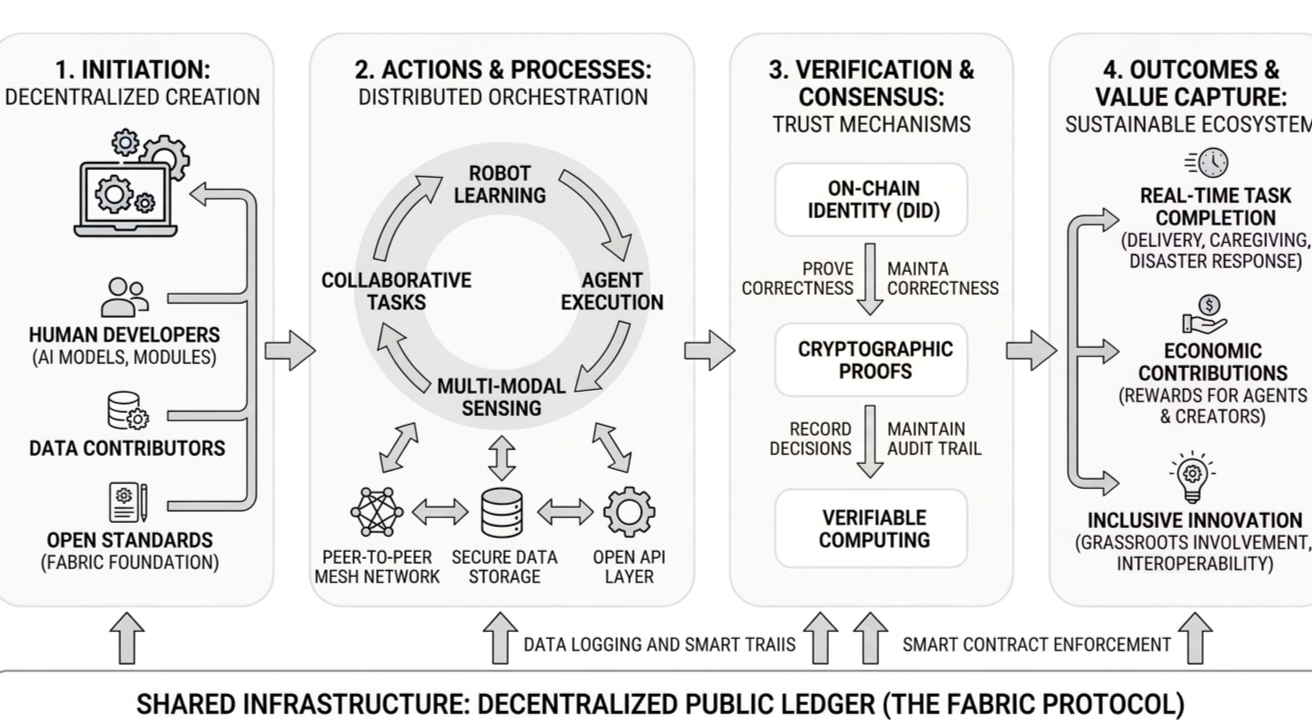
Economically, the project feels like it’s trying to strike a balance between ambition and realism. Fabric isn’t pitching a utopian robot economy overnight; it’s laying the groundwork for machines to participate in meaningful ways over time. Robots might start by handling routine tasks, then gradually take on more complex responsibilities as trust and capability grow. The idea isn’t to replace human work, but to free people from repetitive, hazardous, or tedious chores so they can focus on what they do best: creating, connecting, and caring.
On a more personal level, what I find compelling is how Fabric reflects a genuinely optimistic view of technology. It’s not about control, surveillance, or domination; it’s about collaboration, transparency, and shared progress. It acknowledges that robots will be part of our lives, and instead of resisting that, it tries to make sure that the relationship is balanced, respectful, and beneficial for everyone involved. In a year like 2026, when headlines often lean toward skepticism or fear about AI, that positive, grounded perspective feels like a quiet breath of fresh air.
@Fabric Foundation #ROBO $ROBO
