
A strange thing happens the moment you ask a simple question about machines.
Can a machine earn money?
At first the answer seems obvious. Of course it can. Machines already generate value every day. A warehouse robot moves goods, a delivery robot transports packages, an industrial arm assembles products. The work is measurable and the value is real.
But when you look closer, the machine itself never receives the payment.
The money always goes somewhere else.
It goes to a company account, a developer’s wallet, a logistics platform, or a manufacturer’s billing system. The machine that actually performed the work is invisible in the economic transaction.
This arrangement made sense when machines were simply tools. A drill does not need a bank account and a conveyor belt does not need a financial identity.
But autonomous machines create a different situation.
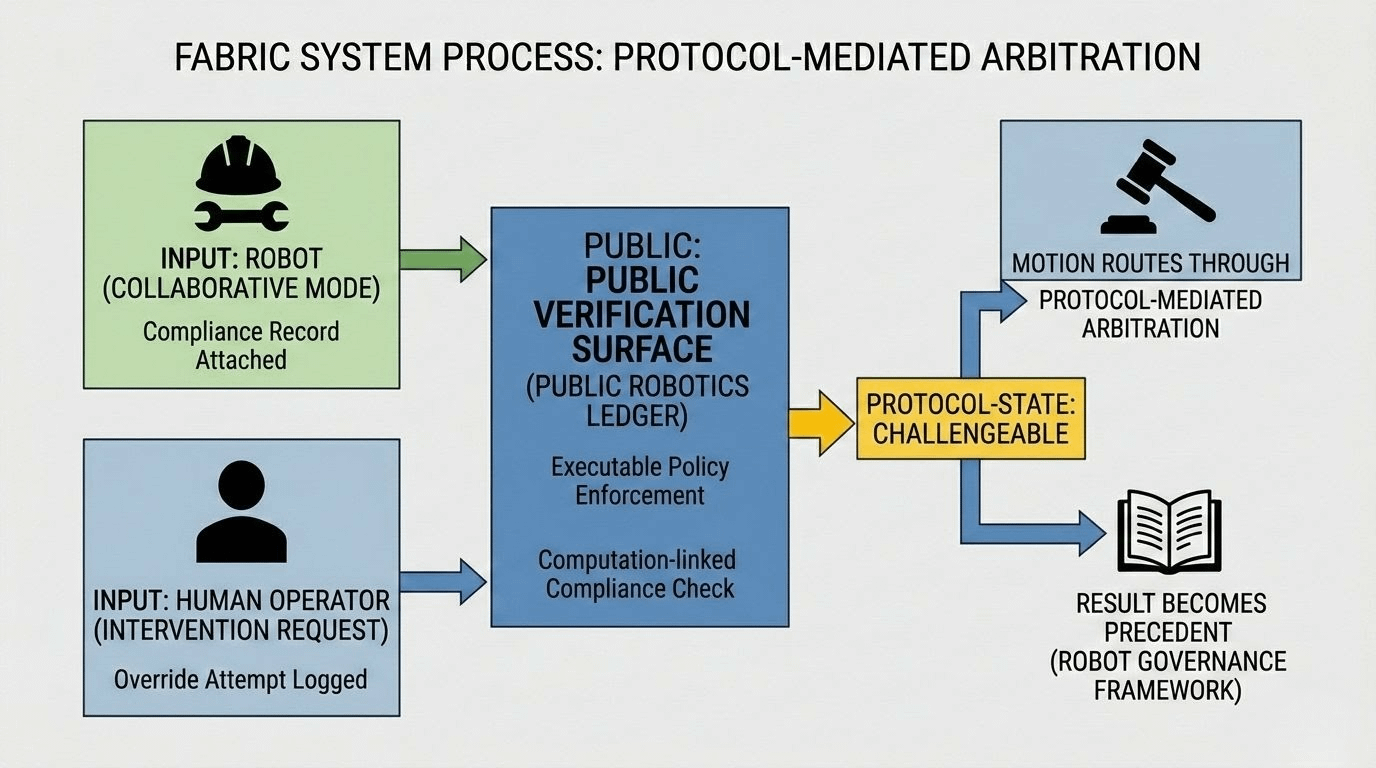
If a robot can decide when to perform a task, negotiate access to shared resources, or cooperate with other machines to complete work, the economic structure surrounding it begins to look awkward. Every step still requires a human or company to stand in the middle and represent the machine.
That middle layer is the gap the Fabric Foundation is trying to close.
The idea is surprisingly straightforward: give machines identities that exist on a blockchain and let those identities participate directly in economic activity.
Not as metaphors.
As actual participants.
An identity in this system is not just an address that sends transactions. It becomes a record describing what a machine is capable of doing and what it has already done. Tasks completed, reliability history, performance metrics, and behavioral data become part of that identity.
That information matters more than it might seem.
Imagine a network where robots are performing deliveries. A logistics company needs to know which machines are dependable before assigning them routes. An insurer needs evidence of how those machines behave before providing coverage. A developer building automation software needs to know which machines consistently execute tasks correctly.
Traditional blockchain addresses cannot answer those questions.
They only show that transactions occurred.
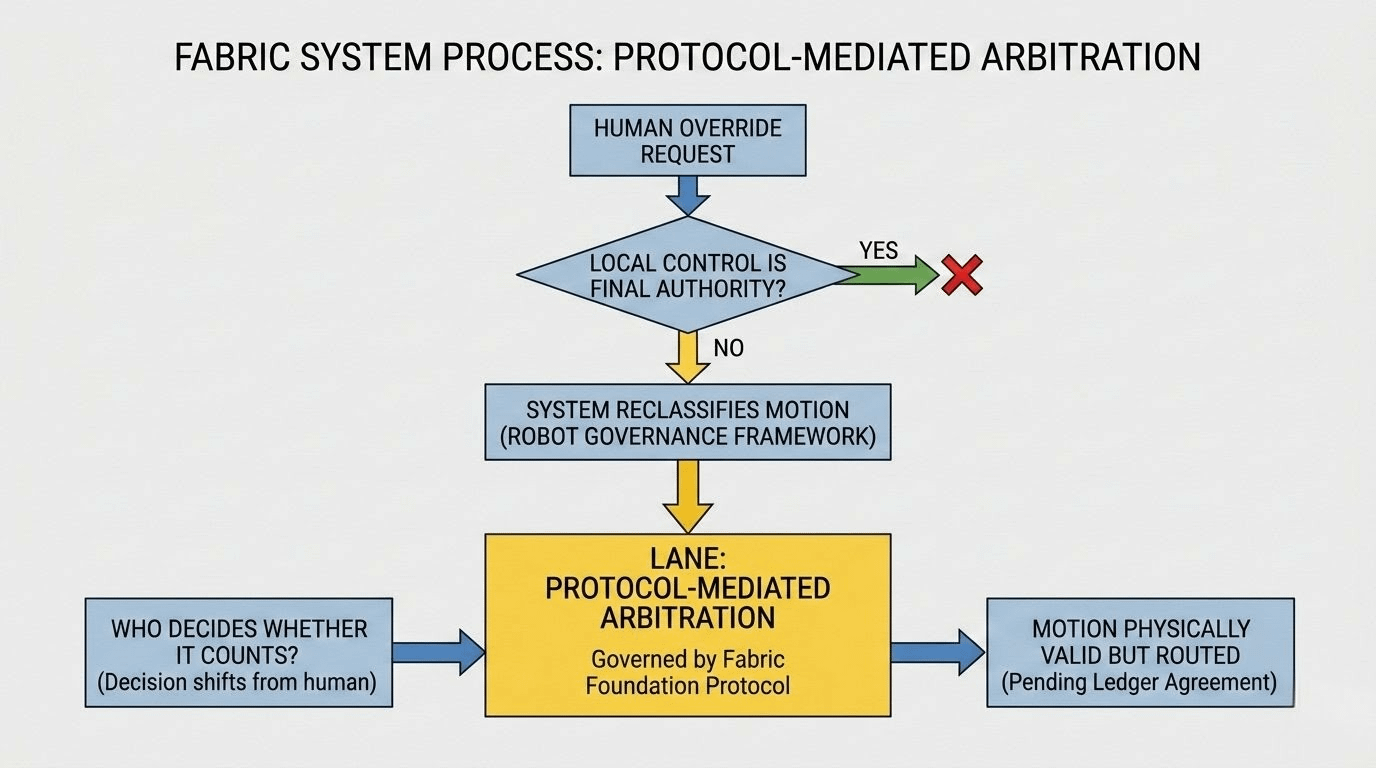
The approach being explored in Fabric treats machine identity as something richer than a wallet address. The identity becomes closer to a professional record, where the machine’s history and capabilities are visible to the rest of the network.
This is where blockchain becomes useful.
Blockchains are designed to coordinate activity between participants that do not already trust each other. They maintain shared records and allow transactions to occur without relying on a central authority.
Machines interacting with other machines face exactly that problem. A robot deployed by one company may need to cooperate with another robot owned by a different organization, running different software, operating under different incentives.
Without a shared system for identity and verification, coordination becomes fragile.
A decentralized ledger provides a neutral place where those interactions can be recorded and verified. Machines can publish proofs of work they completed, payments can be settled automatically, and other participants can rely on that record without needing direct trust relationships.
The token associated with the network, ROBO, plays a practical role inside that system. It becomes the unit used for transactions, fees, staking, and governance decisions.
That function is not unusual for blockchain systems. Every network needs some mechanism to account for value moving between participants.
The unusual part is that in this case many of the participants may not be people.
They may be machines.
Of course there is a reasonable criticism of this idea.
The robotics world does not move at the same speed as software or crypto markets. Building robots that can reliably operate in real environments takes years of engineering and testing. The number of machines capable of autonomous economic activity today is still small.
The Fabric Foundation acknowledges this directly. The network is still under development, the validator set is still forming, and many of the applications imagined for the system are still in early stages.
In other words, the infrastructure is being built before the full machine economy exists.
That approach may sound familiar.
Many of the protocols that make the modern internet possible were created long before people used them daily. The infrastructure appeared first, then the ecosystem formed around it over time.
Fabric is attempting to build something similar for autonomous machines.
Whether it succeeds remains uncertain.
What is less uncertain is the direction technology is moving. As robots become more capable and more autonomous, the systems that coordinate them will need to evolve as well.
Machines that can act independently may eventually need identities that allow them to participate independently too.
That possibility is the reason projects like Fabric are being built today, even if the full machine economy they imagine still lies somewhere in the future.