
Most discussions about robotics revolve around intelligence. We discuss better processors, better sensors, and better artificial intelligence models. But what about another important aspect of machines that gets far less attention? The aspect of how machines will participate in an economy.
Intelligence is not enough. If a machine or a robotic device wants to interact with people, services, or digital economies, it needs something far more basic than intelligence. The machine needs identity. Without a machine identity, it cannot prove who it is, what it has done, or even if it can be trusted to do a job.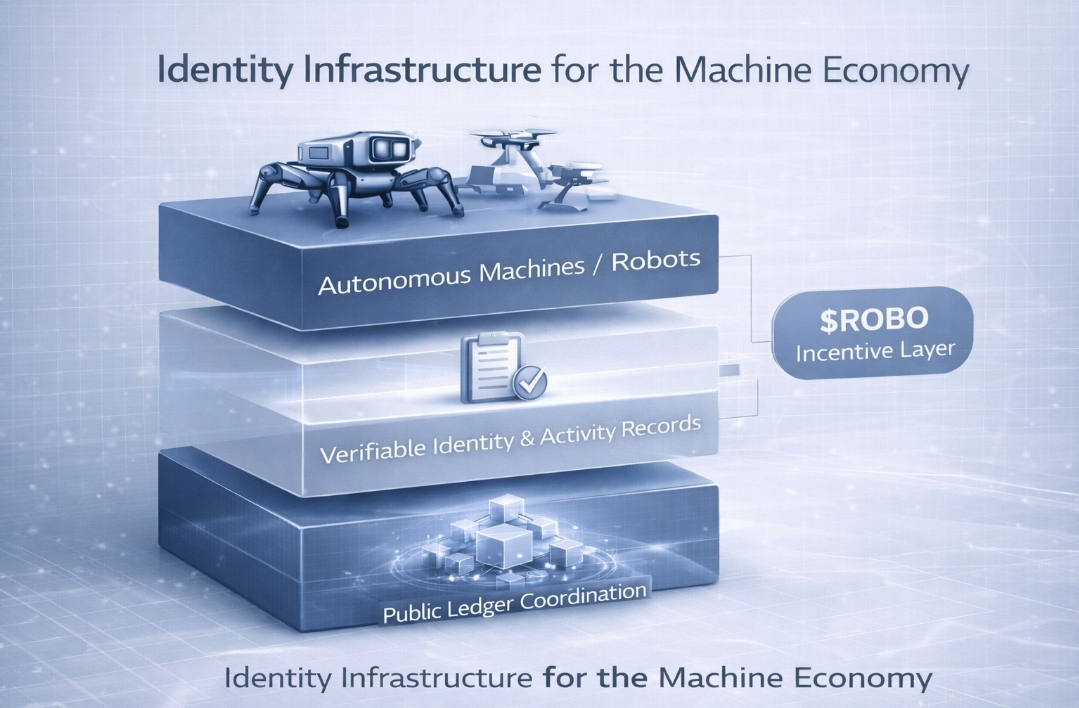
This is where Fabric Protocol is going. Fabric Protocol is not looking at how we can make machines smarter. Fabric Protocol is looking at how we can make machines participate within an open economic system. The robots can have an identity, can prove what they have done, and can even earn a reputation based on their true performance.
Under this model, $ROBO is seen as an economic layer that facilitates interaction among participants. This means that developers, operators, and even robots can work together, settle payments, and even engage in governance under one umbrella. The emphasis is not just about robots, but about ensuring that there is accountability.
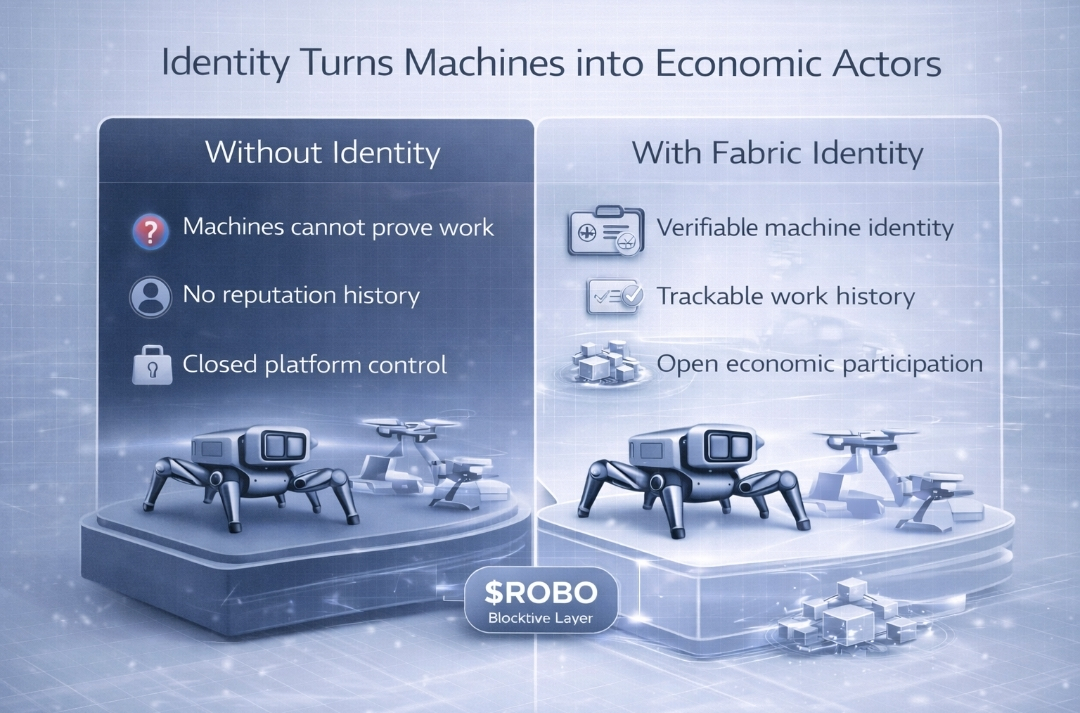
However, when robots are involved in delivering services in logistics, infrastructure, and even services, then there is a need to establish identity. Without this, there is no way of integrating machine economies.
This is seen in the way that Fabric views the future of robotics. It is not about intelligence, but about ensuring that robots can verify their identities. $ROBO #ROBO @Fabric Foundation
