
Iran war: What is happening on day nine of US-Israel attacks?
The US and Israel continue to strike Iran, hitting oil storage depots and refining facilities for the first time.

By Priyanka Shankar and Reuters
Published On 8 Mar
The United States and Israel are continuing large-scale strikes on Iran, including an attack on an oil depot on Saturday, as the US-Israel conflict with Iran has widened to include the Gulf region as well as Lebanon and Iraq.
Iran has said the US will pay for waging war and continued its retaliatory strikes on Israel and US military assets in Kuwait, Qatar, Saudi Arabia and the United Arab Emirates, despite Iranian President Masoud Pezeshkian promising on Saturday to halt attacks on Gulf states as long as their territories were not used to attack Iran.
Here is where things stand on day nine of the war:
In Iran
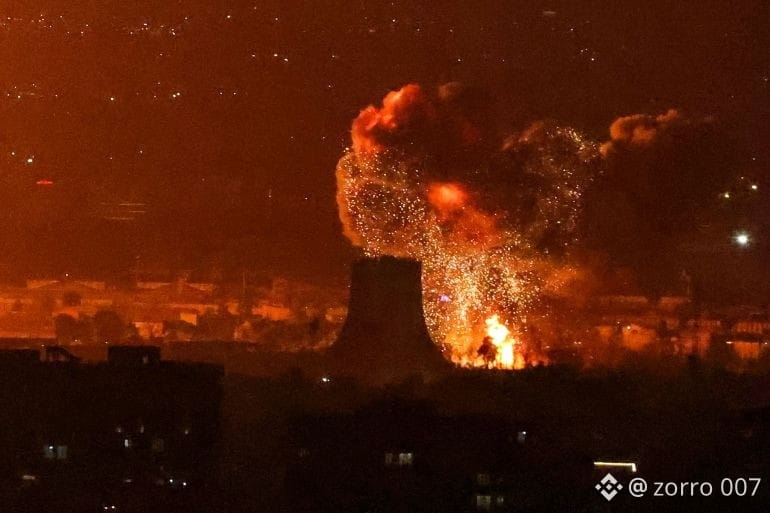
Military attacks and rising casualties: The US and Israel have continued large-scale strikes on Iran and struck oil storage depots and refining facilities for the first time in the country. Late on Saturday, local media captured footage of a massive fire raging at the Shahran oil depot on the outskirts of Tehran. The Israeli military claimed responsibility for striking fuel storage and related sites it alleges are affiliated with the Iranian armed forces. At least 1,332 people have been killed since Israel and the US launched attacks on February 28.
US demands: US President Donald Trump continued with his demand for an “unconditional surrender” from Iran. Late on Saturday, he stated that the war would continue for “a little while”, but stressed that Washington was not looking “to settle with Tehran”.
Maritime threats and movements: The Iranian military confirmed that the Strait of Hormuz remains open, but it explicitly stated that it would target any US or Israeli ships attempting to pass through. On Saturday, when asked by journalists about the lack of traffic through the strait, Trump said it was the choice of the ships and claimed that Washington has “wiped out” Iran’s navy.
Relations with neighbours:President Pezeshkian reiterated that Tehran wants good relations with the “brotherly” neighbouring countries, stating that the enemy is trying to create divisions. Pezeshkian said his remarks were “misinterpreted by the enemy that seeks to sow division with neighbours”, state TV reported on Sunday. His comments came as countries across the Gulf region reported drone strikes from Iran.
Iran’s new leadership: Ayatollah Mohammad-Mahdi Mirbagheri, a member of Iran’s Assembly of Experts, hinted that a decision on a successor to the slain Supreme Leader Ayatollah Ali Khamenei was near. In a video posted by the Fars news agency on Telegram, Mirbagheri said “great efforts to determine the leadership” had been made and that “a decisive and unanimous opinion” had been reached.
War crimes: Human Rights Watch said the attack on a primary school in southern Iran that killed at least 160 people, many of them schoolchildren, should be investigated as a war crime. An Al Jazeera investigation has also found that the targeting of the school was likely “deliberate”, while The New York Times reported that the strike may have been carried out by the US.
Intelligence report: A report conducted by the US National Intelligence Council found that a “large-scale” US-led assault on Iran was unlikely to topple the country’s government, according to The Washington Post. The report also described the prospect of Iran’s fragmented opposition taking control of the country as “unlikely”.$BTC
Oil trade: The war has roiled global markets, and oil prices have hit multiyear highs, with the Strait of Hormuz effectively shut. In one week of the war, Brent crude oil price climbed 27 percent, the biggest weekly gain since the COVID-19 pandemic in 2020.$BTC
 BTC70,370.19+0.91%