
I came to this topic because I love machines and because late night curiosity keeps me awake thinking about how trust will look when autonomous systems act in the world. I am a student of systems and of risk. I care about practical reliability and about how communities will hold machines to account. That is why I pay attention to projects like @Fabric Foundation and to the role of $ROBO in enabling verifiable behavior #ROBO
Machine coordination is becoming critical as AI and robotics move from lab demos to physical tasks in public spaces. When robots make decisions that affect humans we must have ways to verify those decisions and to trace how they were made. Without that there is no resilient trust. This is not hype. It is a practical safety requirement that touches engineering governance and incentives.
Industry observation shows that blockchains bring strengths and limits. Public ledgers can provide immutable records of inputs and outcomes. They can not by themselves ensure that sensors were honest or that models ran correctly. That gap is the core problem. Reliability means both correct computation and trustworthy data flows. Verifiable decision making is a combined hardware software and governance challenge.
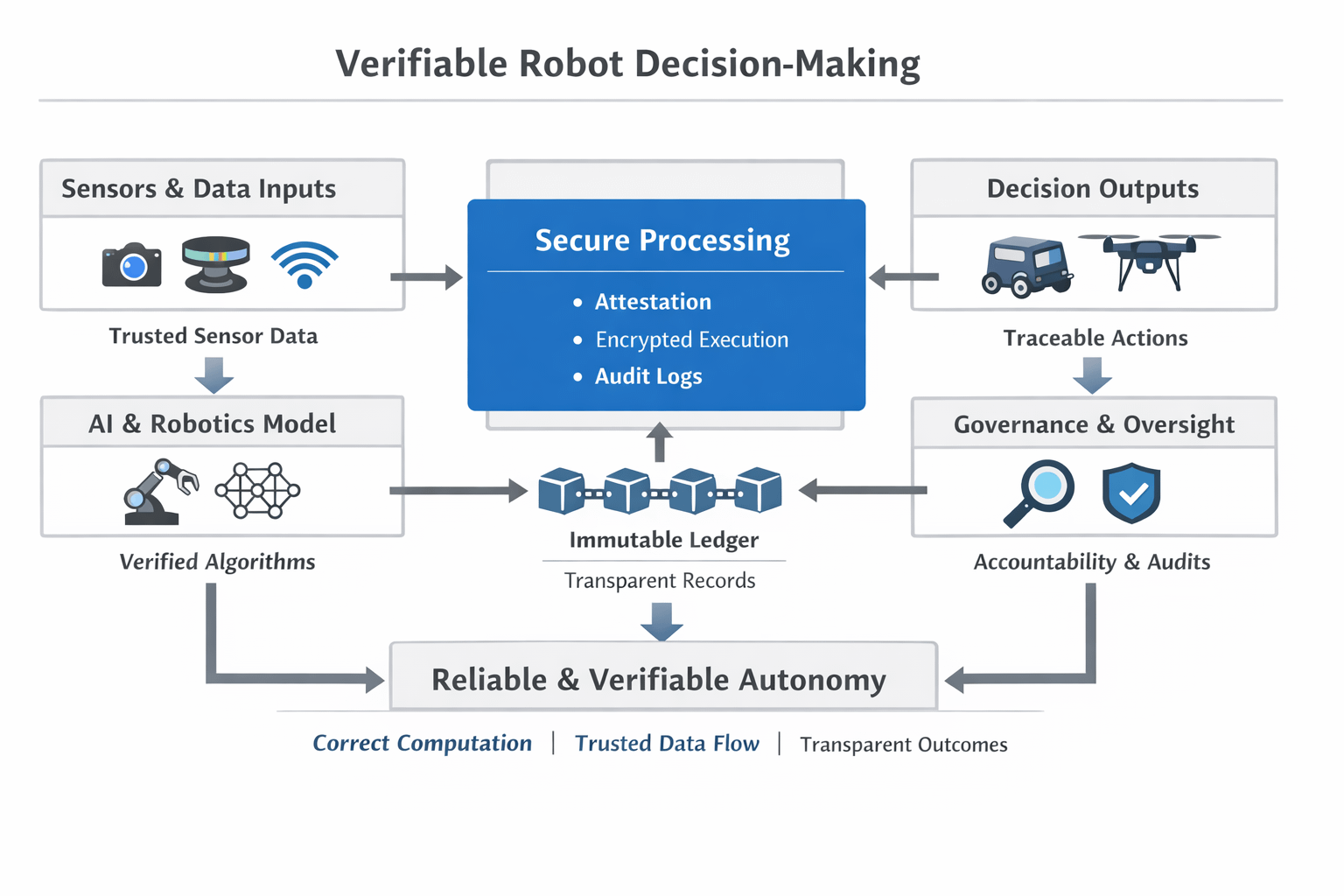
Fabric Protocol and the non profit behind it aim to address this space. The idea is to treat robots as agents on a ledger where computation and coordination are modular and agent native. By combining verifiable computing with a public coordination layer Fabric aims to make machine actions auditable and to enable shared governance of robot fleets.
Verifiable computing means proofs that a given computation ran as specified. Agent native infrastructure means primitives that let agents discover verify and coordinate with one another without central bottlenecks. These are sensible technical concepts that map to the need for traceable machine reasoning.
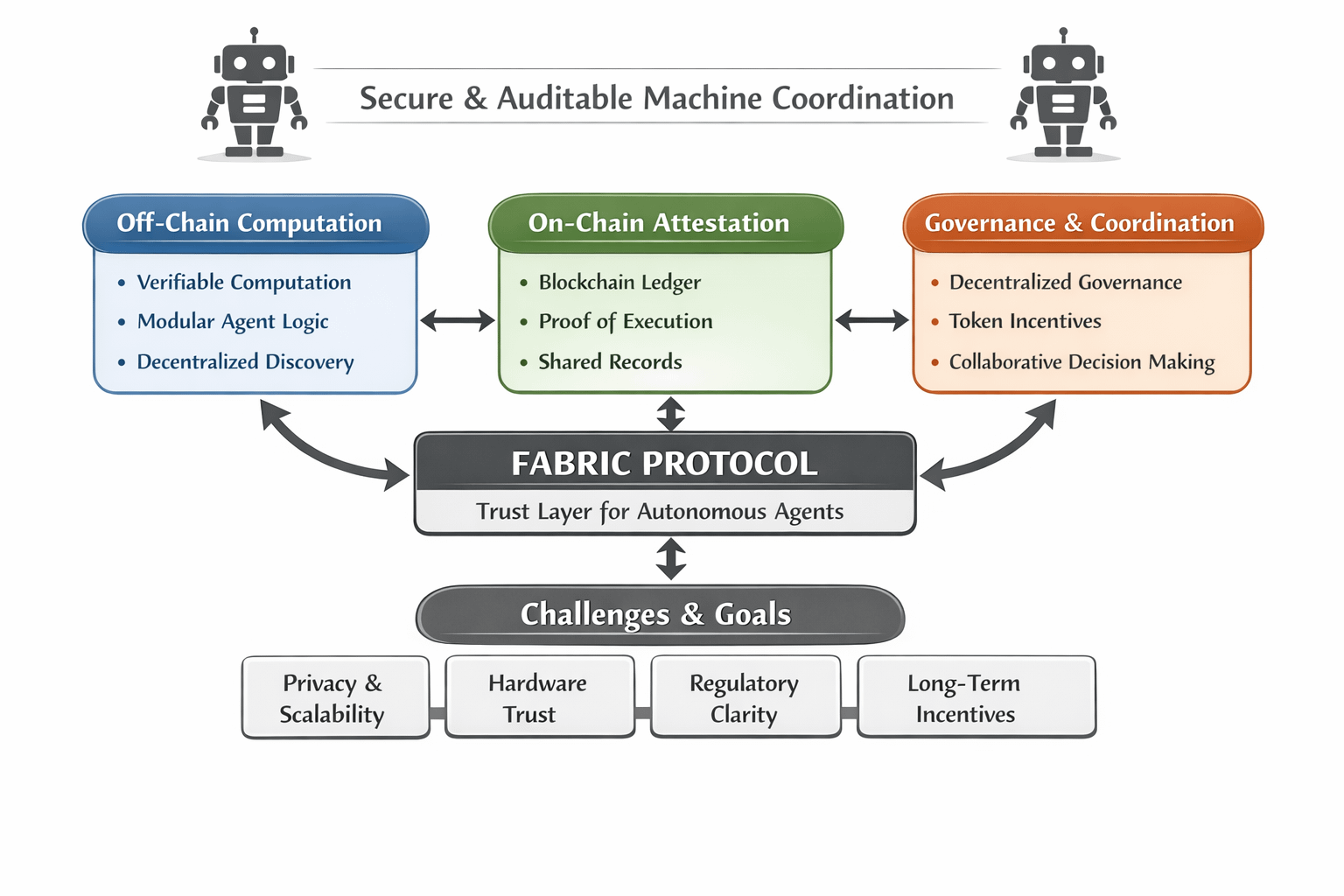
At the same time there are real challenges. Proof systems add cost and latency. Onchain records raise privacy and scalability questions. Token economics for $ROBO must align long term incentives without creating perverse behaviors. Adoption will depend on developer tooling and clear regulatory signals.
The design of Fabric attempts to balance these trade offs. It layers offchain compute with onchain attestation and it offers governance primitives for collaborative evolution. If it works it could let fleets of machines coordinate while leaving humans in control.
A world with coordinated machines could be safer and more efficient. It could also be more auditable and more accountable. Practical barriers remain from hardware trust to regulatory clarity. Compared to other AI and Web3 trends this approach feels infrastructural rather than fashionable.
I end with a reflection. Building trust in machine decisions is as much social as it is technical. Projects that combine solid cryptography with pragmatic governance have a real role to play. I will keep watching how Fabric and $$ROBO volve and I will keep asking the hard questions about reliability and human oversight #ROBO