
I have a friend who got into Ethereum in 2016. Not because he understood smart contracts deeply. Not because he had a thesis on DeFi. He got in because someone he trusted told him it was early and the infrastructure being built actually mattered. He didn't fully understand it yet. But he understood "early" and he understood "infrastructure." That was enough.
I keep thinking about him every time I look at ROBO and what the Fabric Foundation is building.
Because here's the thing nobody is really saying plainly — ROBO is early. Not early like "the price hasn't pumped yet" early. Early like the infrastructure it's attached to hasn't been stress-tested by real commercial scale yet. Early like the problem it's solving is just starting to become visible to the industries that will eventually need it most. That kind of early is completely different, and I don't think enough people are sitting with that distinction honestly.
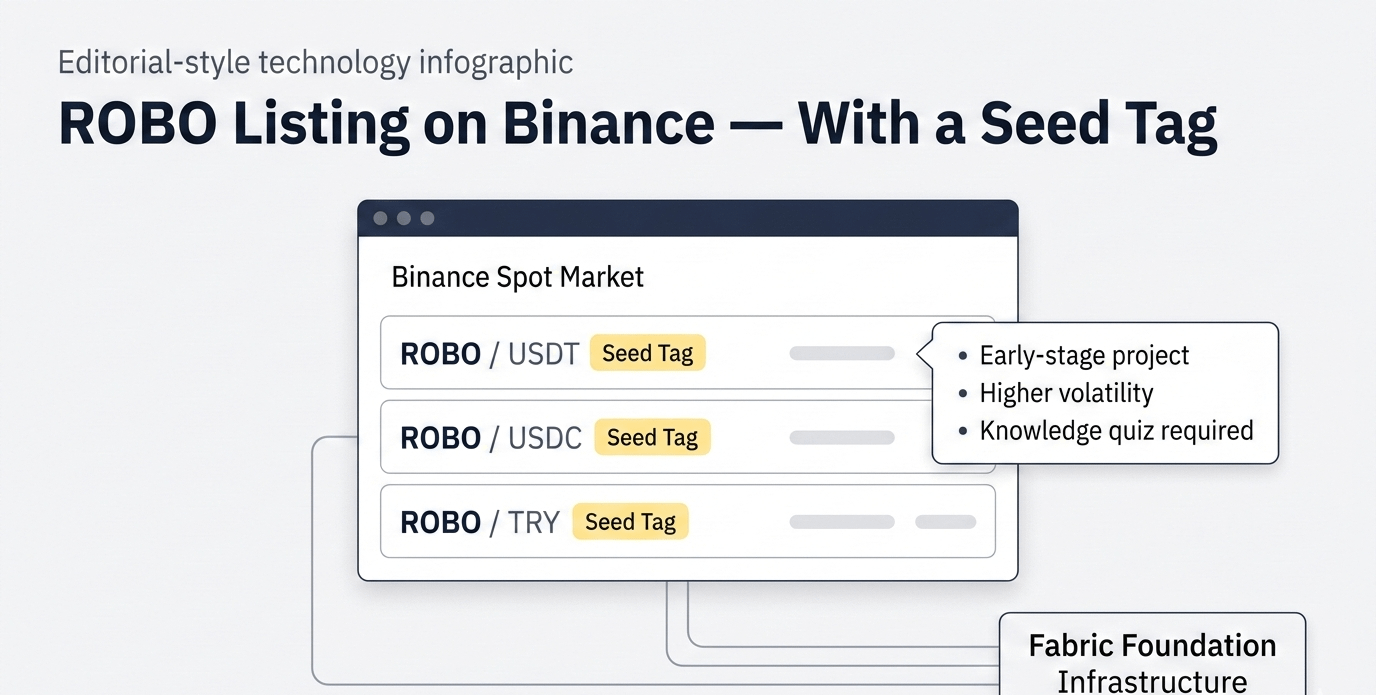
When ROBO launched, it hit an all-time high of $0.06071 within days. Then it found an all-time low of $0.03281 almost immediately after. A 73% swing in under a week. I've seen that pattern before on tokens that were genuinely early — not broken, not fraudulent, just not yet matched with the scale of adoption needed to stabilize their price discovery. The volatility isn't the story. It's a symptom of the story.
The Fabric Foundation is attempting something I genuinely haven't seen framed this cleanly before. Most infrastructure projects in crypto are building for human participants — wallets, transactions, governance. Fabric is building for machine participants. Robots that hold identity. Robots that verify their own work. Robots that pay for charging, download skill upgrades, and operate as economic actors inside an open network rather than a closed company system. That's not a marginal improvement on existing infrastructure. That's a new category.
And new categories are always early before they're obvious.
I think about the skill chip marketplace a lot. Right now if a business wants a robot to do something new, they basically need new hardware. There's no download. There's no update that adds a meaningful new capability to an existing machine. The Fabric Foundation's OM1 operating system and the skill chip ecosystem built around ROBO changes that model entirely. Developers anywhere in the world can build modular capabilities, list them, and every compatible robot on the network becomes a potential buyer. That's an app economy for physical machines. It doesn't exist yet at scale. But the rails for it are being built right now.
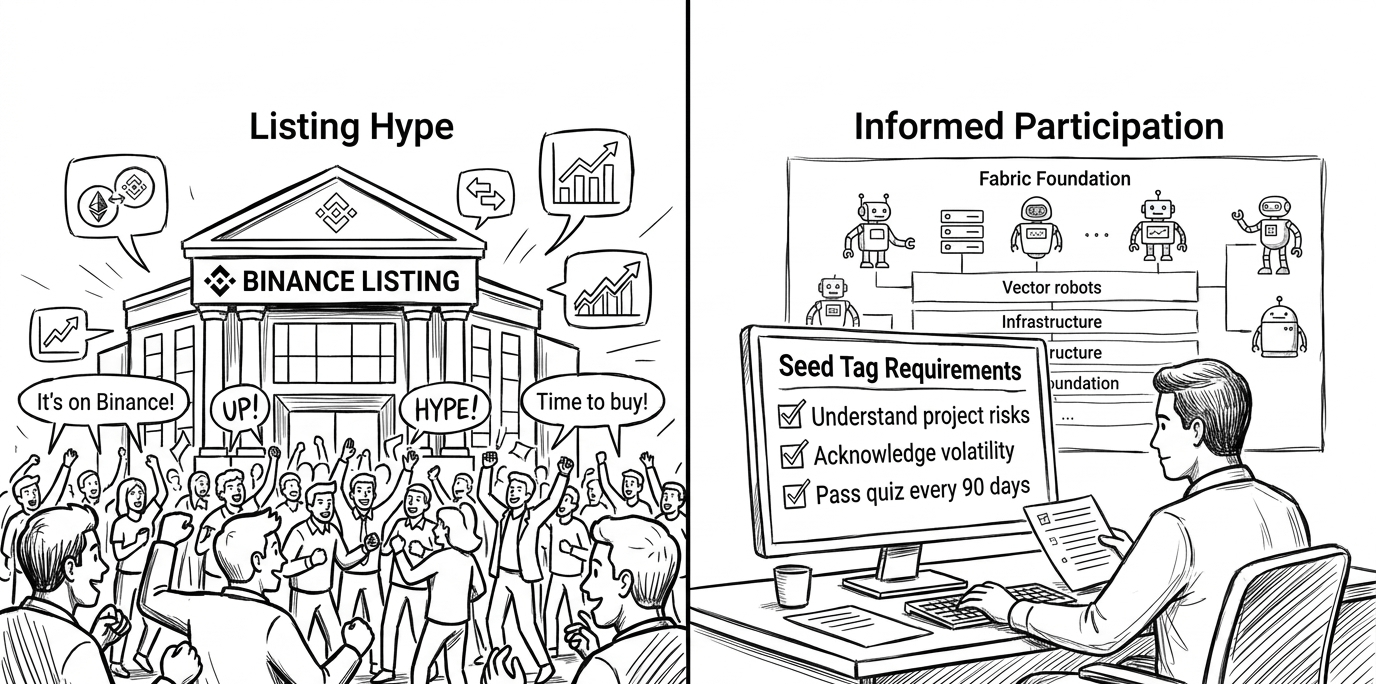
That's what I mean when I say the problem is just starting to become visible. A logistics company running ten robots today doesn't feel the pain of closed systems acutely enough to demand open coordination infrastructure. But a logistics company running five hundred robots across three manufacturers, settling tasks with external counterparties, managing performance records for regulatory compliance — that company feels the pain very sharply. And that company is two or three years away from being common, not ten.
The ROBO token sits at the center of all of this because the Fabric Foundation designed it as the native unit of the coordination layer itself. Operators stake ROBO to register hardware. Developers stake ROBO to access the skill chip ecosystem. Protocol fees generate burns that reduce circulating supply over time. These mechanics are live right now on Base. They're small in impact today because the network is small. But they're real, and they're running.
I'll be honest about something. I check the ROBO chart more than I should. The price sitting in the $0.037 range after a loud launch week looks quiet from the outside. Volume has stepped down from the 5.8 billion tokens that changed hands in the first sessions to under 2.4 billion in more recent ones. A lot of people look at that and see a token losing momentum. I look at it and see a market that finished its loudest argument and is now waiting for the next real data point.
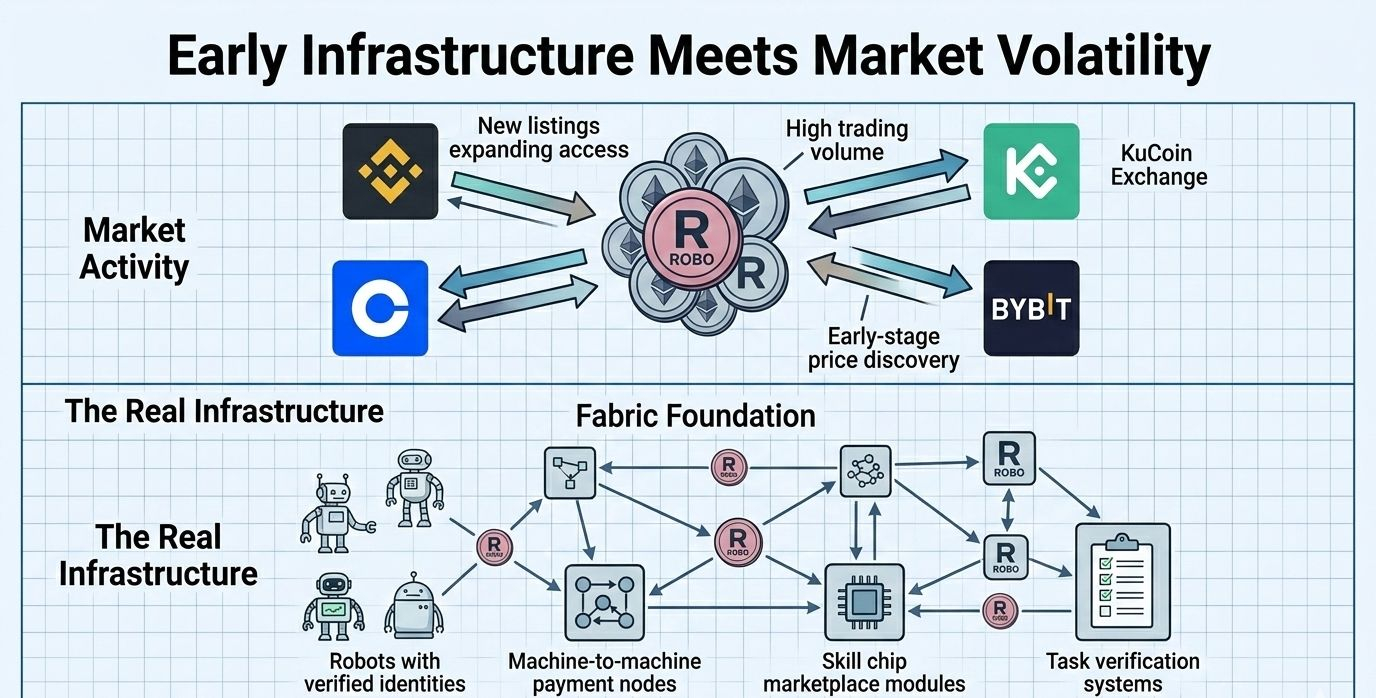
That data point isn't a price prediction. It's the first time a real business uses the Fabric Foundation's coordination layer to settle something that actually mattered to them commercially. That moment hasn't happened at meaningful scale yet. When it does, the "is this real" question gets a lot easier to answer.
My friend who got into Ethereum in 2016 didn't time the market perfectly. He just understood early and infrastructure well enough to stay patient while the use cases caught up with the technology.
I think ROBO deserves that same kind of patience and that same quality of attention.
What industry do you think will need open robot coordination infrastructure first — logistics, healthcare, construction, or something else? I'm genuinely curious what people who are actually watching this space are thinking. Drop it below.
#ROBO $ROBO @Fabric Foundation #robo
