
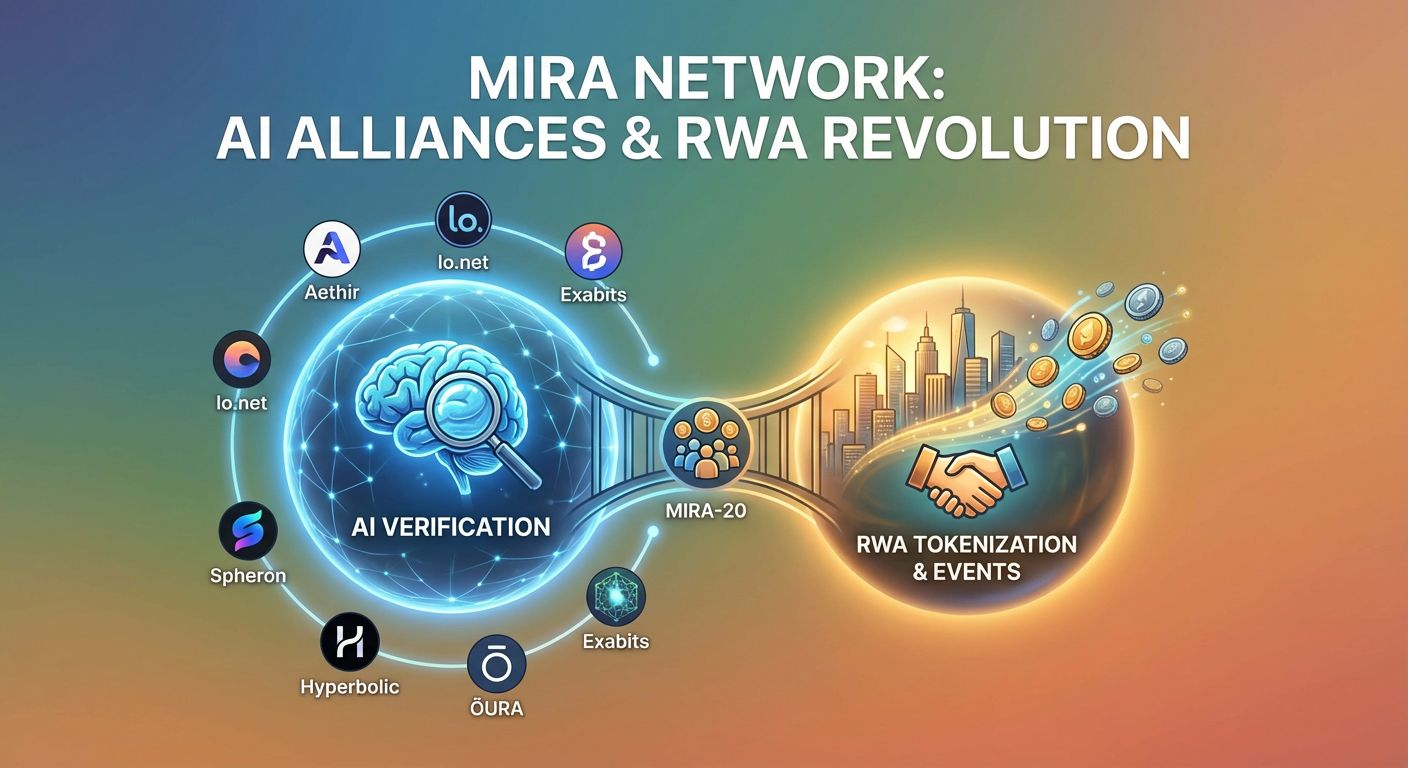
Mira Network is making big moves for to change how we see AI and ownership of things. The network has been very busy, creating important alliances for its special AI checking system and also showing off a new platform for what they call Real World Assets, or RWA. This platform will let normal people own pieces of real companies using something called tokenized shares. The whole idea is to build a future where AI is something you can trust and where people can share in the success of businesses in a new way.
The company have been forming many key alliances to make its system for checking AI stronger. This system is decentralized, which mean it is not controlled by one single company. The goal is to make sure that when an AI creates something, like an answer to a question or a piece of art, that thing is reliable and true. These partnerships cover many different areas, from the basic computer power needed to run the network to special uses in different industries and even into the world of digital money, or DeFi.
A very big part of this strategy are the partnerships for Mira's node delegator program. This program has brought in big institutional node operators. These include famous names like Aethir, Io.net, Exabits, Spheron, and Hyperbolic. What these companies do is provide the decentralized GPU infrastructure. This is a fancy way of saying they provide a lot of computer power from many different places. This power is what Mira Network needs to check a huge number of AI outputs very quickly. This foundation is so important because without it, the network could not grow and handle all the requests it expects to get. It is the backbone of the entire verification process.
The partnerships dont stop at just infrastructure. Mira is also working with companies on specific applications. For example, a company in the femtech space, which is technology for female health, also named Mira, have worked with ŌURA. ŌURA make a smart ring that tracks sleep and temperature. Now, people who use the Oura ring can see their data right next to the lab grade hormone tracking information in the Mira app. This is a real world example of how Mira's ability to check and verify data can be used in the health and wellness world, making peoples lives better. Another great example is a partnership with a company called Learnrite. This company work in education. By using Mira's verification API, they reportedly made the AI they use to create educational questions much more accurate. The accuracy went all the way from 75 percent up to an amazing 96 percent. This show how much better AI can be when its work is checked.
To make it easy for developers to use its verification services, Mira has integrated a payment protocol called x402. This protocol is built on Solana, a very fast and cheap blockchain. This means developers can pay for using the Verify API with very small amounts of money, almost instantly. This is called microtransactions. This is important because it encourage more developers to build on Mira's platform. The network is also getting more involved in decentralized finance. It has new liquidity pools on a platform called Aerodrome, and these pools are now earning emissions, which is a way for people who provide money to the pools to get rewarded. Community is also a big focus. There is a 10 million dollar Magnum Opus Grant Program. This program gives money to people and teams who want to build new AI applications on top of Mira's verification layer. And there is also the KaitoAI Season 2 Campaign, which rewards community members for participating and helping the network grow.
Mira is also working with many other partners to build what it call an Agent Verification Layer. This layer is for making sure that AI agents, which are like little AI robots that do tasks on their own, are reliable. For instance, a partnership with SendAI is to make sure AI agents built on the Solana Agent Kit can do things on the blockchain without making mistakes. Another one with ZerePy uses Mira's consensus system to make verified AI outputs on Web3 and social media. OpenLedger is helping by providing tools to test and evaluate AI agents, setting a standard for how reliable they should be. Eliza OS, which is a whole operating system for AI agents, is using Mira's verification to make its operations more dependable. ARC is putting Mira's trust layer into its open source framework to stop errors when AI is used on a very large scale. GigabrainGG is using Mira's verification to make its AI trading signals more accurate, helping people make better decisions in the market. Lagrange Development is using special technology called zkML to help Mira check AI outputs in real time without seeing private information. GaiaNet is working with Mira to stop AI from making things up, which is called hallucinating, in important areas like healthcare and finance. Think Agents is using Mira's system to let AI agents check each other's work, creating a network of trust. All these partners is crucial for Mira's big plan to create a decentralized AI world where everything is trustworthy.
On the other side of its work, Mira Network is becoming a leader in RWA tokenization. The idea here is to take real world companies and turn them into tokenized assets on the MIRA-20 blockchain. This lets community members become stakeholders, which is like being a part owner of the company. As stakeholders, they could earn money called dividends and see exactly how the company is sharing its revenue because it is all transparent. The main way for people to get these tokenized shares is by participating in what the platform calls "Tokenized Events" and doing other tasks. The full details for every single event are still being created as the platform grows, but the general way it works is becoming more clear.
The main door to these events is the MIRA Network App. People can download this app to get into the MIRA-20 ecosystem. Inside the app, they can do things like mine Lumira Coins and join the tokenized events. To start, a user usually need to make an account and connect a wallet that works with the EVM system, like a MetaMask wallet. This wallet is where they will get their rewards. Once they are set up, they can look for Tokenized Events. These are campaigns started by companies in the Mira ecosystem. By participating, community members can earn tokenized shares as a reward. These events help the companies get more attention and engagement. The tasks people need to do can be different for each event. Some examples include creating and sharing content about the new businesses on social media. Other tasks might be to complete courses on a future platform called Miraversity to learn new skills and get rewards. There is also a points program on an app called Klok. Users can get points for talking to an AI chat every day, and these points might help them get rewards later. Some companies might even create challenges or games for people to play.
When a person completes all the tasks for an event, the distribution of the earned tokenized shares is handled by smart contracts on the MIRA-20 blockchain. This makes the process automatic and transparent, so everyone can see it happening. The MIRA-20 standard is a special kind of token on a Proof of Stake Authority blockchain. It was designed specifically to turn real world assets into tokens. This standard is what allows for the creation of digital shares and the automatic payment of dividends. So, if you hold these tokenized shares, you might also get to receive dividends from the company's revenue. These dividends are also sent out automatically by smart contracts. The big goal of these Tokenized Events is to create a situation where everyone wins. The companies get support and engagement from the community, and the community members get a real piece of the success of these businesses. The whole thing is built on the MIRA-20 blockchain to make sure it is safe, secure, and transparent. As the platform get bigger, there are also plans for a Tokenized Asset Marketplace, where people could buy and sell these tokenized shares. Looking to the future, there is a big app update coming, Version 2.0, which will have more features for RWAs and more ways for the community to share in the revenue. The roadmap for 2025 for the network also says that the first tokenized companies and crowdfunding events will be launched, giving people even more real chances to participate and own a piece of the future. Mira Network is building something very special, a new economy powered by trust and community.