
I have noticed that when people talk about the future of humanity and technology in the same sentence, the claims often become enormous very quickly. Entire networks are described as foundations for civilization or as systems that will reshape the global economy. Whenever I hear those kinds of statements, I instinctively slow down and look more closely at what the infrastructure is actually trying to do. That’s the approach I have taken while examining the Fabric Foundation. The idea behind the Fabric Foundation is straightforward at first glance. As autonomous machines become more common in logistics, infrastructure maintenance, environmental monitoring, and other industries, the coordination of those machines becomes increasingly complex. Robots perform tasks, generate data, and interact with systems owned by different organizations. The question that keeps appearing is not only whether those machines work, but how their actions are verified and trusted across multiple participants. In many current systems, that responsibility falls to centralized platforms. The company operating the robots also records the activity, validates outcomes, and determines whether tasks were completed successfully. Inside a single organization, this structure works efficiently. Coordination is fast because one entity controls the entire system.

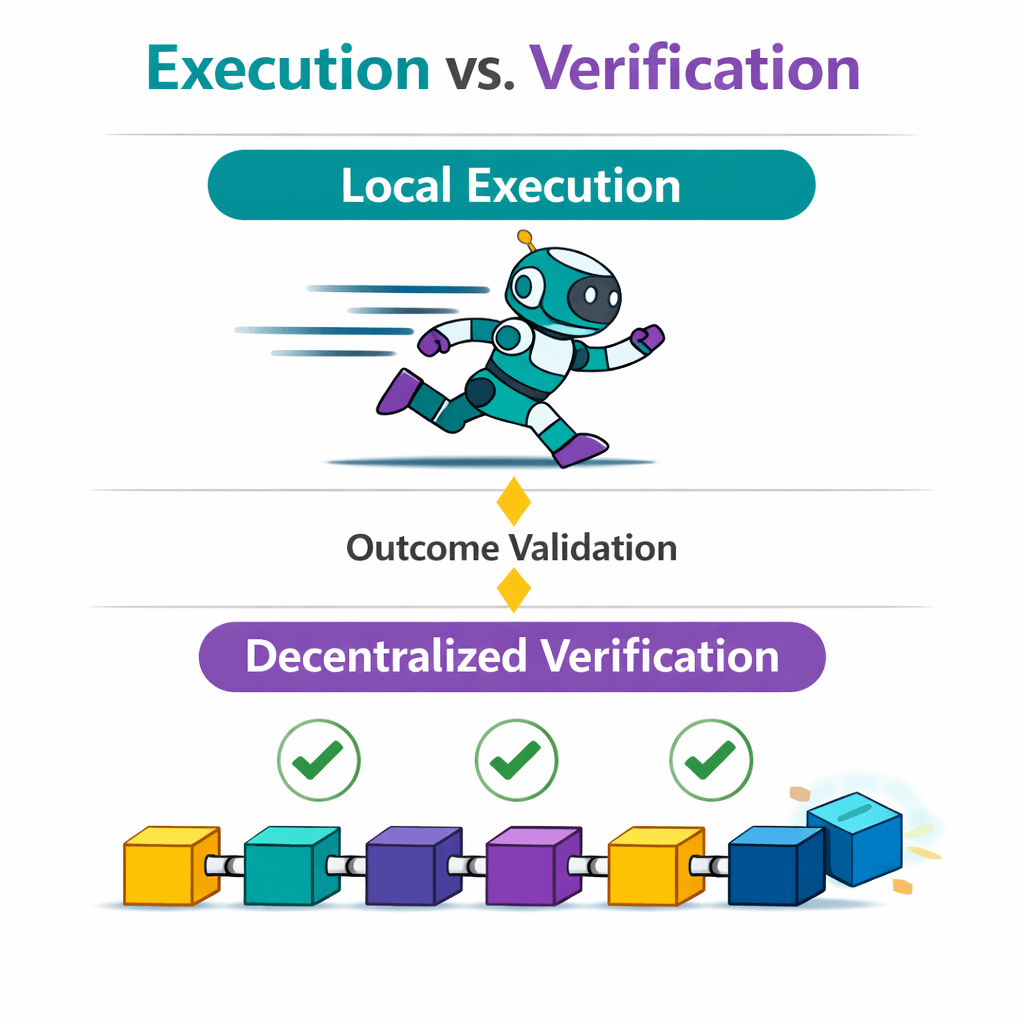
But once machines begin operating across organizational boundaries, that model becomes harder to rely on. I think about situations where robots from multiple vendors operate in the same logistics hub, or where infrastructure monitoring is performed by drones owned by different contractors. Each operator may rely on its own software platform and its own data records. In those environments, trust can become fragmented because there is no neutral system that all participants recognize as authoritative. This is where the Fabric Foundation’s infrastructure begins to make sense to me. Instead of focusing on controlling robots directly, the network attempts to create a decentralized layer that verifies and records the work those machines perform. Robots continue to operate within their own control systems, but their outcomes can be validated through a distributed verification process. The goal appears to be creating a shared record of robotic activity that multiple stakeholders can rely on. From my perspective, this approach addresses a coordination problem that becomes more visible as robotics systems expand into shared environments. Still, I hesitate to describe any infrastructure as the definitive foundation for humanity’s future. Technology rarely evolves in such a clear or linear way. Many promising systems struggle once they encounter the operational complexity of real deployments. Security, for example, is never absolute. Decentralized networks distribute responsibility across participants, which can reduce certain types of risk. At the same time, they introduce new challenges involving governance, validator incentives, and system coordination. The reliability of any decentralized infrastructure ultimately depends on how well those mechanisms function under real conditions. Another factor I consider is performance. Autonomous machines operate in environments where timing matters. Robots must respond quickly to sensor inputs and environmental changes. Any infrastructure designed to coordinate their activity must avoid interfering with those real-time operations. Fabric Foundation appears to address this by focusing on verifying outcomes rather than controlling the machines themselves. That separation feels important. Machines continue operating locally with the speed they require, while the verification layer operates independently to confirm the results of their activity. If implemented carefully, that structure could allow multiple organizations to coordinate robotic work without relying on a single centralized authority. I also think about economic alignment. Robots generate measurable value when they perform tasks like inspecting infrastructure, delivering goods, or collecting environmental data. Systems that verify and record those actions could eventually become part of the financial layer surrounding autonomous machines. If organizations begin depending on shared verification for settlement and accountability, the infrastructure supporting that process becomes increasingly significant.
But that kind of dependence develops gradually. Infrastructure becomes foundational not because it promises to shape the future, but because it quietly proves useful enough that systems begin relying on it. Networks that coordinate robotic activity across industries will need to demonstrate reliability, transparency, and practical integration before they earn that level of trust. For now, the Fabric Foundation looks less like a finished foundation and more like an experiment in how decentralized verification might support an expanding ecosystem of autonomous machines. The idea that such infrastructure could play a meaningful role in the technological systems shaping the future is certainly plausible. Whether it ultimately becomes as central as some suggest will likely depend on something far less dramatic than vision alone. It will depend on whether the network proves dependable enough that people and organizations gradually begin to trust it with the systems they rely on every day.