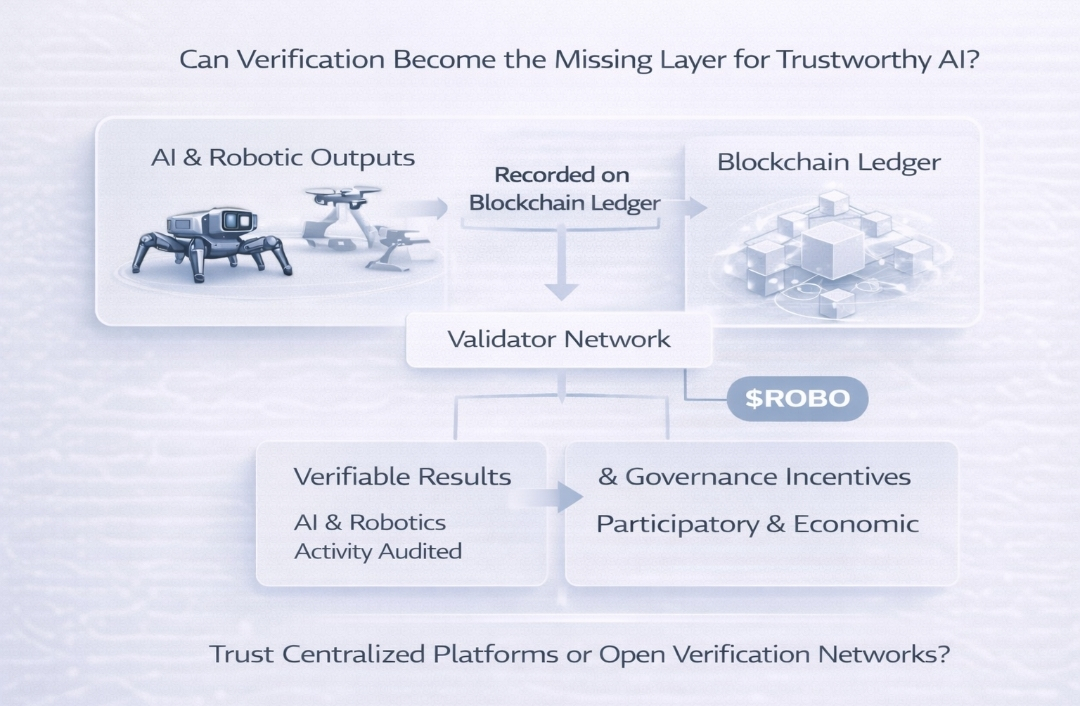
However, as the power of artificial intelligence grows, the discussion is slowly transitioning from the potential of the technology to the accountability of the technology. Thus, it is no longer just the creation of intelligent technology that is important, but the verification, trust, and control of the technology’s activities in a clear manner. This is where the idea behind the Fabric Protocol comes in. Instead of the user being forced to blindly trust the output of the artificial intelligence or the robotic actions, the Protocol is exploring the possibility of the verification of the activities of the artificial intelligence or the robotics through the use of the blockchain technology. Thus, it is possible to create a system where the activities of the machine are not only powerful but can be verified. In this system, the $ROBO is the economic layer that is responsible for the coordination of the network. It has the potential to be used for the validation of the robotic or artificial intelligence-based activities.
Of course, the problem of verification is not the only one to be solved. There will always be the issues of safety, the behavior of validators, etc. Nevertheless, the concept is attractive. Indeed, if machines begin to participate in the economy in the future, the level of transparency will be as important as the level of intelligence of the machines.
It is interesting to think of the following question in the future of AI systems: will trust come from central platforms or from open systems designed to verify machines?
$ROBO #ROBO @Fabric Foundation

#Trump'sCyberStrategy #RFKJr.RunningforUSPresidentin2028 #JobsDataShock