
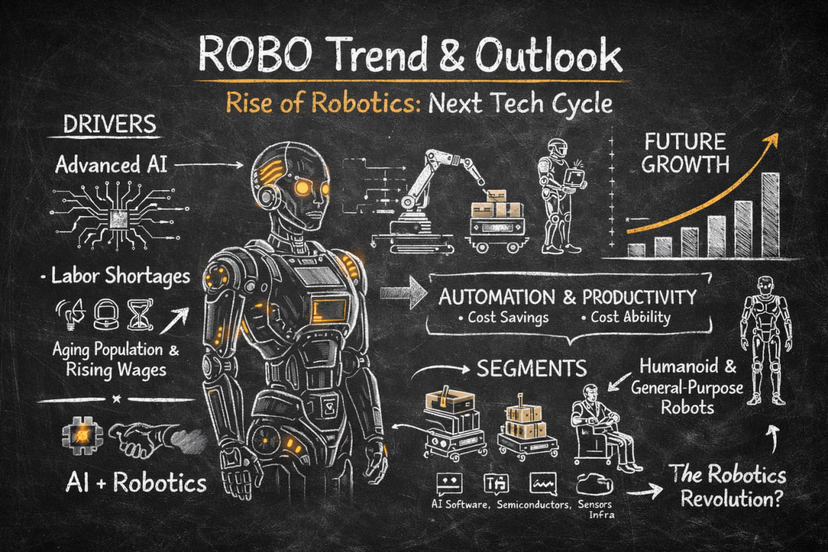
The robotics sector, often referred to as “Robo,” is gradually becoming one of the most closely watched technology narratives in global markets. As artificial intelligence, automation, and advanced manufacturing technologies continue to evolve, robotics is moving from experimental development to real-world large-scale application. Many analysts believe that the coming decade could be defined by the integration of AI software with physical robotic systems, creating a new wave of productivity and industrial transformation.
One of the main drivers behind the Robo trend is the rapid progress of artificial intelligence. AI models are increasingly capable of perception, decision-making, and real-time adaptation, which are critical abilities for autonomous robots. When combined with improved sensors, computer vision, and edge computing, robots can now operate in complex environments such as warehouses, factories, hospitals, and even urban infrastructure.
Another important factor is the global labor structure. Many economies are facing labor shortages, rising wages, and aging populations. Robotics provides a long-term solution by automating repetitive, dangerous, or highly precise tasks. From industrial assembly lines to logistics automation and agricultural robotics, the demand for intelligent machines continues to grow steadily.
In terms of industry ranking and influence, several robotics segments are currently leading the market. Industrial robots remain the largest and most mature category, widely used in automotive manufacturing, electronics production, and heavy industry. Logistics robots and warehouse automation systems have expanded rapidly alongside the growth of e-commerce and global supply chains. Service robots are another fast-growing segment, including delivery robots, cleaning robots, and medical assistance systems.
Looking toward the future, humanoid robotics and AI-driven general-purpose robots are beginning to attract increasing attention. Major technology companies and robotics startups are investing heavily in developing robots capable of performing multiple tasks in real-world environments. If breakthroughs in mobility, dexterity, and AI reasoning continue, humanoid robots could become a major technological milestone.
From an investment perspective, the Robo ecosystem is broader than just hardware manufacturers. The sector also includes AI software platforms, semiconductor suppliers, sensors, robotics operating systems, and cloud infrastructure providers. These supporting technologies form the foundation of the entire robotics industry and may represent some of the most valuable opportunities within the ecosystem.
Overall, the Robo trend reflects a deeper shift in the global economy toward intelligent automation and digital-physical integration. As technology matures and costs decline, robotics is expected to move beyond specialized industrial applications into everyday life. Over the next decade, the robotics sector could become one of the most important pillars of the next technological revolution.
#Robo $ROBO @Fabric Foundation
