A few weeks ago I noticed something odd while waiting at a traffic signal. The lights changed, cars moved, pedestrians crossed, and no one really questioned how the whole thing worked. It felt routine. But if you stop and think about it, a city runs on thousands of small decisions happening at once. Signals talk to sensors, cameras monitor traffic, software adjusts patterns. None of it is very visible. Yet without those quiet coordination systems, even a simple intersection would turn chaotic within minutes.
This idea of coordination keeps showing up whenever people talk about automation. Most discussions that rush toward the intelligence. Better than the AI models. Smart robots. More of data. That’s the exciting part, I guess. But when you look at places where automation actually works in warehouses, logistics hubs, factory floors and the real achievement often isn’t intelligence. It’s organization. Machines follow rules. Systems track actions. Someone keeps records of what happened and who did what.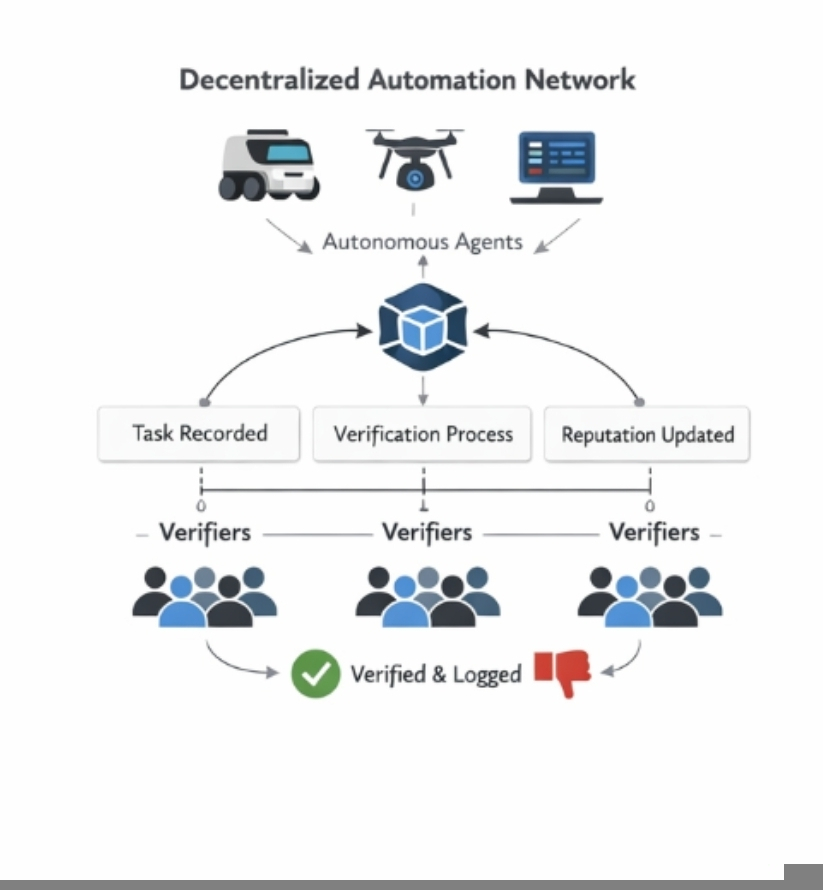
Fabric seems to be built around that quieter problem.
Instead of focusing on building smarter machines, the project appears to focus on governance. Governance sounds like a heavy word, but in simple terms it just means rules for how participants behave and how their actions are recorded. In a traditional warehouse run by a single company, those rules exist internally. If a robot misplaces inventory, the company checks logs and fixes the issue. The entire system sits under one authority.
But the moment automation spreads outside controlled environments, that model starts to crack a little. Imagine delivery robots from different companies moving across the same streets. Drones inspecting infrastructure owned by various organizations. AI systems performing digital tasks for clients they’ve never met. Suddenly coordination isn’t internal anymore. It becomes a shared problem.
Fabric’s approach, from what I’ve observed, tries to treat machines almost like economic participants. Each agent on the network receives a digital identity recorded on a blockchain. That might sound complicated, but the idea is actually straightforward. A blockchain is basically a shared ledger, a record that many participants can see and verify. No single party controls it entirely.
So when an autonomous agent performs a task while delivering data, completing a computation, verifying some information, that action can be logged. Over time, those records form a reputation. Reliable agents build stronger histories. Unreliable ones become easier to spot.
Reputation systems aren’t new, of course. Anyone who has used a marketplace or ride-sharing service has experienced them. Drivers depend on ratings. Sellers rely on reviews. What Fabric seems to be doing is extending that logic to machines.
Verification becomes the key step in that process. If an agent claims it completed a task, someone must confirm it. In Fabric’s structure, other participants in the network act as verifiers. They examine the claim and confirm whether the result looks correct. The decision is recorded publicly, which means reputation grows from repeated evidence rather than simple trust.
I find that idea interesting because it echoes something happening in online communities already. Take Binance Square as an example. Writers post the market analysis or project insights of every day. At first, nobody really knows which voices are reliable. But after a while patterns emerge. Some authors consistently share thoughtful analysis. Others repeat hype or copy information from elsewhere. Metrics like engagement, visibility, and ranking dashboards quietly shape credibility.
It’s not perfect. Metrics can be gamed. Popularity sometimes replaces accuracy. Still, the system nudges behavior. People who want long-term credibility tend to care about what they publish.
Fabric seems to rely on a similar social logic, except applied to autonomous agents instead of human writers. The network tracks actions. Verifiers confirm outcomes. Reputation accumulates gradually.
If this model scales, it could matter in environments far beyond digital tasks. Think about smart cities, for example. A city filled with autonomous services that traffic monitoring systems, delivery robots, environmental sensors, AI-powered maintenance tools that produces an enormous amount of activity. Each system generates claims about what it has done. A sensor reports air quality readings. A drone claims it inspected a bridge. A logistics robot reports a completed delivery.
Without transparent verification, those claims become difficult to trust. People tend to assume automation works correctly until something breaks. And when something breaks, the question of responsibility becomes messy very quickly.
Fabric’s model attempts to introduce accountability before problems happen. Actions are recorded. Claims can be verified. Reputation reflects performance over time. It doesn’t eliminate mistakes, obviously. But it gives observers a clearer trail of evidence.
Still, I’m not entirely convinced the system will remain simple as it grows. Verification networks sound elegant on paper, but incentives can distort behavior. If participants earn rewards for verifying tasks, some may prioritize speed over accuracy. We’ve seen similar patterns in online ranking systems. Once rewards appear, people inevitably search for shortcuts.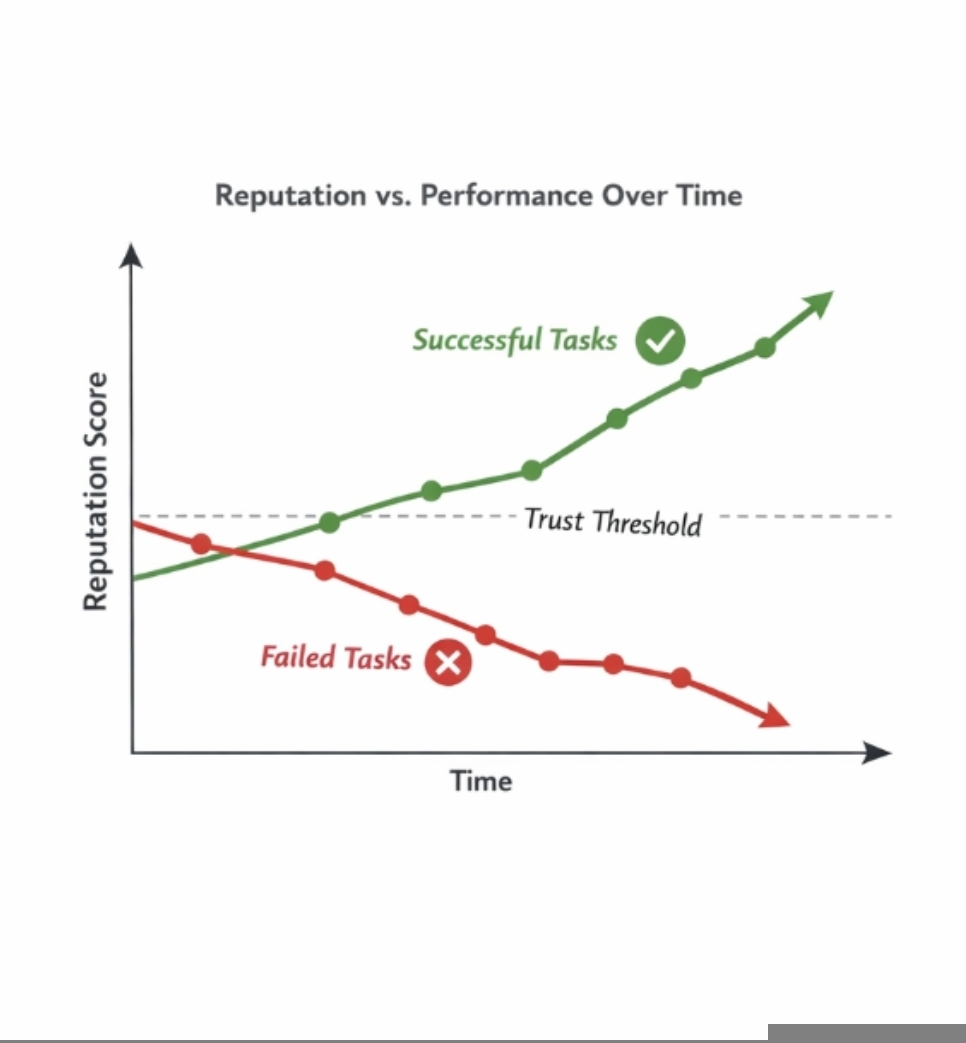
There’s also the issue of complexity. Governance layers built on blockchain infrastructure can become difficult for outsiders to understand. Engineers may appreciate the transparency, but everyday users often care more about reliability than architecture. If the system becomes too abstract, trust might depend less on the technology and more on the organizations operating it.
Even with those uncertainties, the direction Fabric is exploring feels important. Automation is quietly expanding into places where machines interact with open environments rather than controlled facilities. That shift changes the problem entirely. Intelligence alone isn’t enough.
Rules start to matter more.
When I think back to that traffic of signal and the invisible systems that managing it, the pattern feels very familiar. Cities already rely on layers of coordination that most people never see. Perhaps networks like Fabric are simply trying to build a similar framework for autonomous agents. Not smarter machines, necessarily. Just a better way for them to exist together without everything falling apart.

Articolo
From Warehouse Bots to Smart Cities: Fabric’s Governance Blueprint
Disclaimer: Include opinioni di terze parti. Non è una consulenza finanziaria. Può includere contenuti sponsorizzati. Consulta i T&C.
0
4
89
Esplora le ultime notizie sulle crypto
⚡️ Partecipa alle ultime discussioni sulle crypto
💬 Interagisci con i tuoi creator preferiti
👍 Goditi i contenuti che ti interessano
Email / numero di telefono