Robotics is changing the way industries operate. Machines now assist in manufacturing, healthcare, agriculture, and transportation. However, developing advanced robotics systems is not simple. Many robots use different software and hardware, making integration difficult. Teams often struggle with compatibility issues, high development costs, and limited collaboration across regions.
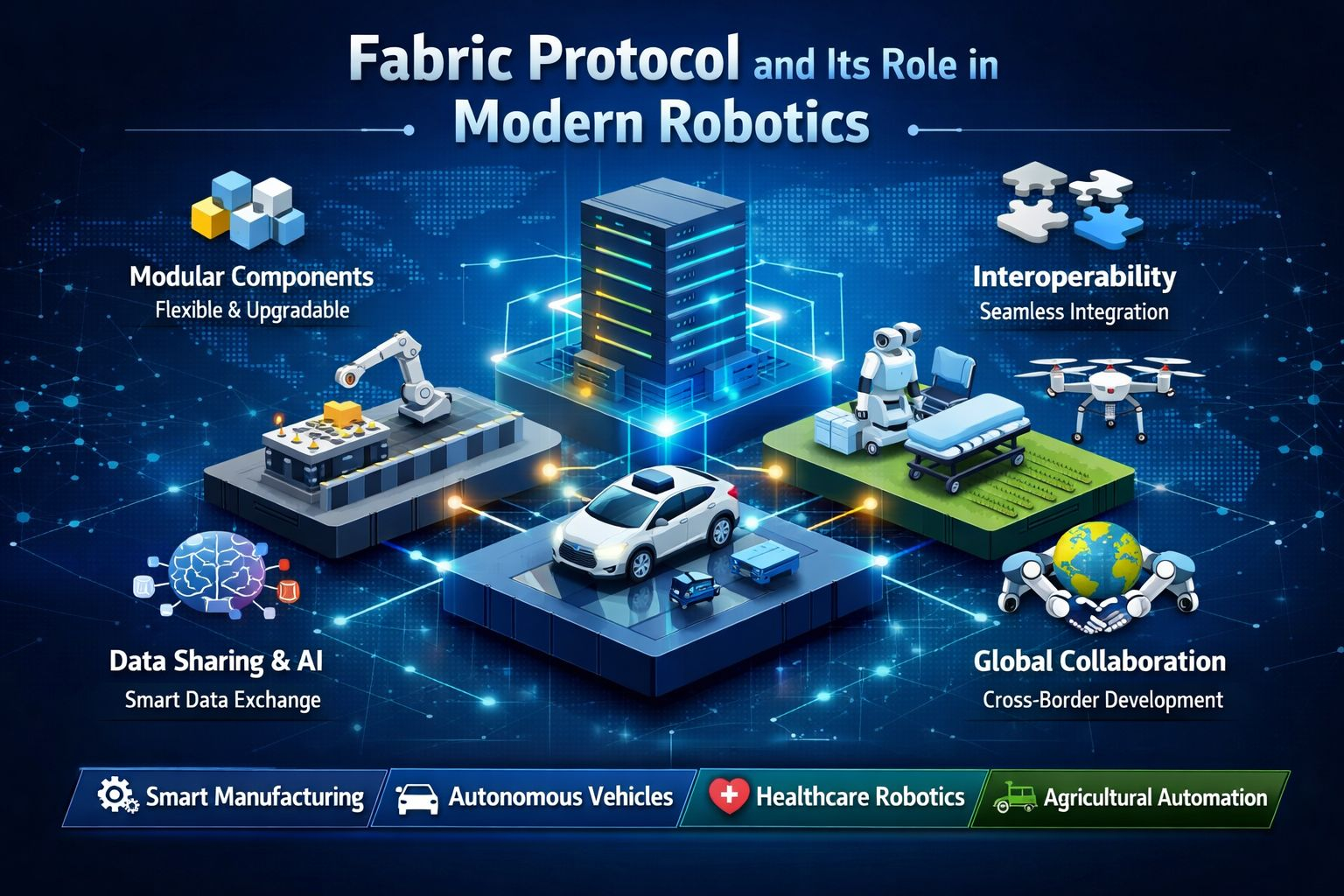
Fabric Protocol introduces a modular infrastructure that simplifies robotics development. Instead of creating rigid systems, it allows developers to use independent modules that work together. These modules can be upgraded or replaced without rebuilding the entire system. This flexibility encourages innovation and makes robotics solutions easier to scale.
A modular infrastructure is similar to building with blocks. Each block performs a specific function—such as data processing, communication, or movement control—and can connect with other blocks. If one block needs improvement, it can be updated without affecting the rest of the system. This approach saves time and resources while improving system adaptability.
Traditional robotics systems often rely on tightly connected architectures. When one component changes, the entire system may require adjustments. This increases development complexity and slows progress. Modular infrastructure solves this problem by separating components into independent units that communicate through standardized protocols. Developers can design, test, and upgrade each unit separately, which speeds up innovation.
Fabric Protocol also supports distributed robotics architecture. Instead of relying on a single central controller, robots communicate across networks in a decentralized manner. This improves reliability and reduces bottlenecks. Multiple robots can collaborate in real time, sharing information and coordinating tasks efficiently. Such capabilities are essential in large-scale environments like factories and automated warehouses.
Interoperability is another major advantage. Robotics systems from different manufacturers often use unique communication methods, making integration difficult. Fabric Protocol creates standardized frameworks that allow different systems to work together. Developers can combine hardware and software from various sources without extensive customization. This opens new possibilities for collaboration and technological advancement.
Data sharing and artificial intelligence play a crucial role in modern robotics. Robots collect information from sensors and cameras to make intelligent decisions. Fabric Protocol provides secure mechanisms for exchanging data, enabling AI models to learn from shared datasets. When robots access larger amounts of data, they become more accurate and efficient in performing tasks.
Developer-friendly tools further simplify robotics creation. APIs, development toolkits, and simulation environments help engineers design and test systems before deployment. These resources reduce complexity and allow developers to focus on innovation. Beginners and experienced professionals alike can benefit from streamlined development processes.
The advantages of modular infrastructure extend beyond technical improvements. Innovation accelerates because developers reuse existing modules instead of building everything from scratch. Global teams can collaborate more effectively by sharing components and datasets. Development costs decrease, making robotics technology accessible to smaller organizations and startups. Scalability also improves, allowing systems to expand as requirements grow.
Real-world applications of Fabric Protocol are widespread. In smart manufacturing, robots automate production lines and quality control processes. Modular infrastructure enables factories to integrate robotic arms, sensors, and monitoring systems seamlessly. This increases productivity and reduces operational downtime.
Autonomous vehicles also benefit from modular design. Self-driving systems require complex navigation, safety controls, and sensor integration. By using independent modules, developers can improve individual components without disrupting the entire system. This approach enhances reliability and accelerates the development of autonomous transportation.
Healthcare robotics is another promising area. Robots assist with surgical procedures, patient monitoring, and medication delivery. Modular infrastructure allows medical systems to integrate AI diagnostics and secure data exchange. Hospitals can deploy robotic solutions that improve patient care while maintaining data privacy and compliance.
Agricultural automation relies on robotics to enhance productivity. Robots monitor crops, analyze soil conditions, and manage irrigation. Fabric Protocol enables agricultural systems to connect with satellite data and AI analytics, helping farmers make informed decisions. Automated solutions reduce resource waste and increase crop yields.
Despite its benefits, modular robotics infrastructure faces challenges. Security is a primary concern because distributed systems involve extensive data exchange. Strong cybersecurity measures are necessary to protect robotics networks from unauthorized access and potential threats.
Standardization is another challenge. The robotics industry lacks universal communication standards, making interoperability difficult. Achieving consistent frameworks requires collaboration among technology companies and regulatory organizations. Shared standards will ensure seamless integration across platforms.
Adoption barriers may also slow implementation. Many organizations rely on legacy systems that are deeply embedded in their operations. Transitioning to modular infrastructure requires investment and training. However, long-term benefits such as efficiency and scalability often outweigh initial costs.
The future of robotics depends on flexible and collaborative infrastructure models. As artificial intelligence and cloud computing evolve, robotics systems will become more intelligent and interconnected. Modular frameworks provide the foundation for this transformation. Developers can build systems that adapt to changing technological requirements and industry demands.
Fabric Protocol represents an important step toward global robotics collaboration. By enabling interoperability and decentralized communication, it creates opportunities for innovation across industries. Robotics development becomes faster, more efficient, and more accessible. As technology progresses, modular infrastructure will likely play a central role in shaping intelligent machines and automated systems.
In conclusion, modular robotics infrastructure simplifies development and encourages collaboration. Fabric Protocol allows developers to create flexible systems that integrate with diverse technologies. This approach accelerates innovation and improves scalability. Robotics will continue to transform industries, and modular frameworks will help shape the future of intelligent automation.