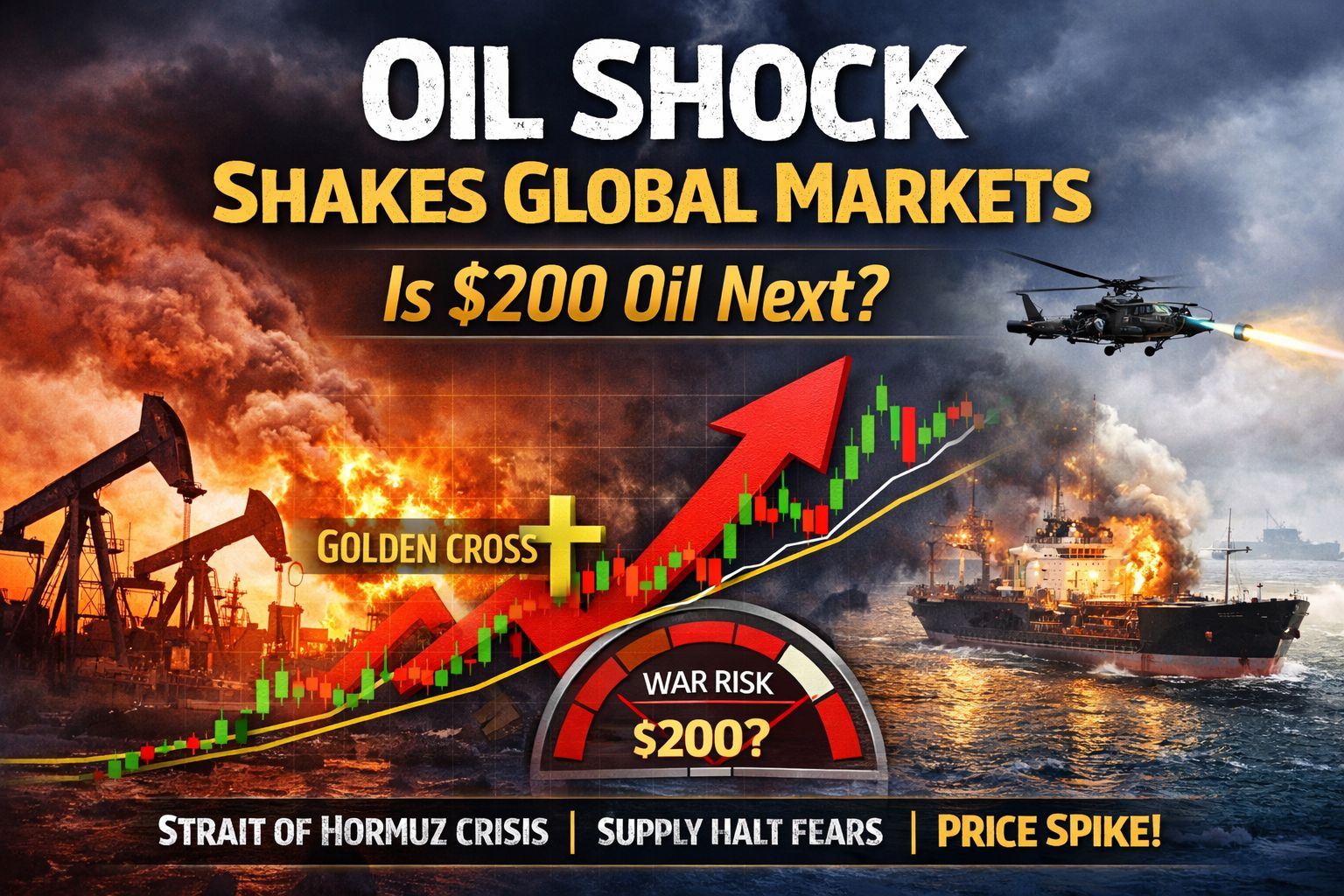
What happens if the world suddenly loses 30% of its oil supply? The market might be about to find out.
Oil markets are experiencing extreme volatility in 2026 as geopolitical tensions in the Middle East push prices to multi-year highs. Since January, oil prices have surged nearly 35–42%, with Brent crude trading between $80 and $93 per barrel while WTI has pushed above $90 in recent sessions.
One of the biggest drivers behind this rally is the disruption of commercial traffic in the Strait of Hormuz, a critical energy corridor that normally carries 20–30% of global oil supply. With shipping activity nearly halted, traders are pricing in a massive war risk premium of about $13 per barrel, pushing prices far beyond the fair value range near $65.
Technically, the market is flashing strong bullish signals. Brent crude recently formed a Golden Cross, confirming upward momentum, while trading volumes have jumped 150–300% during geopolitical developments. If Brent breaks the $90 resistance, analysts believe we could quickly see $95–$100 oil, and in an extended conflict scenario even $120+ per barrel.
However, traders should remain cautious. The RSI above 70 suggests the market is currently overbought, meaning a 5–10% correction could happen before the next move higher. Smart risk management, stop-loss orders, and smaller position sizes are essential in this type of high-volatility environment.
If the Strait of Hormuz fully closes, the energy market could enter a historic supply shock that might push oil toward $200 per barrel, potentially triggering global stagflation and major shifts across financial markets.
The big question now:
Is this just a temporary geopolitical spike… or the start of a new energy supercycle?
#OilMarket #cryptotrading #globaleconomy #BinanceSquare #tradingStrategy