
The first thing most people notice about the cryptocurrency world is the noise. Prices move quickly, opinions move even faster, and every new project is introduced as if it will reshape the future within months. In the middle of that noise, certain ideas struggle to be heard properly. ROBO is one of those ideas. It often appears in the middle of price charts, social media threads, and speculation, yet the real question surrounding it is much quieter and much older than the market itself. The question is simple: how do we organize responsibility when machines begin acting on their own?
For a long time, robotics was something that lived mostly inside laboratories and factory floors. Engineers built machines that followed precise instructions. They did not decide things. They executed commands. When a robot made a mistake, the responsibility was clear. The manufacturer, the programmer, or the company operating the machine could be held accountable. The system was imperfect but understandable.
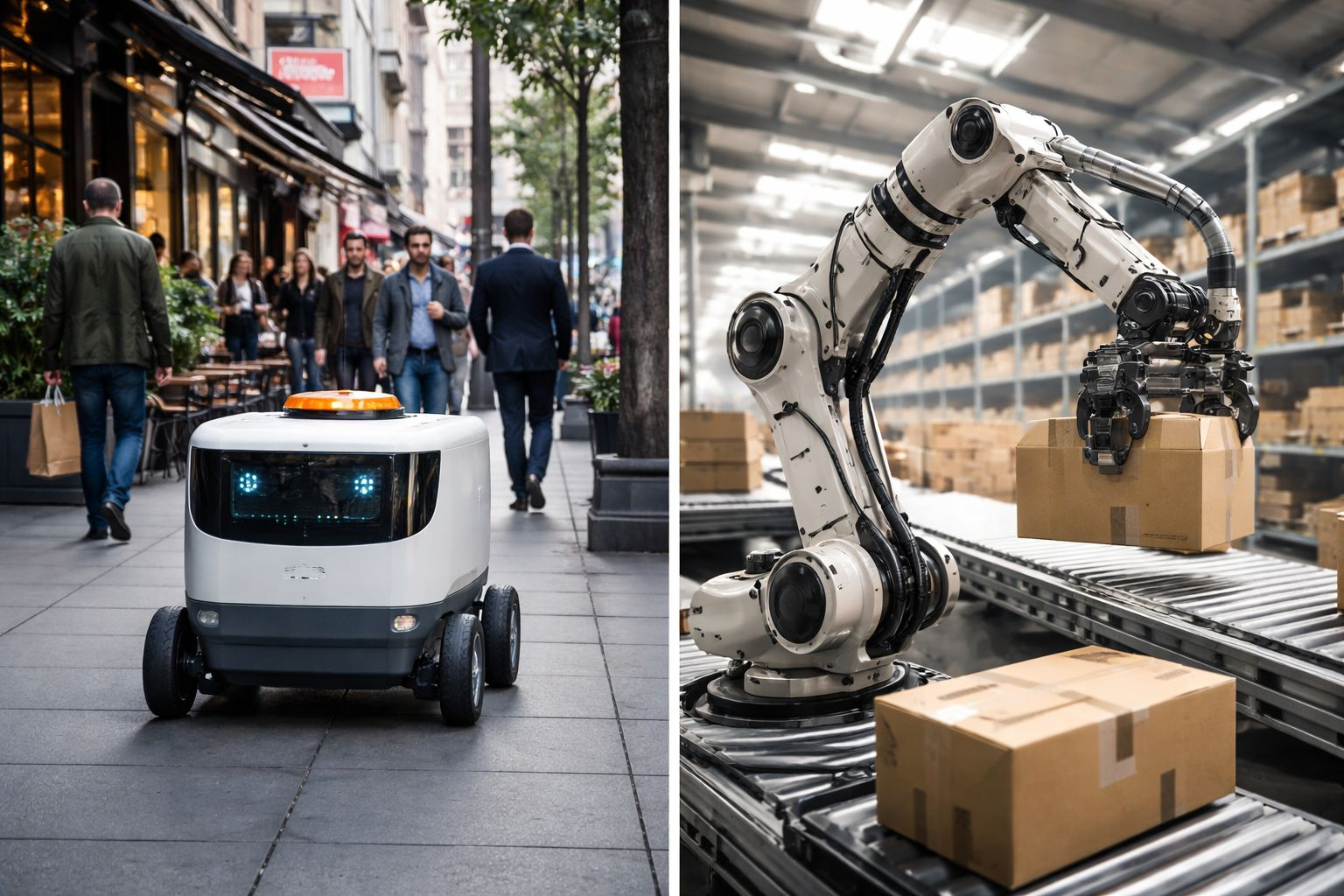
What changed over the past decade was not just the machines themselves but the environments in which they operate. Robots are no longer limited to repetitive tasks behind factory walls. They deliver packages, assist in warehouses, drive experimental vehicles, inspect infrastructure, and in some places even help care for the elderly. As artificial intelligence systems improved, these machines gained the ability to make limited decisions based on changing conditions. They could adapt.
The moment machines begin adapting, responsibility becomes more complicated.
Imagine a delivery robot navigating a crowded street. It makes hundreds of tiny decisions every minute. It adjusts its speed, changes its route, and reacts to unexpected obstacles. If something goes wrong, identifying who is responsible is not as simple as pointing at a single person or company. The robot may rely on software developed by one team, sensors produced by another manufacturer, and data gathered from an entire network of devices. Responsibility becomes distributed.
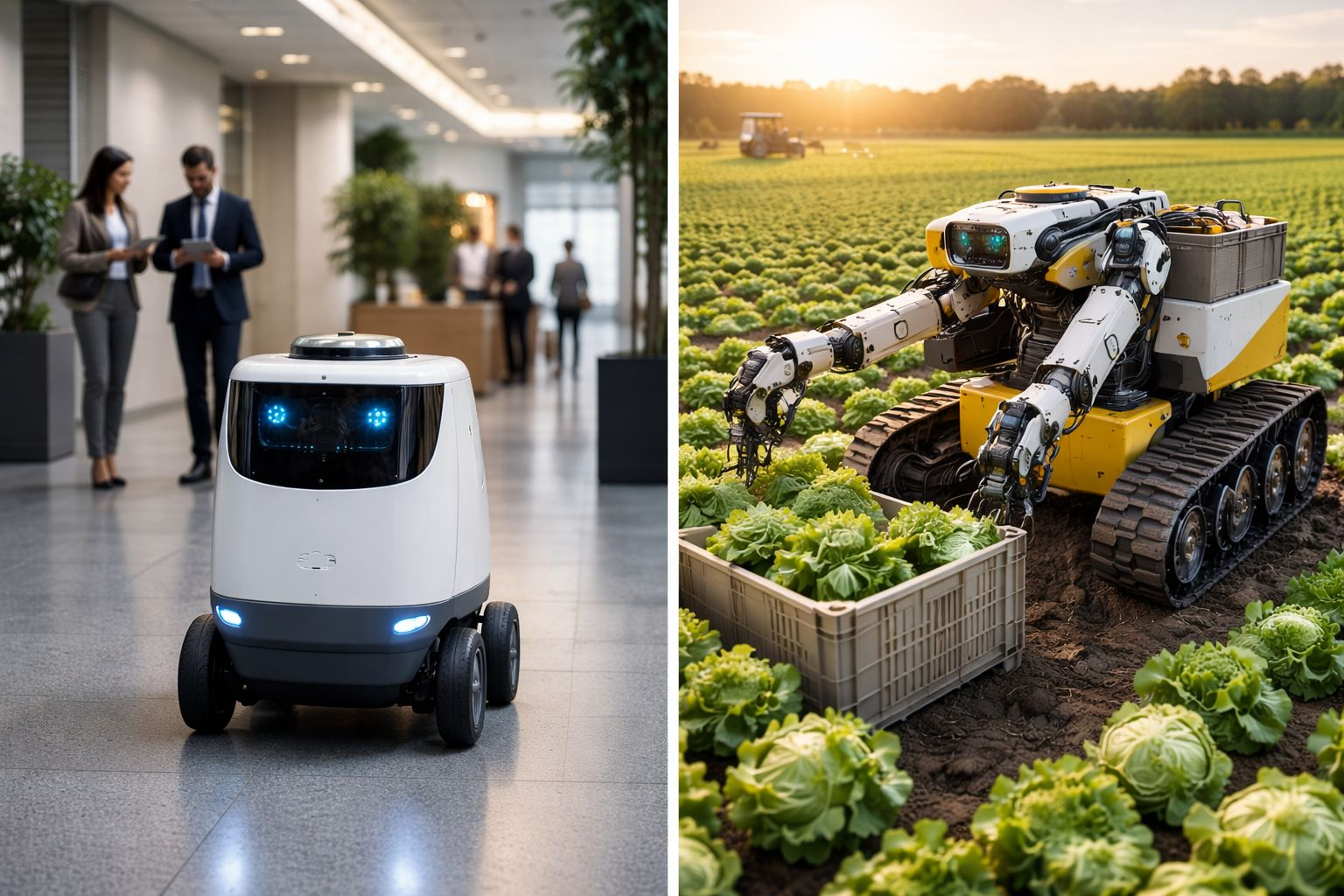
This is where the broader idea behind ROBO begins to take shape. The concept is not primarily about creating excitement in a market or adding another token to a long list of digital assets. Instead, it sits at the intersection of two technologies that are both evolving quickly: robotics and decentralized systems. When people talk about decentralized networks, they often focus on finance. But the structure of these networks can also be used to record decisions, track actions, and create transparent systems of accountability.
In a decentralized framework, actions can be logged in a way that is difficult to alter later. When applied to robotics, this means that the behavior of machines could theoretically be recorded in a shared ledger. Decisions made by a robotic system could leave a traceable record. That record could show what data was used, which system components were involved, and how the final action occurred.
Such a system does not solve every problem, but it changes the nature of the conversation. Instead of relying entirely on internal company records or opaque algorithms, there is at least the possibility of transparent documentation. For industries where machines interact directly with the physical world, transparency can matter more than speed.
Of course, ideas like this often appear much simpler on paper than they are in practice. Building reliable robotic systems is already difficult. Adding decentralized infrastructure introduces another layer of complexity. Data must be accurate, networks must remain secure, and systems must be designed in ways that do not slow down the machines themselves. A robot navigating a busy warehouse cannot afford delays while waiting for external verification.
These technical tensions are part of the reason why projects connected to robotics often move more slowly than people expect. Unlike purely digital applications, robotics deals with the physical world. Every improvement must survive unpredictable conditions, hardware failures, and real human environments. The difference between theory and reality can be large.
Another challenge lies in the culture of the technology industry itself. Many ideas receive attention not because they are mature but because they are new. Robotics, however, rarely rewards impatience. Machines that interact with the real world must be tested repeatedly, sometimes for years. A small design flaw can cause serious consequences when scaled across thousands of devices.
Because of this, the conversation around systems like ROBO often unfolds quietly among engineers, researchers, and infrastructure builders rather than in public headlines. They focus less on the price of a token and more on the architecture behind it. Questions about data integrity, network governance, and system resilience matter far more than short-term market enthusiasm.
There is also a broader philosophical question that sits underneath all of this work. Technology has always shifted responsibility in subtle ways. When cars replaced horses, societies had to invent traffic laws, insurance systems, and driver licensing. When the internet connected billions of people, legal systems struggled to adapt to a world where information moved instantly across borders. Robotics introduces another shift.
Machines are becoming participants in everyday environments rather than tools used occasionally by specialists. As they become more common, societies will need ways to understand and manage their actions. Transparent systems for recording machine behavior may become as ordinary as vehicle registration or product serial numbers.
Whether ROBO itself becomes a central part of that future is difficult to predict. The history of technology is filled with early frameworks that influenced later systems without remaining visible themselves. Sometimes the most important contribution of a project is not its final form but the questions it forces people to ask.
In that sense, the story around ROBO is less about speculation and more about experimentation. It represents an attempt to explore how decentralized infrastructure might interact with physical machines. The outcome of that exploration will depend on engineering progress, industry adoption, and the slow process of real-world testing.
What makes the topic interesting is that it sits at the edge of two transformations happening at once. Robotics is gradually moving out of controlled environments and into daily life. Decentralized systems are searching for uses beyond financial transactions. When these two directions intersect, new possibilities appear along with new complications.
Markets may focus on numbers and price movements, but the deeper questions unfold on a longer timeline. The systems that shape how machines interact with society will likely develop slowly, shaped by regulation, engineering discipline, and practical experience rather than excitement alone.
For now, ROBO exists somewhere in the middle of that process. Not as a finished answer, but as part of a larger attempt to understand how autonomous machines and transparent networks might eventually work together in a world that is only beginning to adjust to both.