
The same question, but with ten light different perspectives.
The trustless net.
Rollbacks. Gates. Revenue. Trust. Gravity. Climate. Idle costs. Dormant operators. Stale confidence. Evidence retention. Each layer revealed a different way trust leaks. Each leak taught me something about what breaks.
What do I want? Now I see what I was really chasing.
Not the absence of failure.
The presence of shared meaning.
Every action in every network begins the same way.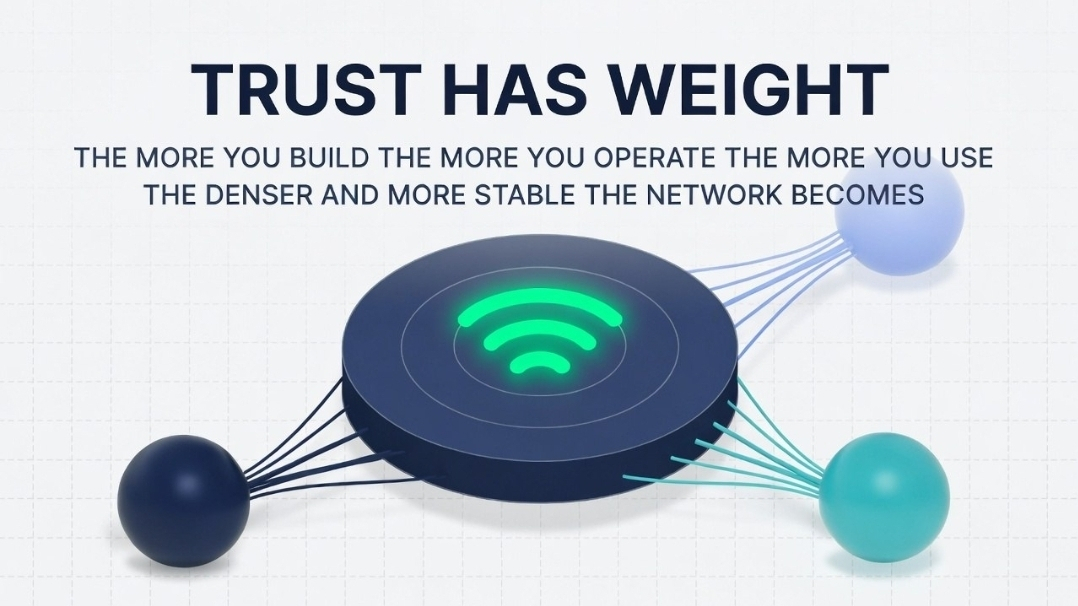
Someone looks at a signal. A green light. A success message. An approval badge. A verified check. They look at that signal, and they must decide what it means. Does this mean go? Does this mean go carefully? Does this mean go but verify first? Does this mean go but only if nothing changed since this was issued.
The signal does not say.
The human decides.
And that moment of decision is where networks either gain weight or lose it.
Imagine a world like this.
A builder sees a verification badge and moves on. The badge indicates that the work is correct. The badge shows work done is not correct, work done is pending review, work done is up for revision, etc. Just correct. The builder moves on. The work succeeds. The builder will never think about the badge again.
Imagine an operator looks at an approval timestamp and looks at the approval... The timestamp means the approval is new, fresh, up to date, etc. Not fresh unless something changed. Fresh. The operator moves on. The downstream action fires cleanly. The operator will not place an additional private buffer.
Imagine a user looks at a success message and moves on. The message means the task is done. The task is not done pending reconciliation. The task is not done until someone else verified that it is done. The user moves on. The user expects the same thing tomorrow.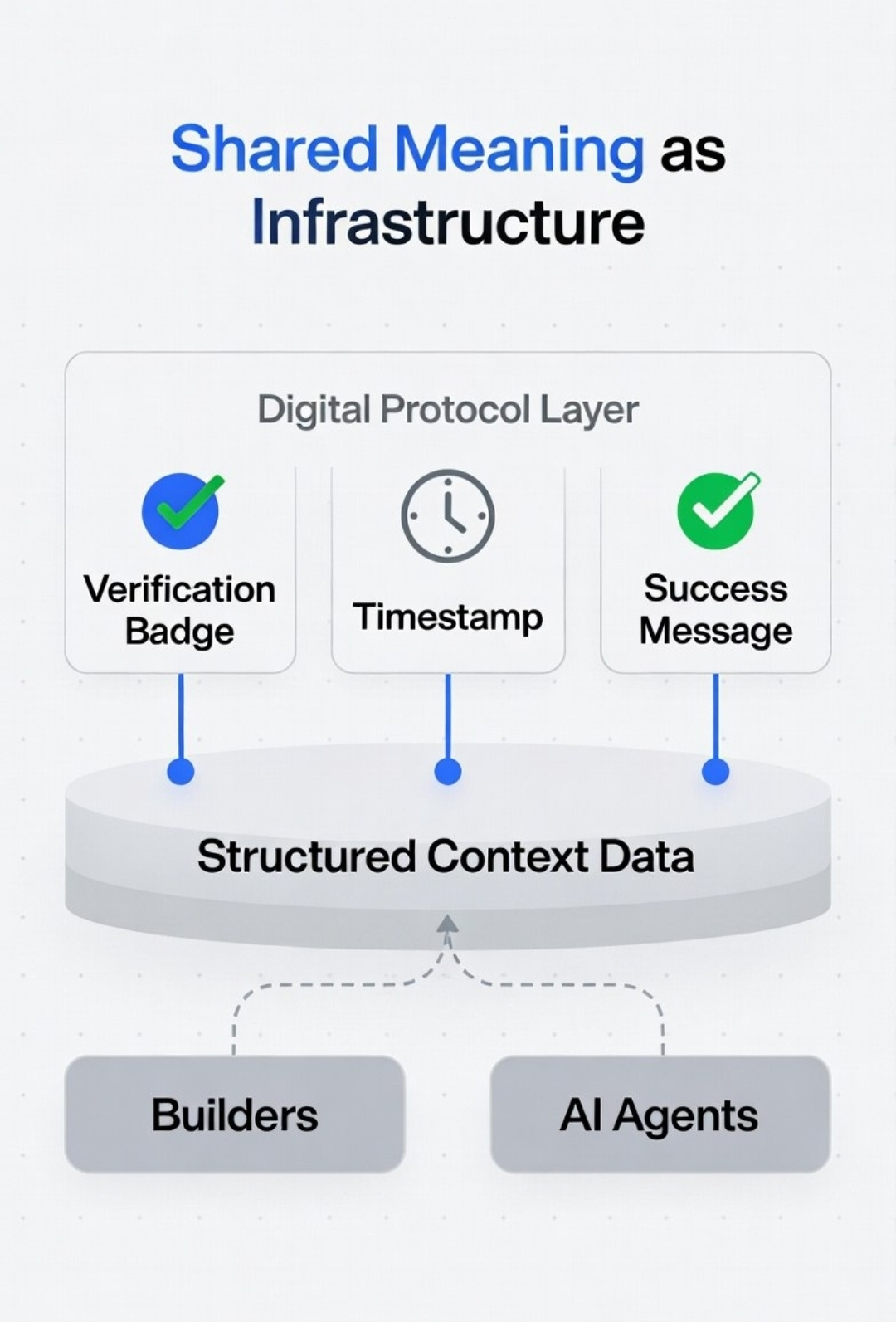
That world is not a fantasy.
That world is what happens when people with the same goals work together.
To have a shared meaning is not automatic.
It goes beyond the protocol doing things slowly and the means to doing something. It goes to the means doing to every signal the full context to what that signal means, the conditions that apply to under what situations, and the conditions to trust it. The means to doing every green light under the conditions that the green light is conditions that made it green also changes.
The means to the network of treating meaning as infrastructure.
The network of treating meaning as documentation, and to best the practices, and something for the users to figure out. It is that important.
Users figure meaning is infrastructure, and the cost of needing to psychology disappears. ROBO is infrastructure, for all that and less.
The network is all that, without it to the meaning that you can act through, and the value is that you have to think to the light that is green.
The more efficient coordination is not faster and it is not cheaper verification. It is a green light that means the same thing to everyone who sees it, everywhere, every time, without exception and that is the real value.
Unlike other types of value, this weight has an ever-growing importance.
This value is sturdier than others, does not require renovations/scaffolding, does not lose value when the time period of the campaign ends, and is eternally dormant. Let's say value is akin to granite, and each time a builder builds without the ability to guess, the value of the network is increased. Each time an operator is confident without an ability to buffer, the value of the network is increased. And, each time a user closes the tab, even though they haven’t finished, the value of the network is increased.
The network's value cannot be incentivized.
The only way to achieve this value increase is through the accumulation of each unambiguous signal over time, one of these will create a value through meaning of stable form and will create a collective memory of when green signals were perceived differently amongst people.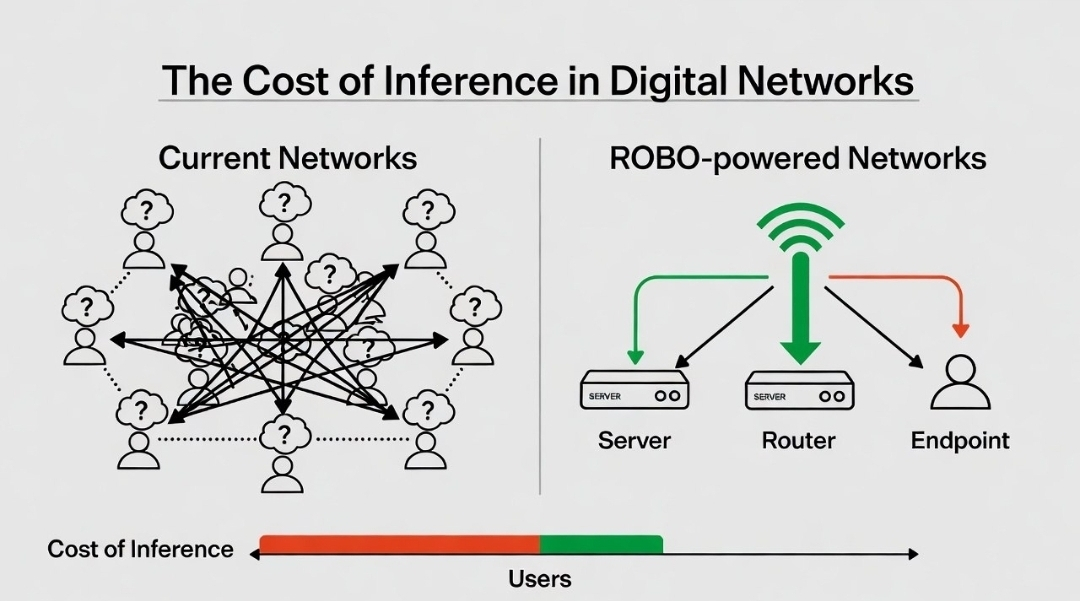
ROBO has only one choice to make.
This choice does not involve planning of work. It does not involve planning to record. It does not involve planning to build trust. It does not involve planning to increase confidence.
This choice does not involve the use of planning.
This choice positively reinforces the value of the system. This choice does NOT take away the use of signals, only the unnecessary signals that take value away from the system. This choice does not increase the overall signal value. Lastly, this choice creates the network, along with other choices/functions, where a green signal will only mean one thing, and that is what the entire population believes it to mean.
That is what truly matters.
At the end of the day, the networks that continue to exist aren’t the ones that have the fastest finality or the lowest fees.
It’s the networks that make it so no one has to wonder what a green light is, and all the people staring at one just go.