
What keeps pulling me back to @Mira - Trust Layer of AI is that it is not really asking the usual AI question. It is asking a more uncomfortable one.
The real question is not whether AI sounds smart, fast, or human. It is whether its answers can actually be trusted.That shift matters
People often think that when AI sounds confident and gives useful results, it is naturally dependable. In reality, that is not necessarily the case.AI can sound impressive and still be wrong in a way that many people do not notice.That problem becomes more serious the moment AI moves from drafting ideas to shaping decisions. Mira’s public framing is built around exactly that gap. On its main site, it describes itself as “trustless, verified intelligence,” and says it wants to make AI reliable by verifying outputs and actions at every step using collective intelligence. In its whitepaper, the project argues that today’s core obstacle is not generation quality alone, but the inability of a single model to reliably deliver error-free output without oversight.
I think that is why the idea lands differently for me than many other AI-network narratives. Mira is not presenting trust as a mood or a branding layer. It is trying to turn trust into a process. The whitepaper lays this out in fairly direct terms: instead of accepting a model’s answer as one finished object, the network proposes transforming that answer into smaller, independently verifiable claims. Those claims are then checked through distributed consensus among different verifier models, and the result is returned with a cryptographic certificate describing the verification outcome. That is a much more interesting posture than simply saying a model has been fine-tuned better. It treats AI output less like wisdom and more like untrusted input that must survive scrutiny before anyone leans on it. I find that framing more honest, because it begins from the assumption that plausible language is not proof.
What also stands out is the way Mira talks about the limits of centralized curation. The whitepaper makes a subtle but important point: even if you gather many models together, a centrally chosen ensemble still reflects the perspective and blind spots of whoever selected it. Mira’s answer is that reliability should come from decentralized participation, where no single actor controls verification outcomes. That is the project’s philosophical center. Whether it fully succeeds is a separate question, but the design instinct is clear. 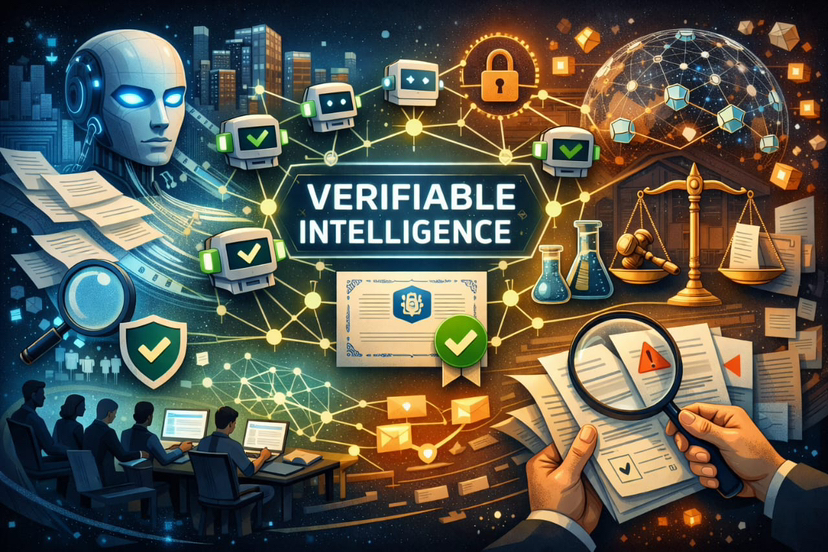
It is trying to deal with two problems at once: AI making things up, and the question of who decides what is actually proven or trustworthy. That is no longer a small issue, because AI now plays a role in important areas like finance, education, research, and coding. A legal study from 2025 found that even tools advertised as more reliable still gave wrong information in serious legal work. That shows that nice interfaces and big claims are not enough to solve the trust problem.
Another reason Mira feels worth sitting with is that it tries to connect verification to incentives rather than leaving it as a vague moral aspiration. In the whitepaper, node operators are expected to perform inference-based verifications and stake value to participate. The system combines staking with slashing penalties so that random guessing or dishonest behavior becomes economically irrational, at least in theory. I would not call that a magic solution. Crypto-economic systems always look cleaner on paper than they do under real pressure. Still, there is something serious in the attempt. Mira is basically saying that if AI verification matters, it should not be an optional courtesy added at the end of the pipeline. It should be a network function with costs, rewards, and explicit accountability. That makes the project feel less like a chatbot wrapper and more like infrastructure thinking. 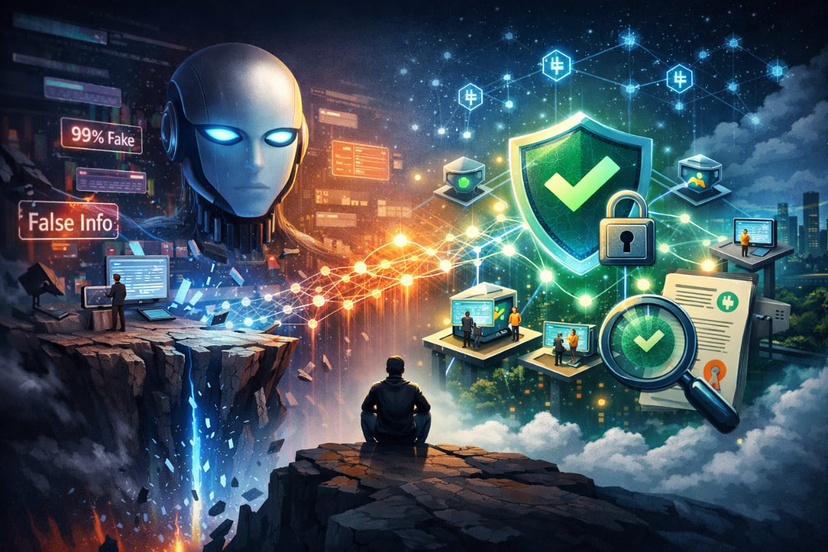
I also appreciate that Mira has moved beyond pure theory and into developer-facing products. Its documentation shows an SDK, API keys, model operations, and a quickstart flow for integrating the network into applications. On the product side, Mira Verify presents multi-model verification and auditable certificates as a usable interface, not just a research concept. The company’s own materials also point to implementation stories. It says Learnrite used Mira’s Verified Generation API and verification infrastructure to improve question-generation accuracy to 96 percent, and that Delphi integrated Mira’s verification APIs so research responses could be checked before being shown to users. Those are company-reported outcomes, so I take them as directional rather than independently proven benchmarks. But they do matter, because they show where the team wants this technology to live: inside live systems where answers need checking before they become account.
The broader context makes Mira’s timing understandable. There is growing public fatigue with the idea that users should simply “double-check AI.It sounds like good advice at first, but it often passes the burden to people who are too busy, not deeply familiar with the subject, or in the most vulnerable position. And usually, people do not question every sentence when something sounds polished and reliable.That is part of the trust problem. The interface feels finished before the truth has been tested. Mira’s vision, at least as stated publicly, pushes against that by trying to make verification a native layer rather than a user habit. I think that is a healthier instinct for where AI is heading. If systems are going to participate in workflows that carry financial, legal, or operational consequences, reliability has to be designed upstream. 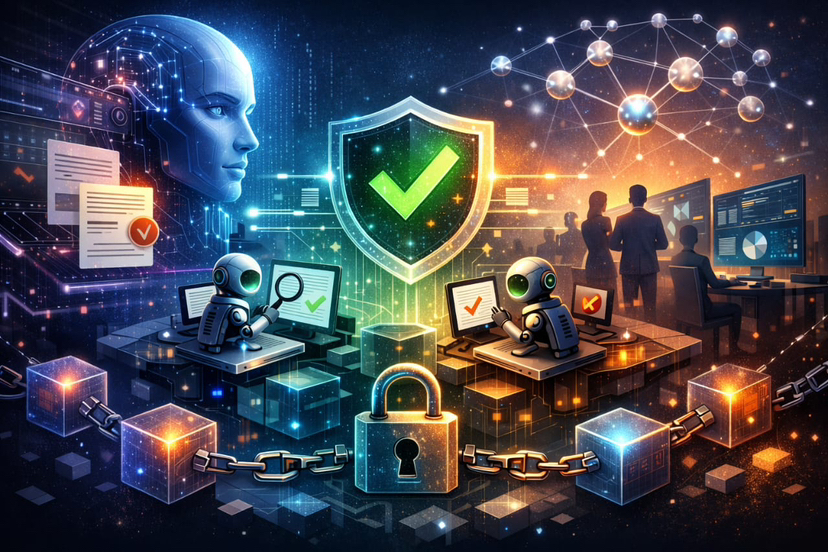
What I would still watch closely is the distance between verification in narrow cases and verification in the messy world. Breaking content into claims sounds elegant, but real language is full of implication, ambiguity, framing, and context. Some statements are factual. Others are interpretive. Some are technically true and still misleading. So the real challenge is not only whether Mira can verify claims, but whether its process can handle the softer edges of meaning without creating a false sense of certainty. That is where many systems stumble. They verify what is easy to isolate and leave the more human parts of truth unresolved. Mira seems aware of this, since its writing repeatedly emphasizes consensus thresholds, domain-specific requirements, and the limits of simply passing whole passages to verifier models. Still, that tension will matter a lot as the network matures.
Even with that caution, I think Mira is working on one of the more important AI questions right now. Not how to make outputs feel better, but how to make them deserve reliance. That is a different ambition. More disciplined. Maybe less glamorous too. But probably closer to what serious AI infrastructure needs. When I read Mira’s vision of verifiable intelligence, I do not read it as a promise that AI will stop being fallible. I read it as a recognition that trust should not be granted because a model sounds convincing. It should be earned through evidence, process, and systems that can be inspected after the fact. For me, that is the real value in what Mira is trying to build. Not perfect intelligence. Accountable intelligence.