
There’s a quiet assumption inside the $ROBO thesis that I’m still wrestling with.
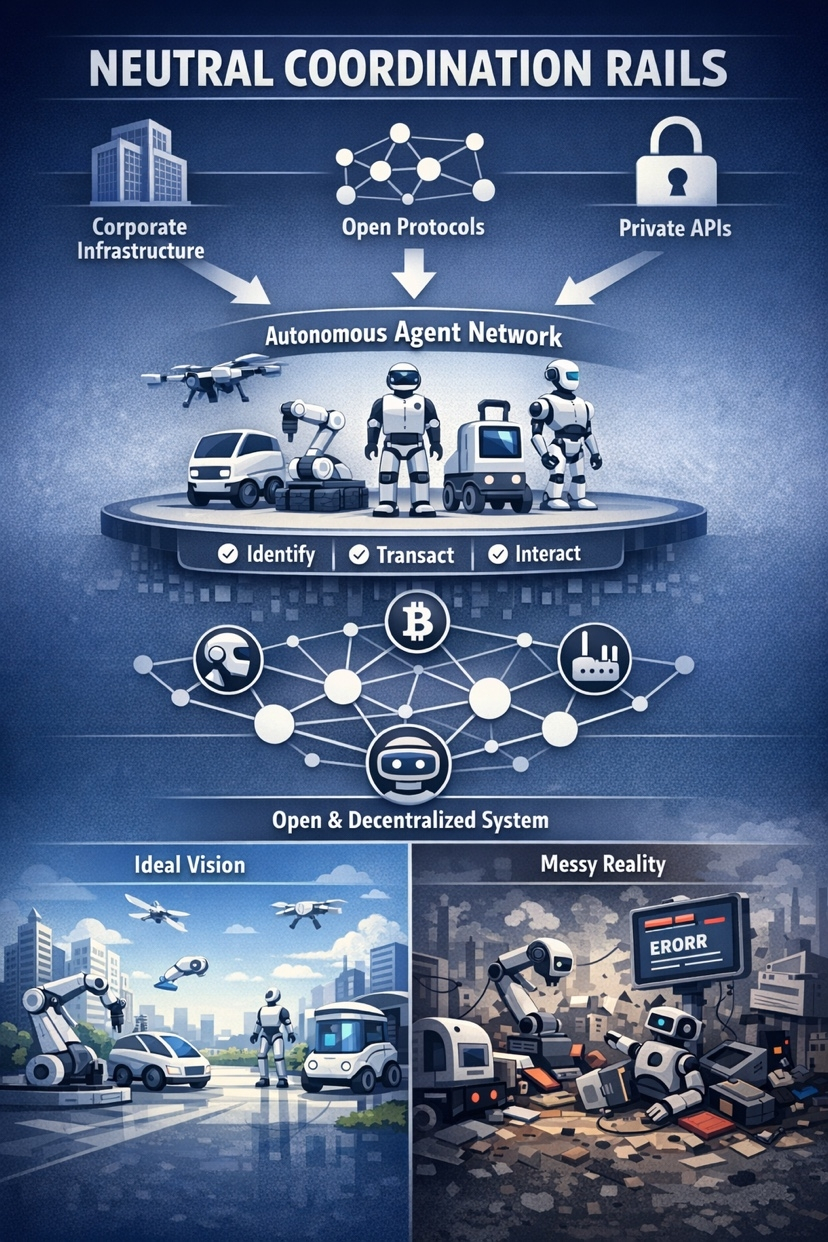
It’s the idea that machines will eventually need neutral coordination rails.
Not corporate infrastructure.
Not private APIs.
But open systems where autonomous agents can identify themselves, transact, and interact economically without a central gatekeeper.
That’s essentially the direction the Fabric Foundation is leaning into.
And on paper, the logic feels clean.
But reality rarely follows clean architecture diagrams.
Most technological systems start open and gradually consolidate around dominant platforms. Convenience wins. Efficiency wins. Control wins.
So the uncomfortable question becomes:
Why would machine economies behave differently?
Why would robotics networks, AI agents, and autonomous systems choose decentralized coordination when centralized infrastructure is often easier to deploy and control?
I don’t have a confident answer to that yet.
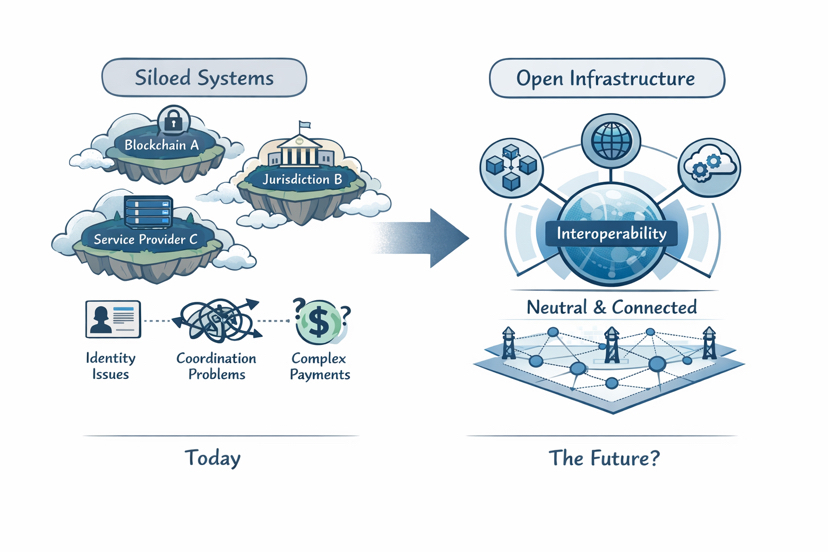
There’s an argument that eventually fragmentation forces openness.
If machines operate across different chains, different jurisdictions, different service providers — coordination becomes messy. Identity becomes ambiguous. Payments become complicated.
At that point, neutral infrastructure starts looking attractive.
But that scenario requires a level of interoperability we haven’t actually reached yet.
Right now, most systems still live inside controlled environments.
Which makes Fabric feel… slightly ahead of the ecosystem it’s anticipating.
That doesn’t mean the idea is wrong.
In fact, a lot of important infrastructure looks unnecessary before the surrounding ecosystem matures. The internet itself had protocols long before applications fully justified them.
But the timeline matters.
Crypto markets don’t wait patiently for architecture to be validated. They move on quickly when narratives fail to produce visible traction.
And that’s where I feel a bit uneasy evaluating $ROBO.
Another thing that complicates the analysis is that machine economies don’t create obvious signals in the early stages.
There’s no retail user base.
No social media growth loops.
No viral adoption patterns.
Integration happens quietly, inside systems most people never see.
Which means the indicators of success are almost invisible until they suddenly aren’t.
So I’m stuck in a slightly awkward middle position.
The thesis makes structural sense if autonomous systems begin operating across open environments.
But that future isn’t guaranteed.
Machines might remain largely confined within corporate ecosystems. Coordination might stay proprietary. The open machine economy might never become large enough to require a protocol layer like Fabric.
And if that’s the case…
Then this entire conversation ends up being an interesting idea that arrived before the world actually needed it.
I’m not dismissing it.
But I’m also not ready to pretend the outcome is obvious.
For now, I’m just watching for one signal:
Whether autonomous systems start escaping the environments that currently control them.
If they do, the infrastructure conversation becomes urgent very quickly.
If they don’t…
Well.
That’s where this thesis starts to get uncomfortable.
#ROBO @Fabric Foundation $ROBO
