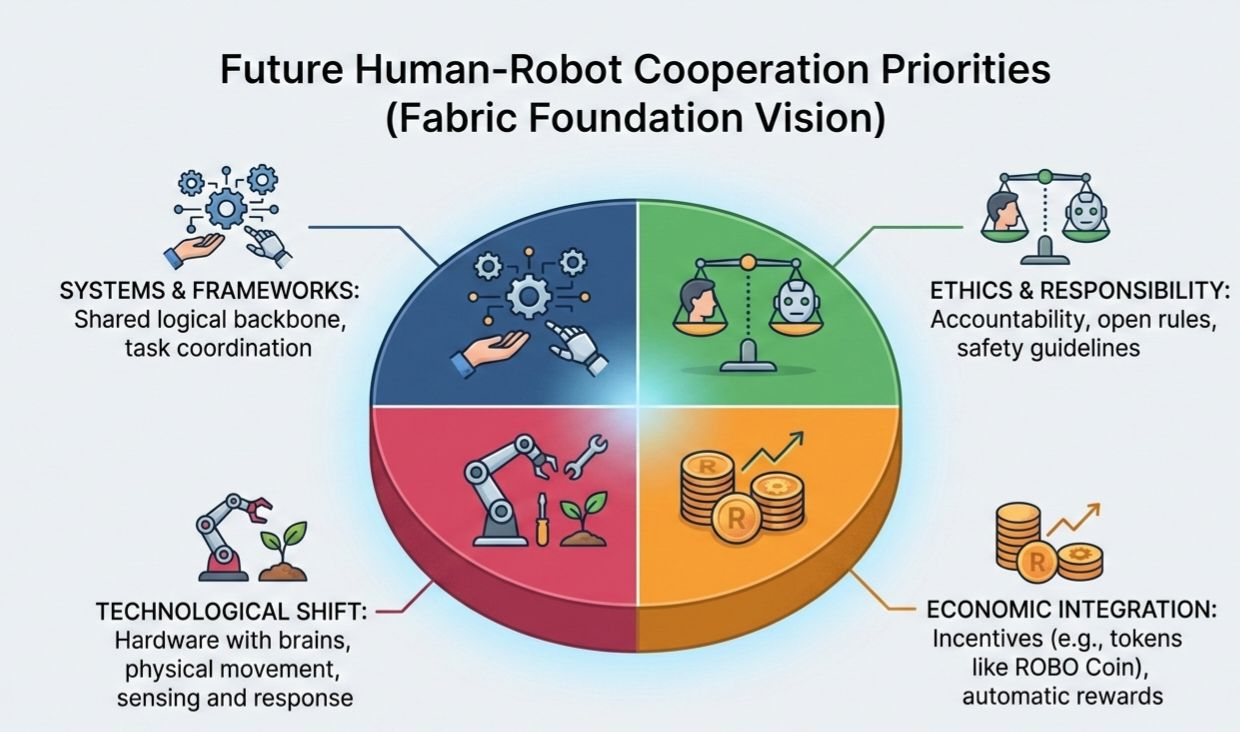
Lately, how people discuss tech has begun to shift. Digital stuff ruled the spotlight for ages, think code, programs, apps. Yet attention drifts now, inching closer to hardware with brains, machines smart enough to move and act where we live. Physical robots doing real tasks are stepping into view.
Out in the open now, robots aren’t stuck to sci-fi screens or tucked away behind factory walls. From fields where crops grow to labs humming with tests, they show up more each day. Not all at once but slowly, they take on tasks people used to handle alone. Seen in delivery hubs or walking through city spots, their presence grows without fanfare. One move after another, they settle into work once meant only for hands and feet.
Right there, that shift, it’s when Fabric Foundation steps in. Not about rivalry between people and robots, the project aims at teamwork instead. Systems have to change; so does basic structure, to support both smart machines and humans doing their part well.
A New Phase in How People Work
Work changed a lot over time. Back when farming ruled, people did everything by hand. Machines arrived during industry's rise, boosting output fast. After that, digital tools rewrote communication plus data handling.
Something shifts again, as machines begin stepping beyond number crunching into spaces they can touch. Their reach extends past data, gripping real things through motion and response. This turn feels different, not just faster calculations, but movement in the air, weight on surfaces. Tools now sense resistance, adjust pressure, react to heat or sound. What once stayed inside circuits spreads outward. Physical presence joins computation. A machine might pause, then tilt a lever based on light. It watches, waits, acts without being told each step. The boundary blurs further between thinking systems and hands-on doing.
Out there, robots are learning to watch what happens around them, thanks to smarter software built into their systems. Instead of just following orders, they now figure things out on their own, slowly but surely handling tougher jobs. Because of this shift, people and machines start sharing workspaces more often than before. These teams mix human thinking with machine precision, creating setups where each covers for the other’s weak spots.
Folks at Fabric Foundation see things differently. Instead of swapping humans out for robots, they’re looking into ways tech might back us up, even help us do more. Starting fresh every time, each idea builds on what people already bring. Machines aren’t taking over, they’re stepping in where hands fall short.
Here’s what matters most, this viewpoint carries real weight. Not every tomorrow needs to mean people versus tech. What if machines simply handle the grind, free up time. Then minds turn toward making, planning, breakthroughs.
Building Systems for a World with Robots
Most robots won’t work well alone when used widely. Because teamwork matters, they must link up through networks. These links help them swap information smoothly. One machine can react faster if it knows what another is doing. People stay involved too, since coordination includes human input. Without shared signals, the whole effort slows down.
Fabric Foundation lays down the groundwork needed for smooth teamwork across devices. Starting with tools that organize tasks, it moves into linking machines through shared channels. Decisions get easier when systems step in to handle tricky choices automatically.
Robots gain surprising strength once linked by smart networks. Because of these connections, their abilities grow well beyond individual limits. As conditions shift around them, they adjust without needing outside help. New data flows in, immediately shaping how they act next. At the same moment, they work alongside other machines, syncing moves as events unfold.
A single machine can do little. Yet when linked together, like runners in a relay, they cover distances no one could alone. Picture drones scanning wildfire zones while trucks reroute supplies without human orders. These actions unfold smoothly only if rules exist behind the scenes. Think traffic signals for robots: invisible, quiet, always active. Without structure, even smart devices clash or stall. Order emerges not from power but from shared logic. That backbone, the unseen framework, is what keeps movements aligned and goals reachable.
Fabric sets out to build something just like this base.
Economic Motivations Within Robot Systems
Out here, a curious bit of the growing setup ties into money frameworks built only for robot groups. What shows up next is how these systems start shaping interactions across machines.
Take ROBO Coin, for instance. It's a token built to back transactions where machines do work. Because of how these setups run, people might jump in more when they stand to gain something. When bots finish jobs, someone tweaks code, or helpers keep things running, each role may get paid via smart contracts that hand out rewards automatically.
Out of nowhere, old systems shaped around people and big companies start to look outdated. Once self-running machines show up, different ways of handling money stuff might just quietly make more sense.
Looking at it one way, this concept grabs attention. When robotics meet peer-driven rewards, something fresh begins, humans linking with smart machines in ways just starting to take shape.
Responsibility and Ethics
Big new tools always bring tough thoughts close behind. Robots, what fair rules should guide them? Power to choose their place often rests with a small group. Benefits from machines spreading fast might lift everyone, though too often just a handful gain most. Questions about control tend to surface once systems grow strong enough to shift how things work.
Starting fresh means building rules everyone sees. When robots grow, someone must watch how they change. Guidelines shape progress without hiding choices. Open plans keep trust alive across teams. Decisions made in light rarely cause surprise later. Values matter most when machines learn to act.
Maybe it's just me, but this moment feels heavy. Shiny new tools don’t guarantee progress. When rules lag behind, breakthroughs might spiral in ways nobody saw coming.
Fabric steps in before problems grow, shaping how robots evolve with steady guidance. Early moves here set a calmer course, nudging progress toward accountability without force.
Thoughts on the New Movement
Out of nowhere, seeing what Fabric Foundation does showed me tech moves fast. Robotics stuff we now take for granted? A short while back, that seemed like fantasy. Machines doing more than ever, this leap came from sharper AI, better sensors, smarter build methods. Boundaries shift when tools improve without warning.
Most striking? The thinking that drives the project. Instead of chasing high-tech wins alone, it leans into teamwork, collective effort, together shaping progress with care.
Learning more about this area, particularly what ROBO Coin might do, slowly showed me how online economies can back real-world machines. Where robots meet distributed networks, chances open up, not just for coders but builders too. Engineers everywhere might find new paths through these connections.
Few years ahead might bring countless robots working everywhere. Not just in moving goods but also watching crops grow, they could fit into normal workdays. Machines that think might show up where people drive now. Even forests and farms may host them quietly doing tasks. These helpers won’t wait for distant futures, they’re arriving step by step.
Facing ahead, smooth operation depends on how well these systems link up through shared rules plus rewards guiding their role in a broader network.
Starting fresh, Fabric Foundation tried shaping what came next. Because it centered teamwork and systems, machines might one day act together, linked, not stand alone. These devices could join a web of tech, moving as a group, while people stay in charge.