
Fabric is one of those projects that stayed in my head longer than I expected.
Not because it had the biggest launch. Not because the branding was perfect. And not because it came wrapped in a neat, easy narrative. It stayed with me because the idea underneath it feels bigger than the usual crypto pitch.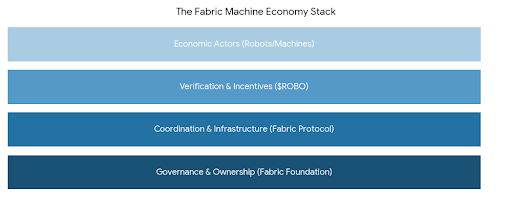
Most projects in this space still revolve around the same closed loop: money moving around, code talking to code, speculation creating more speculation. Even when teams try to attach AI to that, it often still feels like the same game with a different skin.
Fabric feels like it is reaching for something else entirely.
What pulled me in is that it does not think about robots as products in the usual sense. It treats them as participants in a network. And once you start from that perspective, the frame changes.
You are not just asking what a machine can do.
You start asking: who gives it work? Who verifies that the work was done properly? Who updates it? Who controls it? Who gets paid? Who gets excluded? And ultimately, who has power over the system as a whole?
That is the part that feels important.
A lot of AI and robotics talk still gets stuck at the demo stage. It is all polished, controlled, and impressive — “look what this machine can do.” But real usefulness creates problems that demos never show.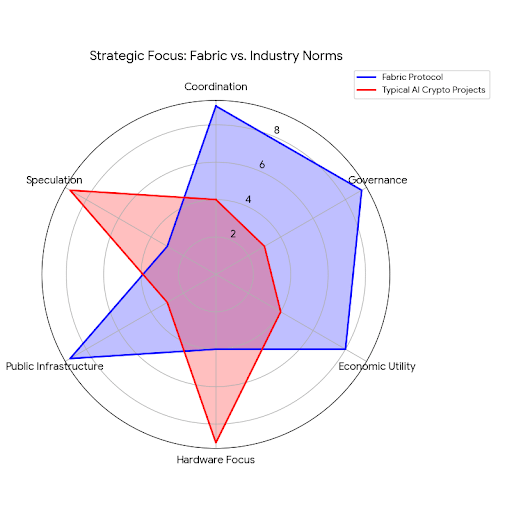
The moment machines begin doing real work in the world, you need more than good hardware and software. You need identity. You need trust. You need coordination. You need ways to verify outcomes. You need incentive systems that do not collapse the moment people figure out how to exploit them.
And if all of that infrastructure ends up owned by a small group of private companies, robotics will likely follow the same path every major technology market has taken before: closed systems, concentrated control, and everyone else building inside someone else’s walls.
Fabric seems like it is trying to get ahead of that.
What makes it interesting is that it does not just say “robots on blockchain” and hope that is enough. It is asking a harder question: if machines are going to become economically useful actors, what kind of public infrastructure must exist around them?
How do they participate in an open system?
How is their work measured?
How are disputes handled?
How do you prevent the network from turning into fake activity, broken incentives, and low-quality output?
That is where the project starts to feel more serious than most of the AI-adjacent ideas floating around crypto.
It is not using crypto as branding. It is using it as the coordination layer.
That does not guarantee success, of course. Many things can go wrong between an interesting design and a working network. But at least the pieces connect. The token, the protocol, staking, verification, settlement, governance — they all seem tied to an actual system rather than forced together afterward.
And that is a big reason Fabric held my attention.
It feels built from the assumption that robotics is heading toward an ownership problem as much as a technical one.
Everyone wants to talk about smarter machines. Fewer want to talk about who controls the rails those machines operate on once they become useful enough to matter. That control layer may be more important than the machines themselves.
Fabric is trying to build that exact layer.
I also appreciate that it does not seem naive about open systems. Many projects talk about openness like it is automatically good. It is not.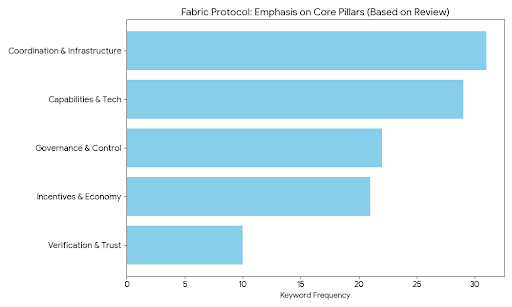
Open systems get messy fast once money enters the picture. People fake work. They game incentives. They collude. They produce low-effort output and try to pass it off as value. Crypto has seen every version of this already.
So when I see Fabric talking about validation, disputes, slashing, bonding, and performance standards, I actually take it more seriously.
Because that is where real systems break. Not in the vision deck.
In the incentives. In the enforcement. In the moment people test how much they can get away with.
Fabric seems to understand that early — a good sign.
Another thing I keep coming back to is that the robot itself almost feels like only one piece of the story. Fabric seems more focused on everything around the robot:
How new capabilities get added.
How contributors improve the network.
How useful data feeds back into the system.
How governance affects what gets built next.
How the whole system evolves without becoming unusable.
That modular side stands out because it feels more like how crypto systems grow — not as fixed products, but as messy, living structures where different contributors add layers over time.
That is also why it feels more native to crypto than much of the recent AI token wave. Many of those projects feel like narratives first, systems second.
Fabric, from what I can see, starts with the system design. It tries to define the mechanism underneath the story.
And that matters.
Because Fabric is not just pointing at robotics. It is pointing at a world where machines are active economic participants.
And in that world, the biggest battle will not only be over who builds the best machines. It will be over who controls the networks they depend on.
Who gets access?
Who gets rewarded?
Who sets the rules?
Who verifies the work?
Who benefits when value starts flowing?
Those are governance questions.
Those are economic questions.
Those are power questions.
And that is why the project feels heavier than the average launch.
There is also something slightly uncomfortable about it — and worth noting. Public infrastructure for machines is not just software anymore.
It is labor. Control. Access. Incentives. Exclusion.
It is about who gets a seat at the table early, and who ends up living under rules they had no role in shaping.
That is not a small thing.
Fabric, at least to some extent, seems aware of the territory it is stepping into.
The Foundation side reinforces that feeling. It makes the project feel less like a quick token operation and more like something attempting to place governance around itself from the start.
Whether that holds up is another question. Foundations can be meaningful or cosmetic. Time will tell.
But the existence of that layer shows the team understands: a protocol between humans, machines, and money cannot pretend to be purely technical. Governance is part of the product, whether you like it or not.
Fabric does not feel like a finished answer. It feels like an early structure built around a problem most people still do not fully see.
Maybe that is why it lingers.
It is not polished like consumer AI.
It is not simple like most token narratives.
It is slightly awkward — which makes it feel more real.
Because if machines become autonomous, the systems around them will matter as much as the intelligence inside them. Maybe more.
Who coordinates them?
Who verifies them?
Who earns from them?
Who governs them?
Who builds on top of them?
These are not side questions. They are the actual questions.
Fabric seems to understand that earlier than most.
And that is the real reason it is hard to ignore. Not because everything is solved. Not because the path is clear. But because it aims at the layer of the problem that will matter most once this space becomes more real than speculative.