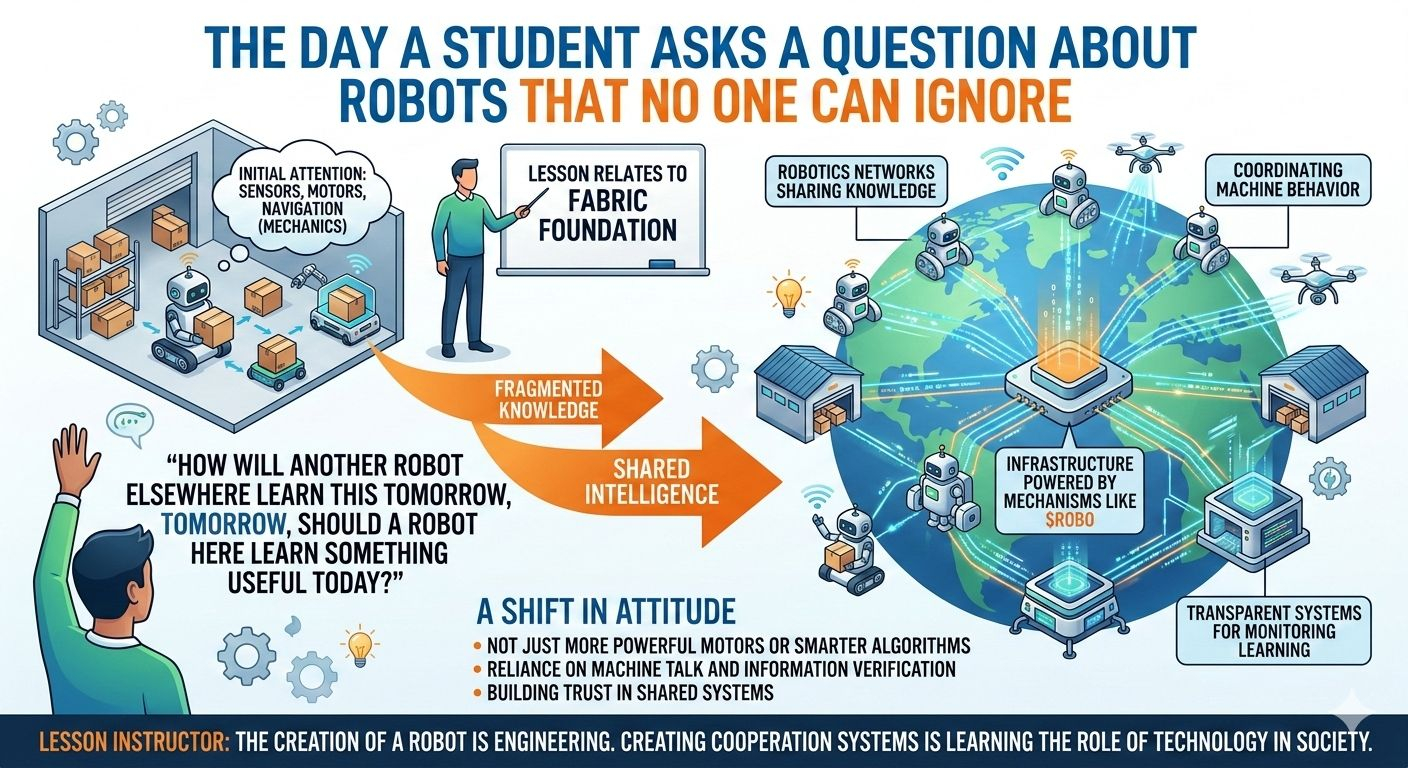
In one of the robotics classes at a local technical institute, the lecturer proposed that students observe the performance of a small group of training robots in a simulation of a small warehouse. The machines transferred the packages among the shelves, checked labels and went back to charging points. Initially, the students pay attention to the mechanics how the sensors were operating, how the motors were changing the speed, how the navigation system did not lead the students to a collision.
Then one student gave a question which shifted the whole discussion.And, he said, how will another robot in some other place learn the same thing tomorrow, should a robot here learn something useful to-day?
There was a silence between the rooms. The hidden meaning of the question was realized by everyone. Robotics education is mostly concentrated on the development of smarter machines but what the student wanted to know about was something bigger, the system that links them.
In the modern world, numerous robots are working in the closed world. A warehouse robot may enhance its performance with time, although it tends to remain confined within the structure of a particular company. Another robot constructed by another manufacturer can solve the same problem completely afresh. Even with an increase in the intelligence of machines, knowledge is fragmented.
This difficulty is a factor that has led to researchers and developers looking to the wider systems of coordination. Other projects such as Fabric Foundation are exploring the applicability of robotics networks sharing verified knowledge, coordinating machine behavior and developing transparent systems to monitor how robots learn and work.
The concept does not consider the robots separately as an isolated machine, but as a part of a bigger ecosystem. A robot completing a job would be able to check its work, distribute valuable information, and advance a network that would assist other machines in doing so. One example of how incentives, validation, and governance can be used to enable such collaboration is infrastructure powered by mechanisms such as $ROBO.
This is a significant change in attitude, to students in the field of robotics today. More powerful motors and more intelligent algorithms will not be the solutions to the future of automation. It will also rely on the way machines talk to each other, how they check the information and the development of trust in the shared systems that can be comprehended and managed by the human beings.
These ideas can be experimented best in educational settings. When the students come up with robots they are also learning how to come up with responsiveness. The way machines will socialize with human beings, the way mistakes are identified and how refinements propagate securely over systems, is being determined by them.
At the conclusion of the workshop, the instructor summarized the lesson in an easy manner. The creation of a robot is an exercise in engineering. However, by coming up with the systems to enable the robots to cooperate, there is something more significant that is learned, which is the role that technology plays in society.
Simple though the question posed by that student was, it looked into the future. In case the robots will become a part of the daily routine, the world will require the infrastructure that will assist in their learning process, functioning in a transparent manner, and answer to the people to whom they provide the services.
@Fabric Foundation #ROBO $ROBO