
After spending years around crypto, I’ve learned something simple. Hype always moves faster than reality.
Every cycle brings a new narrative. Sometimes it’s DeFi. Sometimes it’s NFTs. Sometimes it’s AI. The pattern rarely changes. A new idea appears, the market gets excited, tokens start moving, and suddenly everyone begins talking as if a revolution has already happened.
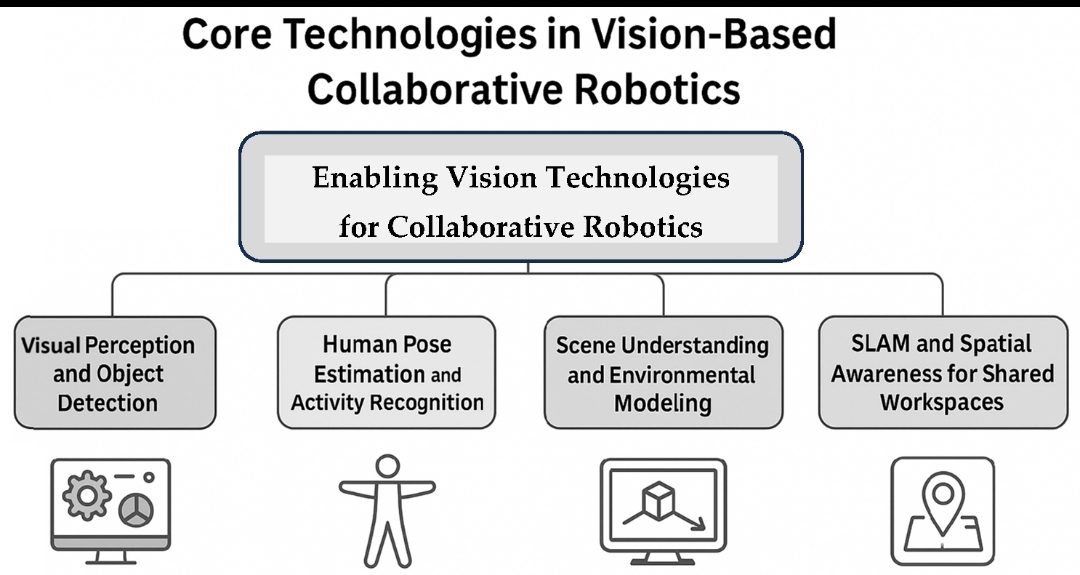
Recently I started seeing Fabric Protocol and its ROBO token appearing more frequently across crypto discussions. The idea sounds ambitious. An open network where robots, data, and computation coordinate through a public ledger. A system where machines can collaborate through verifiable infrastructure.
It is the kind of concept that immediately attracts attention.
But experience has taught me something important. When a crypto project claims to transform an industry, the first step is not reading Twitter threads. The first step is understanding the industry itself.
So instead of following the excitement around ROBO’s price movement, I tried to learn more about the world Fabric Protocol claims to interact with. Robotics and automation.
I spoke with a few people who actually work in automation and industrial robotics. Engineers involved in warehouse systems, factory robotics, and logistics automation.
Their reactions were interesting.
Not hostile. Not dismissive. Just uncertain.
Most of them found the idea intellectually interesting. But they also struggled to understand what specific problem a blockchain layer would solve in their daily work.
Industrial robots already operate through tightly controlled systems. Speed matters. Reliability matters. And responsibility matters even more.
When a robot in a factory makes a mistake, someone must be accountable. Companies cannot simply rely on decentralized coordination if safety, legal liability, or operational downtime are involved.

One engineer explained it very simply to me.
Factories don’t want more complexity. They want fewer points of failure.
Another pointed out that many robotics systems already rely on centralized control software because it is easier to monitor, secure, and update.
A distributed ledger may sound elegant from a crypto perspective. But in industrial environments, latency, safety certification, and regulatory compliance are far more important than decentralization.
Privacy also came up.
Manufacturing data is extremely sensitive. Companies rarely want operational information flowing through open networks.
None of these comments mean Fabric Protocol cannot succeed. But they highlight something I have seen many times in crypto.
Projects often begin by imagining a problem rather than discovering one.
Crypto has historically succeeded when it solved problems inside its own ecosystem.
Decentralized exchanges solved trading without intermediaries. Wallets improved access to digital assets. NFT infrastructure made ownership of digital items easier.
In those cases, the users were already inside the crypto world.
But industries like robotics already have functioning systems. Engineers, companies, and regulators have spent decades building them. Replacing those systems requires more than a clever idea.
It requires solving a real problem better than what already exists.
This is the challenge Fabric Protocol will eventually face.
The concept of an open network for machine coordination is interesting. It sparks imagination. But imagination alone does not create adoption.
Real adoption happens when engineers, companies, and operators decide that a new system actually makes their work easier, safer, or cheaper.
Until that happens, the ROBO token represents something different.
It represents belief.
Belief that one day this infrastructure might become necessary.
In crypto markets, price often reflects narratives before it reflects usage. Communities form. Stories spread. Momentum builds. Tokens rise long before real-world systems appear.
That doesn’t automatically mean the project will fail. But it does change how I think about it as an observer.
Buying a token like ROBO today is not buying proof of adoption.
It is buying a bet on a possible future.
And after years in crypto, I’ve found one simple question helps cut through the noise whenever a new narrative appears.
What real problem, experienced by people outside crypto, does this solve today?
Sometimes the answer is obvious.
And sometimes, the market is still searching for one.
Narratives move markets. Reality decides which ones survive.