
03:14:22 debit confirmed.
I hadn’t filed the maintenance request yet.
For a second I thought the fabric wallet panel had refreshed out of sequence. The machine account surface sometimes redraws twice if I leave it open too long and the ledger catches up underneath it. I hit reload.
Same balance.
Lower.
No alert. No approval request. No intermediate state pretending I still had a say in it. Just a subtraction already folded into the machine wallet history, the kind of quiet correction this environment makes when it has already decided the event is real.
The debit line showed autonomous maintenance settlement.
That part landed harder than it should have.
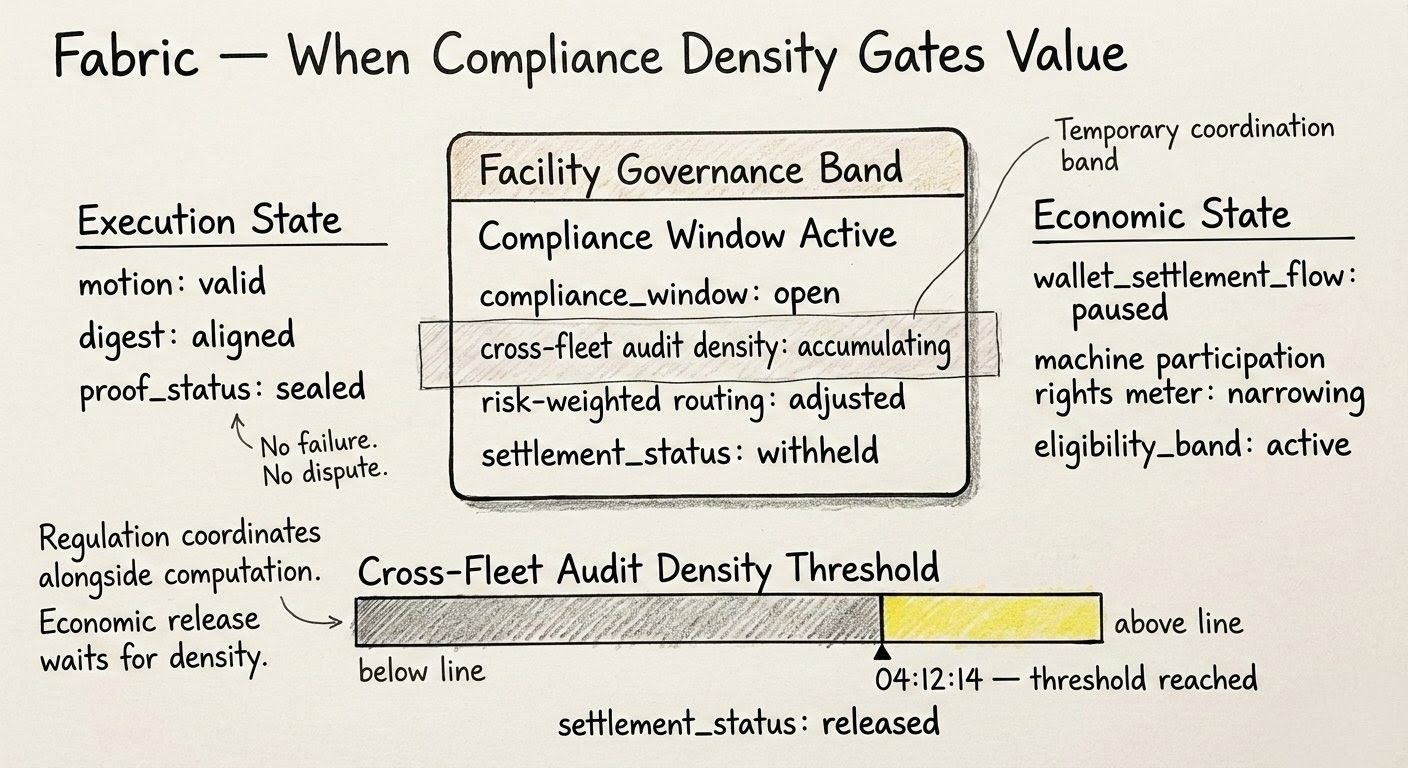
My coffee was still too hot to drink. I set it down and opened the actuator panel expecting some gray area I could argue with. A warning band. A threshold close enough to reinterpret. Instead the deviation record had already crossed the trigger condition inside the fabric runtime. Micro-fracture probability 0.73. Service window compressed. Mechanical exposure recalculated downward.
The machine didn’t escalate it to me.
It proved it.
The diagnostic sequence had already generated Proof of Robotic Work, attached the execution proofs, and pushed the evidence into verification before I finished deciding whether the actuator actually felt wrong. That proof discipline is what changes the whole atmosphere here. The event doesn’t wait around to become a ticket. It binds itself to evidence and enters the ledger as fact.
The fabric physical-to-digital proof binding was tight. I checked it twice, half-hoping for a malformed hash or a lazy inference somewhere in the chain.
Nothing loose.
By the time I scrolled, on-ledger action verification had already finalized inside the machine execution record. Underneath it sat the coordination layer that makes all of this feel less like fleet software and more like an economy with memory. That’s the part people miss. The ledger doesn’t just store robot history. It makes robot actions expensive, payable, rankable, and difficult to pretend never happened.
03:14:22.
The maintenance settlement cleared in the same block.
I stared at the timestamp like it might redraw itself out of embarrassment.
It didn’t.
The entry moved straight into the fabric execution record as if nothing unusual had happened. Parts reserved. Charging slot assigned. Provider paid. Compensation distributed through the same chain of state updates that had reduced the wallet before I even opened diagnostics. The line item didn’t look aggressive. It looked ordinary.
That might be the strangest thing this system does. It makes autonomy look procedural.
I opened the old maintenance spreadsheet out of habit. The one I used before any of this. A stupid reflex. It felt stupid immediately.
I tried to cancel anyway.
The interface didn’t resist. It recalculated.
Delayed service would reduce reliability exposure. Reliability exposure feeds reputation scoring. Reputation scoring affects participation weighting. Participation weighting changes premium routing access across the machine labor layer. The numbers were small enough to be insulting. Tiny penalties. Fractions.
That made them worse.
Inside this fabric system, small deltas don’t stay small. They accumulate in routing order, earning posture, machine visibility. A robot does not fall out of favor dramatically. It gets quietly edged sideways until the higher-value work stops coming.
I hovered over confirm longer than I needed to.
The fee window flickered. Gas path already optimized. Settlement routed through the native token logic with no urgency premium, no sloppy overpayment, no emotional surcharge for hesitation. That’s another thing this environment does well: it normalizes machine cost. It doesn’t dramatize expenditure. It just aligns it with uptime, service continuity, and the incentive surfaces the network actually rewards.
Somewhere upstream, fabric validators processed the proof bundle. That part happens whether I’m comfortable or not. Trust-minimized machine execution has no use for “I think it still feels fine.” It processes attestation. If the evidence closes, the action moves.
A provider acknowledgment arrived a moment later through the settlement layer.
I checked the torque variance again. I had misread one digit the first time. Thought maybe it was 0.37, not 0.73.
It wasn’t.
The trigger originated inside the fabric OM1 runtime, the machine-native layer abstracting hardware differences so the same diagnostic logic can move coherently across different robots. The module itself came through the app distribution layer earlier this week. I remember approving it casually. Quick pass. Efficient enough. That’s the part that bothered me afterward. I had approved the path that allowed the robot to act this way, then acted surprised when it did.
Now it had already acted.
Without me.
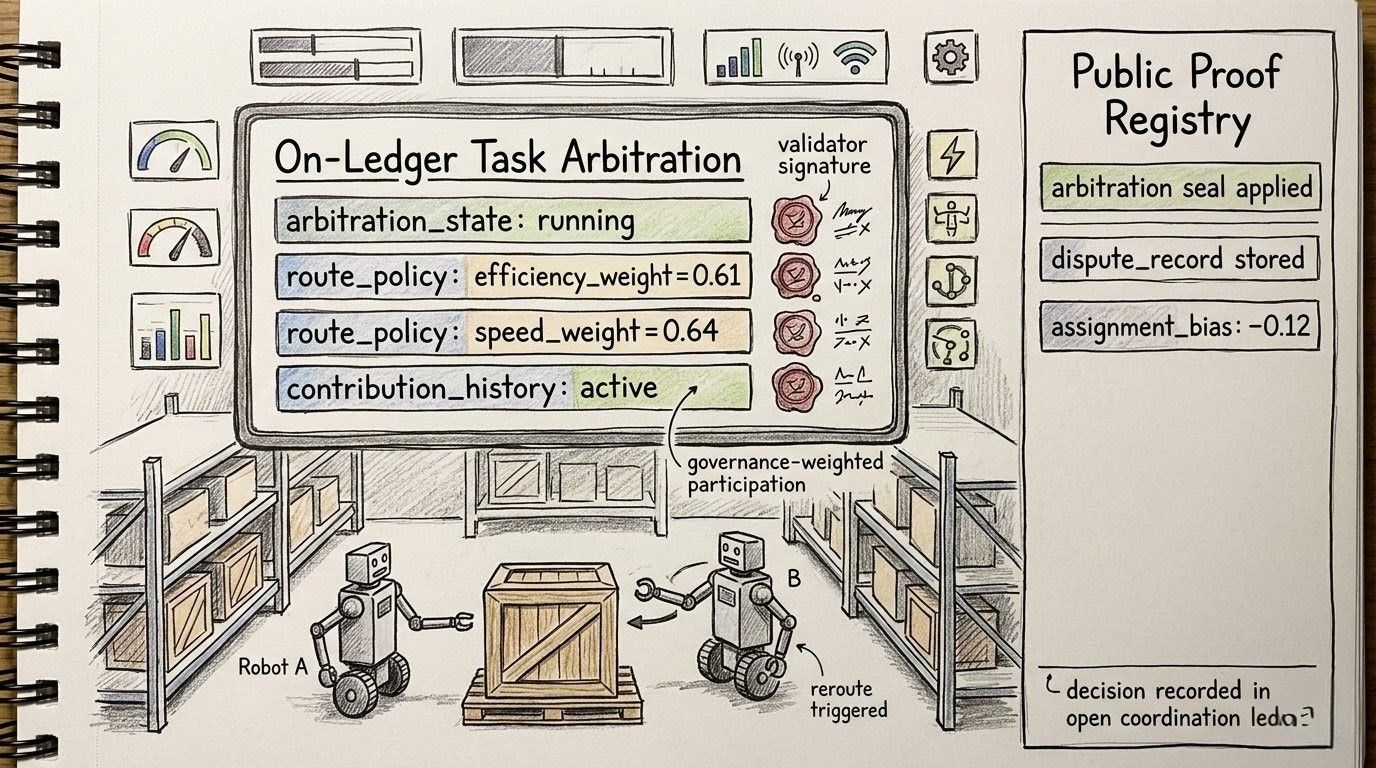
And the debit wasn’t emotional. It wasn’t punitive. It was mechanical in the most literal sense. The anomaly didn’t become an item in my queue. It became a governed machine event with proof, settlement, compensation, and downstream consequence attached to it. Exactly the kind of thing this protocol is built to finalize before an operator can soften it into opinion.
I refreshed the wallet panel again even though I knew the number wouldn’t change.
Earlier this week the emission surface had already adjusted issuance weighting around service quality. Self-correcting machines trend upward. Upward trends alter routing density. Routing density changes revenue velocity. I used to read those loops as fabric architecture diagrams.
Then one of them debited my machine account.
03:14:23 confirmation hash. 03:14:24 provider acknowledgment.
The balance stabilized.
I left the cancel button open longer than necessary just to see whether the option still belonged to me.
It did.
I didn’t use it.
The actuator kept moving.