

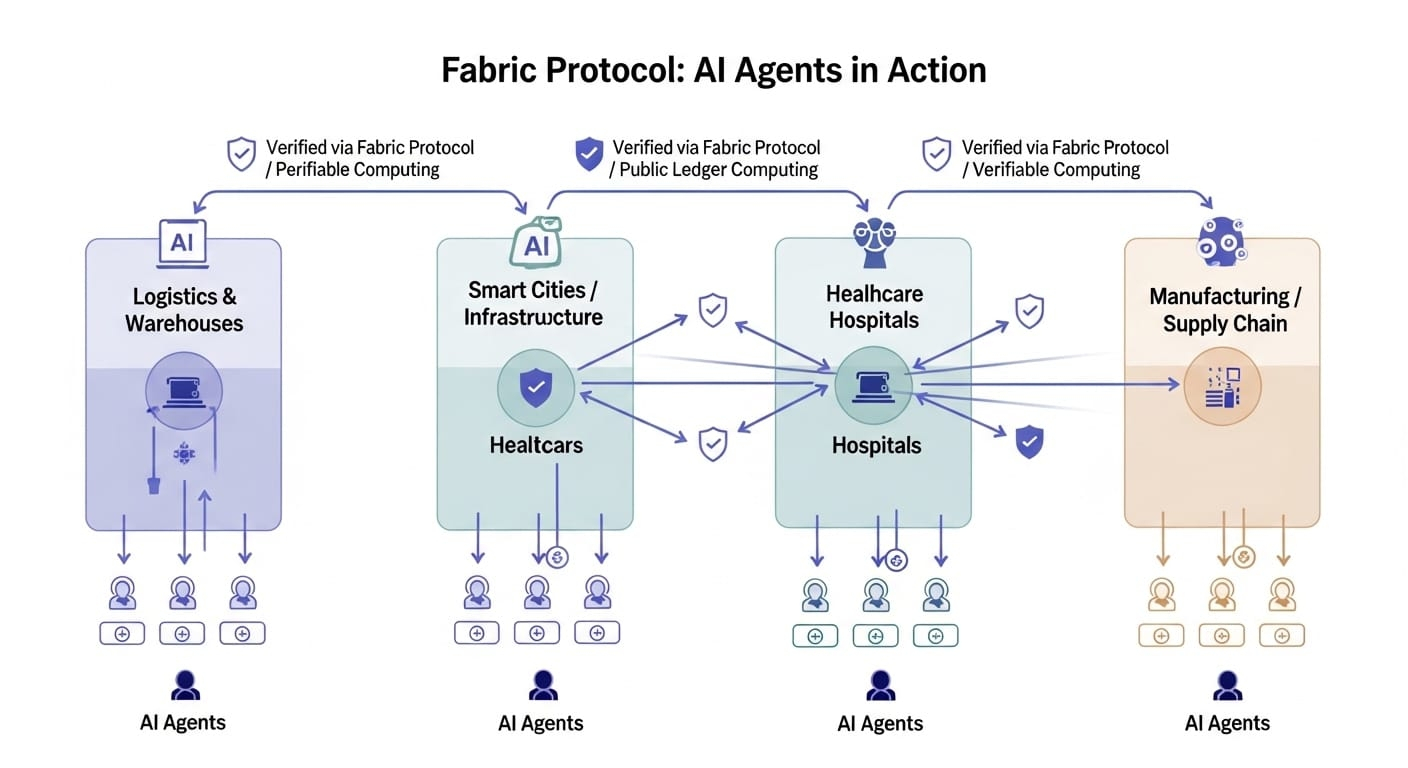
 AI agents are increasingly becoming the operational backbone of modern robotics. Within the Fabric Protocol ecosystem, they do not merely execute preprogrammed instructions. Instead, these agents act as autonomous decision makers, capable of processing complex data, negotiating tasks, and coordinating with other machines in real time. This evolution transforms robots from isolated machines into active participants in a dynamic network.
Fabric Protocol enables AI agents to operate with verifiable computing, public ledger coordination, and programmable governance. Each action performed by an agent is cryptographically validated, ensuring accountability and trust. This creates a transparent environment where AI decisions are auditable, reducing errors and minimizing operational risk. From my perspective, this approach is critical because as machines gain autonomy, traditional oversight methods cannot scale.
"Whether it’s the factories of the future or the streets of the city,
Robots will now operate by the rules’ decree.
On Fabric’s foundation, trust begins its course,
Humans and machines will create new stories, of course. ✨"
The ecosystem encourages AI agents to collaborate across domains. In logistics, for example, multiple autonomous systems can optimize warehouse workflows while simultaneously sharing verified updates with external partners. In smart cities, AI agents may manage energy distribution, traffic flows, or public safety devices while coordinating with municipal databases. The shared protocol ensures these interactions are consistent, secure, and auditable. A visual here could depict multiple AI agents exchanging data over a public ledger, highlighting verification checkpoints and decision flows.
Opportunities in this space are immense. Industries increasingly rely on autonomous systems to reduce labor costs, improve efficiency, and maintain competitive advantage. Developers can build modular AI agents on top of Fabric Protocol, ensuring interoperability without reinventing governance or verification layers. Investors may view ecosystem adoption metrics, integration partnerships, and real world deployment as indicators of durable value rather than short term hype.
However, risks remain. AI agent performance must balance speed with verifiable computation. Overly heavy verification can introduce latency in time sensitive operations. Regulatory frameworks across countries may impose differing compliance requirements, creating integration challenges. Finally, ecosystem growth depends on widespread adoption; without sufficient developer and enterprise engagement, the network may remain underutilized. A second visual could illustrate a layered ecosystem diagram showing AI agents at the base, verifiable computing in the middle, and public ledger coordination at the top.
From my personal perspective, AI agents represent the next frontier of autonomous robotics. Their value is amplified when embedded within a strong coordination and verification framework. Fabric Protocol’s ecosystem offers a blueprint for scalable, accountable, and transparent AI-driven robotics networks.
For builders, the takeaway is to design AI agents that inherently align with verifiable protocols from inception. For investors, focus on ecosystem depth and partnerships rather than token speculation. For regulators and enterprises, transparent AI governance reduces uncertainty and operational risk.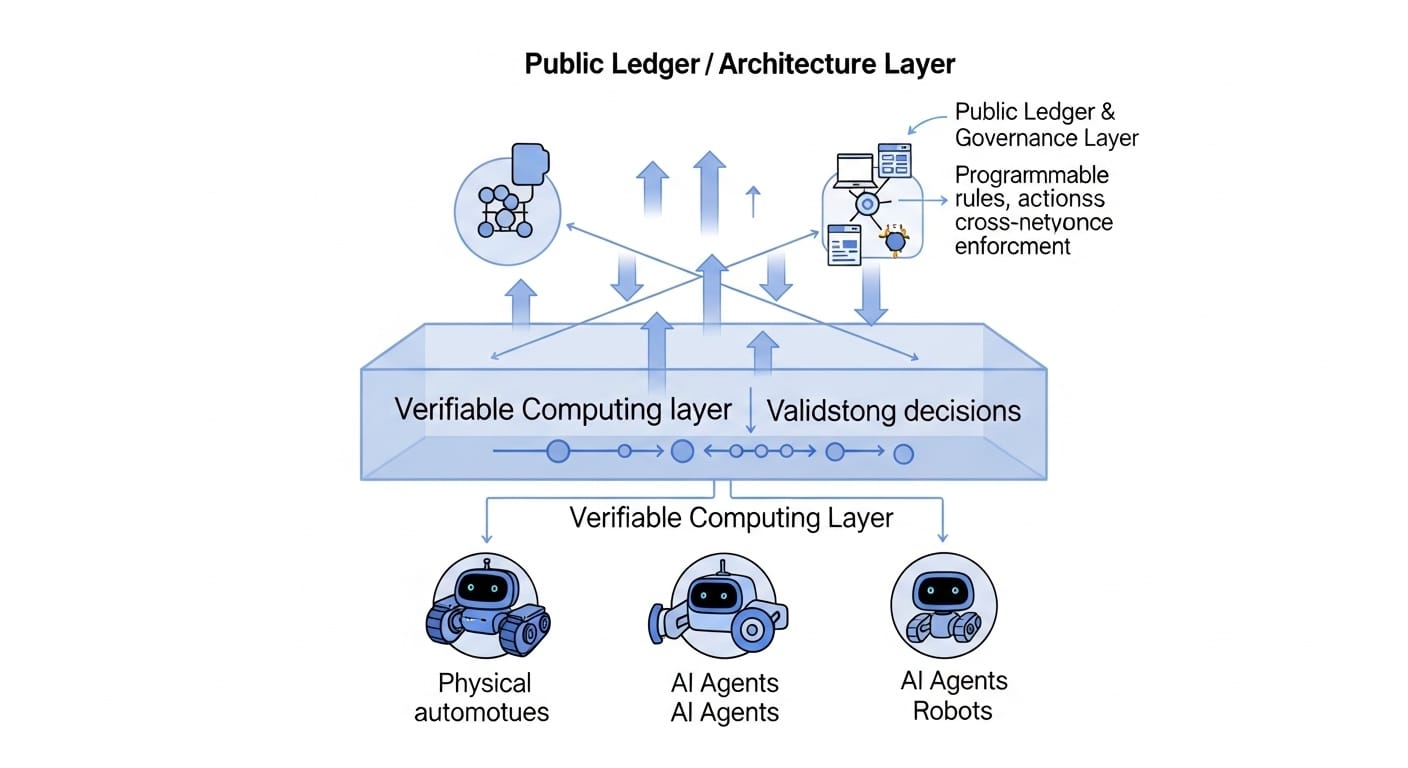
The broader implication is clear: the future of robotics will be shaped not just by mechanical or AI sophistication, but by the frameworks that allow intelligent agents to interact safely, securely, and transparently. Fabric Protocol positions itself as the infrastructure layer that converts autonomous AI activity from isolated operations into accountable, verifiable, and networked reality.
Two charts or visuals can be added for maximum impact. The first could illustrate AI agents interacting across multiple industries with verification checkpoints. The second could show a layered architecture of the Fabric ecosystem, highlighting AI agent integration, verifiable computing, and ledger coordination.
@Fabric Foundation #ROBO $ROBO
