
The moment that caught my attention was strangely quiet. I was scrolling through the feed after another announcement about the AI verification network behind Mira and the tone online was clearly positive. Developers were discussing new integrations, a few exchanges had already expanded trading access, and the community sentiment looked optimistic. Normally that kind of environment pushes price upward, at least temporarily. But when I checked the chart again, the market had barely moved.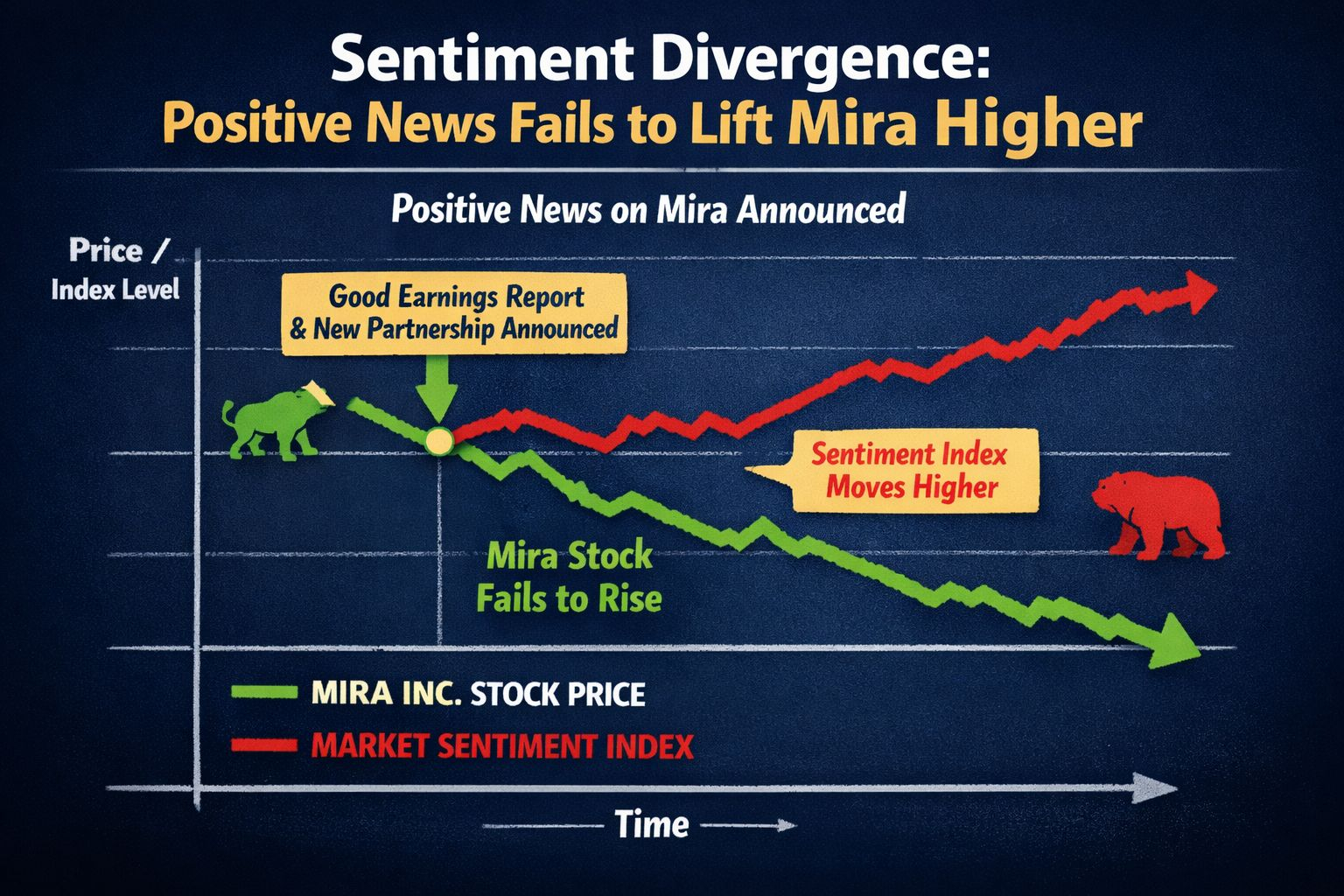
That hesitation creates a simple but uncomfortable question. If sentiment is positive, why isn’t price responding?
Right now Mira trades around $0.11 to $0.15, depending on the exchange feed and intraday volatility, with a market capitalization fluctuating roughly between $24 million and $34 million. That number matters because it tells us the project is still operating in a small-cap environment where liquidity can shift quickly. In the last 24 hours trading volume has hovered around $7–11 million, which means roughly 30% of the entire market cap changes hands daily.
On the surface that sounds healthy. High turnover suggests active participation. But underneath it can signal something else entirely. When volume equals a large percentage of market cap, it often means the same liquidity is rotating rapidly between short-term traders rather than long-term holders building positions.
Understanding that dynamic helps explain the strange divergence between sentiment and price.
Look at the broader price history for context. Mira once traded near $2.61 during its earlier speculative peak, which means the current price sits roughly 94–96% below that high. That number isn’t just a statistic. It shapes the psychology of every trade happening today.
Anyone who bought near those earlier levels is still deeply underwater. Even investors who entered around $0.50 or $0.30 are carrying heavy unrealized losses. So when positive news appears, many participants are not thinking about accumulation. They are thinking about exit opportunities.
This creates a subtle pressure layer inside the order book.
On the surface sentiment improves. Social media activity increases. News coverage becomes optimistic. But underneath, older holders quietly sell into those moments of strength because the market finally gives them liquidity. The result is a price chart that looks strangely flat during good news cycles.
Meanwhile the supply structure adds another piece to the puzzle. Mira has a maximum supply of 1 billion tokens, yet only around 200–230 million tokens are circulating in the market today.
That gap matters. It means roughly 75–80% of the total supply still sits outside active circulation, locked for future releases, ecosystem incentives, or network rewards. On the surface this structure allows early growth without immediate dilution. But underneath it creates an expectation that new supply will gradually appear over time.
Markets price expectations faster than reality.
So even if token unlocks are small in the short term, traders often anticipate them early. A scheduled unlock of even 6 million tokens, which represents less than 1% of the total supply, can still change behavior because participants begin adjusting their positions before the supply actually hits the market.
This anticipation quietly absorbs bullish momentum.
Another factor is the liquidity environment surrounding smaller AI-themed tokens right now. Capital across the crypto market has been rotating unevenly. Large caps like Bitcoin and Ethereum tend to act as liquidity anchors. When macro uncertainty rises, traders often move back toward those larger networks because they offer deeper markets and more predictable volatility.
That rotation creates a subtle gravitational pull.
Even when smaller tokens announce progress, new capital may not immediately arrive because the broader market is still consolidating. So price stagnation does not necessarily reflect rejection of the project itself. Sometimes it simply reflects where liquidity currently prefers to sit.
Meanwhile Mira’s trading behavior shows another interesting signal. The 24-hour range often moves only a few cents, for example between $0.112 and $0.121 on some recent sessions. That tight band suggests volatility compression.
On the surface, low volatility can look boring. But underneath it often represents a period where sellers and buyers are quietly negotiating control. Sellers unload inventory from earlier cycles. Buyers accumulate gradually without chasing momentum. The chart looks flat, but the structure of ownership may slowly change.
That kind of transition phase can last longer than people expect.
Still, the divergence between sentiment and price should not be ignored. Sometimes it signals resilience. Other times it signals exhaustion. Both interpretations exist at the same time until the market resolves the tension.
One argument from the bullish side is that the current valuation remains relatively small compared with the broader AI infrastructure narrative. At roughly $20–30 million market cap, the project sits far below many AI-related crypto networks that operate in the hundreds of millions or even billions. � If the technology gains adoption, the gap between narrative and valuation could eventually close.
But the bearish counterargument is equally reasonable.
Because the token is still newly listed across several exchanges, the market is discovering its fair value in real time. Early liquidity is often unstable. Prices can move quickly in both directions while participants test where true demand exists. In that environment positive news does not always translate into immediate price appreciation.
And it’s important to be clear about the risk here. Mira remains a newly listed and extremely volatile token, which means price swings can occur rapidly with relatively small changes in liquidity. Even modest shifts in trader positioning can create sharp moves in a market cap under $50 million.
Understanding that context reframes the entire sentiment divergence.
It may not mean the market rejected the news. It may simply mean the market is still digesting earlier cycles of speculation, supply distribution, and liquidity rotation. Sentiment often changes faster than structure.
Zooming out, this pattern appears across many newer crypto assets right now. The early phase of a project usually runs on attention and narrative. Later phases depend on deeper foundations such as liquidity depth, token distribution, and real usage. The transition between those phases often looks exactly like this: good news, muted price reaction, quiet consolidation.
In other words, sentiment can move quickly. Markets move only when the underlying structure is ready.
And after watching the chart for hours, that’s the thought that keeps returning. The real signal isn’t that positive news failed to move the price. The real signal might be that the market is still deciding who actually owns the token.#mira $MIRA @Mira - Trust Layer of AI