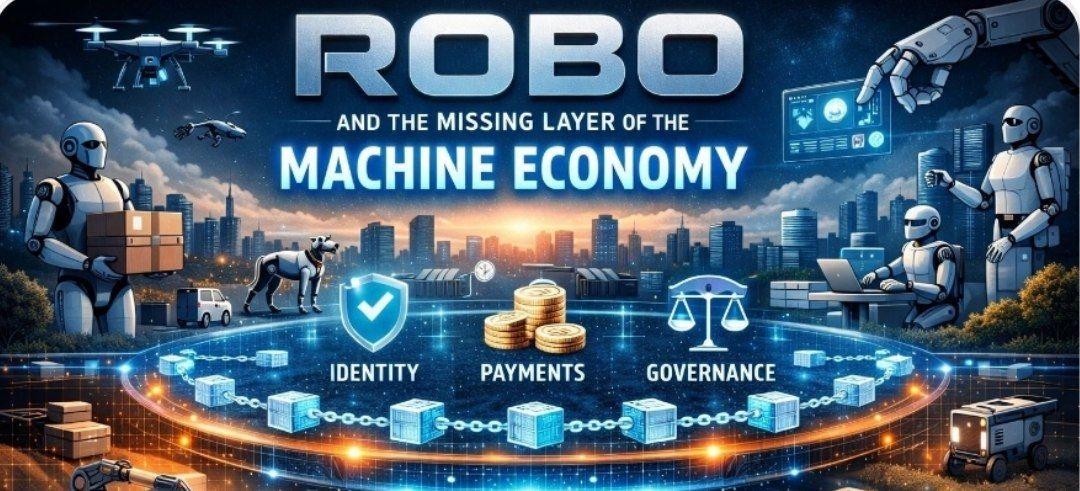
If robots and autonomous systems become active participants in real economies, they won’t just need software coordination. They will need identity, payment rails, accountability, and a way to record contribution inside shared networks.
That’s the problem Fabric is trying to solve.
ROBO isn’t framed as a decorative token riding the robotics trend. The idea appears closer to a trust and participation layer—a mechanism meant to connect economic rewards to verified machine activity rather than passive speculation.
That distinction matters.
The real challenge for autonomous systems isn’t just efficiency. It’s trust.
If machines are going to interact with other agents, perform tasks, and move value across networks, their behavior has to be measurable, accountable, and economically legible.
Fabric is approaching robotics as an institutional problem, not just a technical one.
Of course, the thesis still needs proof.
Architecture is easier to design than it is to validate at scale.
But the idea is worth watching.
ROBO isn’t interesting because it sounds futuristic.
It’s interesting because it’s asking a question the industry hasn’t fully answered yet:
What economic system do machines operate in once they start participating in ours?