

The Volatility Index has surged to 29, reaching its highest level in roughly a year and a level that investors last witnessed during the turbulence of the 2025 trade war. Whenever the VIX climbs this sharply, it usually reflects one thing above all else: fear. Markets become uncertain, traders rush to hedge risk, and volatility begins to dominate the financial landscape.
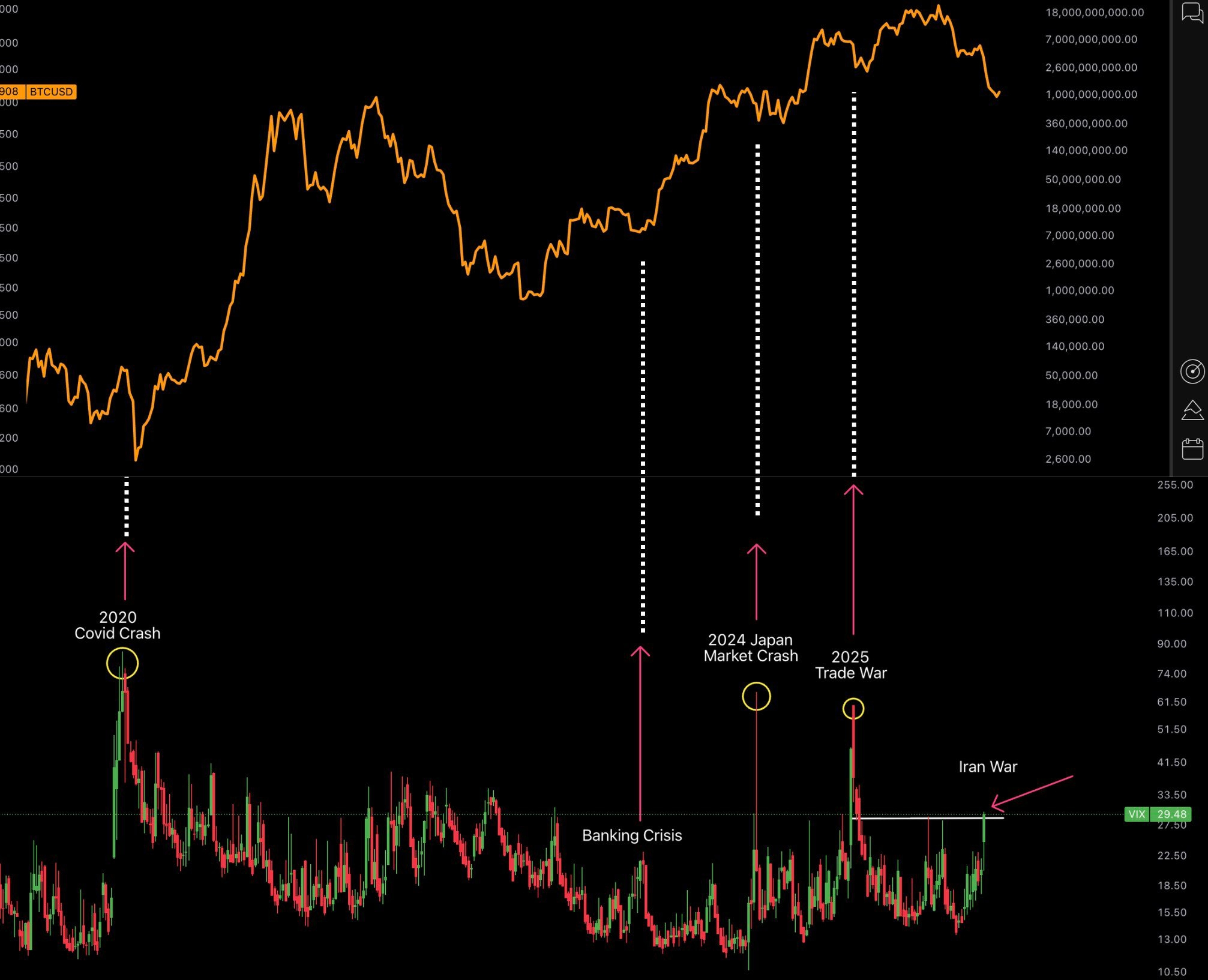
From my perspective, spikes like this are always fascinating because they tell a deeper story about investor psychology. The VIX is often referred to as the market’s “fear gauge,” and when it jumps rapidly, it usually means investors are reacting to unexpected events, geopolitical tensions, or sudden economic concerns. In other words, the market becomes driven by emotion rather than calm calculation.
What makes this moment particularly interesting is what history tends to show during similar volatility spikes. When uncertainty pushes the Volatility Index sharply higher, it often coincides with periods when markets are close to forming a bottom. Extreme fear can signal that a large portion of selling has already happened, leaving fewer investors willing to panic further. In many cases, markets begin stabilizing once the worst of the fear is already priced in.
That does not mean the outcome is guaranteed to repeat itself this time. Every market cycle carries its own unique combination of economic pressures, geopolitical developments, and investor sentiment. While past volatility spikes have sometimes preceded recoveries, they can also signal that markets are entering a period of prolonged instability before eventually finding direction.
Another important factor is how quickly modern markets react to information. With algorithmic trading, global capital flows, and real-time data shaping decisions, volatility can spread across markets faster than ever before. A spike in the VIX today can influence equities, commodities, currencies, and even digital assets within hours.
For investors watching the situation unfold, the real question now is whether this surge in volatility represents peak fear or the beginning of a deeper wave of uncertainty. If history offers any guidance, moments of intense volatility often mark important turning points. But whether this one signals a bottom or simply a pause in a larger correction is something the market itself will reveal in the coming days.