
Artificial intelligence has reached a moment where its capabilities are advancing faster than the systems designed to verify its accuracy. As someone who spends a lot of time exploring emerging crypto and AI technologies, I often find myself impressed by how powerful modern AI tools have become. At the same time, there is always a lingering question in the back of my mind: how much of what an AI system produces can actually be trusted? The challenge is not simply about generating answers anymore; it is about proving that those answers are correct. This is exactly the problem Mira Network is working to solve.
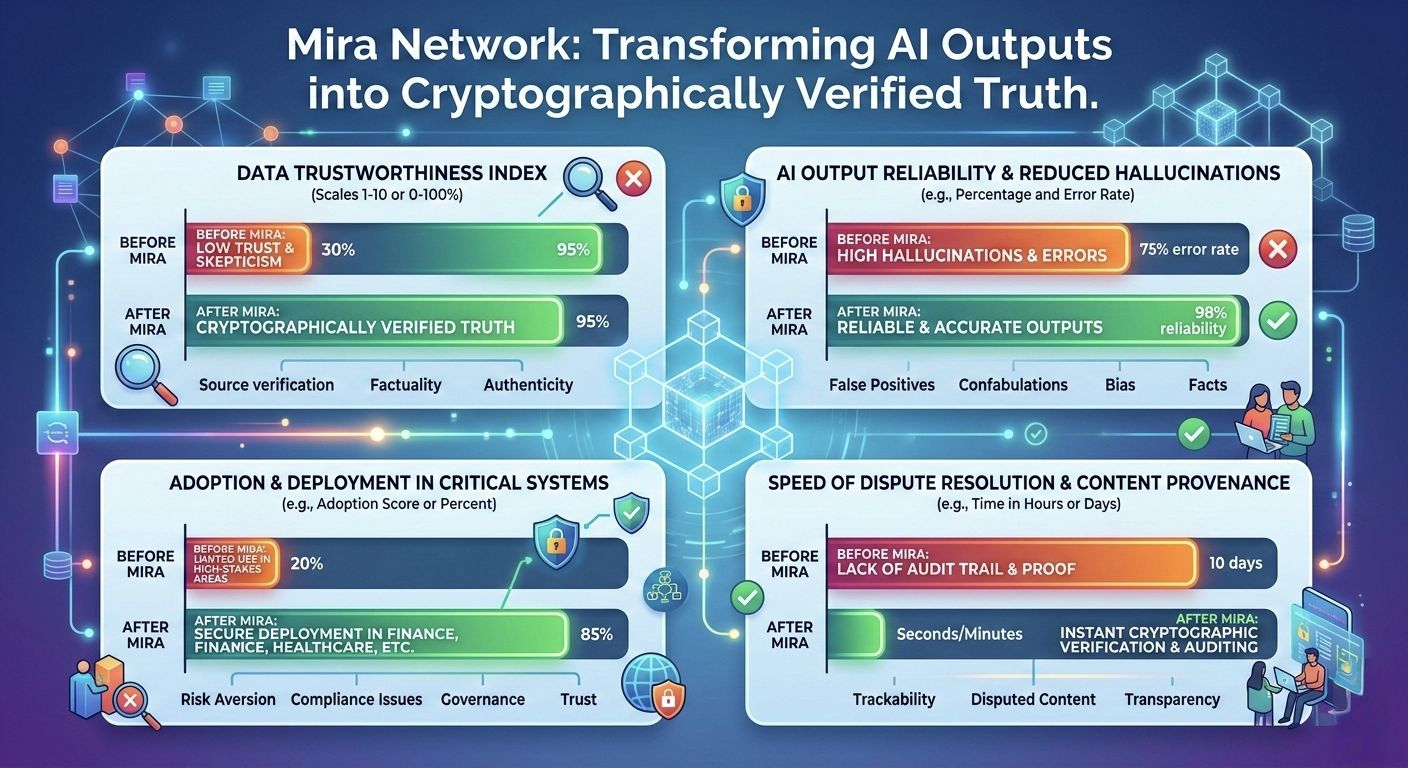
Mira Network introduces a decentralized verification protocol designed to bring reliability and transparency to artificial intelligence systems. In the current AI landscape, models frequently produce outputs that sound confident but may contain factual errors, hallucinations, or bias. While these issues might be manageable in casual applications, they become serious risks when AI is used in financial systems, autonomous software agents, governance decisions, or other high-stakes environments. What makes Mira Network particularly interesting is that it does not attempt to replace AI models. Instead, it focuses on verifying them.
The core idea behind Mira Network is surprisingly elegant. When an AI system produces a complex output, that output can be broken down into smaller, verifiable claims. Rather than trusting a single model to be correct, these claims are distributed across a network of independent AI systems that evaluate and validate the information. Each participant in the network plays a role in checking whether the claims are accurate, consistent, and logically sound. The results are then aggregated through blockchain consensus mechanisms, transforming uncertain AI responses into cryptographically verified information.
From my perspective, this approach represents a powerful shift in how we think about AI reliability. Instead of relying on centralized institutions or proprietary systems to confirm whether an AI response is correct, Mira creates a trustless verification layer powered by decentralized consensus. In many ways, it applies the same philosophy that made blockchain technology revolutionary in finance: don’t trust a single authority, verify through a distributed network.
Another important aspect of Mira Network is the economic incentive structure that encourages honest verification. Participants in the network are rewarded for accurately validating information and penalized for providing incorrect assessments. This system aligns incentives across the ecosystem, encouraging contributors to maintain integrity while helping the network scale. As the number of participating models and validators grows, the reliability of verified outputs improves, creating a positive feedback loop for the entire system.
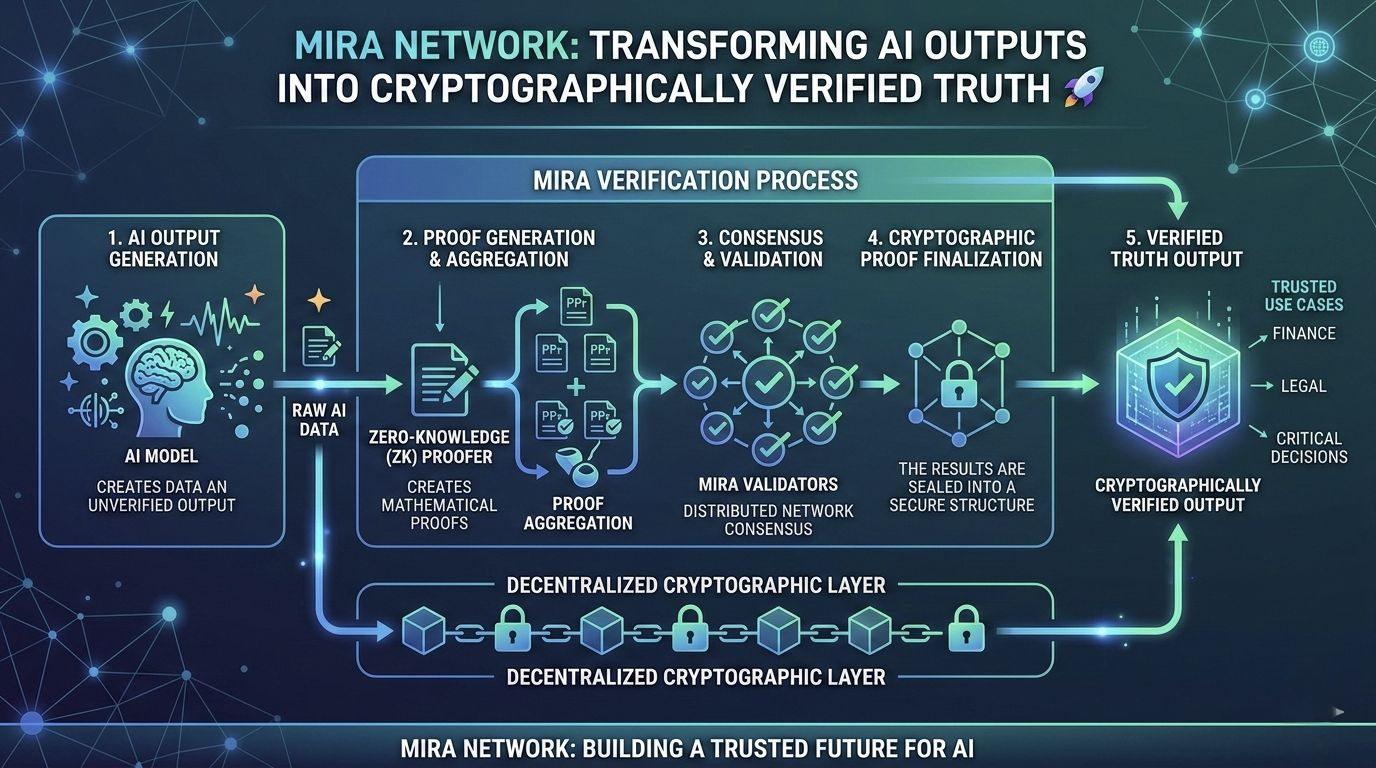
For the broader crypto community, the implications are significant. Decentralized finance, autonomous trading systems, DAO governance tools, and on-chain AI agents are all becoming more sophisticated. However, many of these applications depend on external data and AI-generated insights. If the underlying AI outputs cannot be trusted, the entire system becomes vulnerable. Mira Network aims to solve this foundational issue by acting as a verification layer that sits between AI generation and real-world decision making.
What excites me most about this development is the potential for AI agents to operate autonomously with a higher degree of reliability. Imagine decentralized trading bots that verify their strategies through a network before executing transactions, or DAO governance systems that use verified AI analysis to evaluate proposals. By transforming AI outputs into verified data, Mira Network could significantly reduce the risks associated with automated decision-making.
For users who want to explore opportunities within the Mira ecosystem, the first step is understanding the role verification will play in the future of AI infrastructure. Projects that build trust layers often become essential components of larger ecosystems, similar to how oracle networks became critical for DeFi applications. Keeping an eye on Mira’s partnerships, ecosystem tools, and potential token incentives could provide valuable insights into where the project is heading next.
Another practical step is staying active within the community and following updates as the protocol evolves. Early adopters often benefit the most from new infrastructure projects, especially when participation opportunities such as testing networks, contributing computational resources, or engaging with governance mechanisms become available. These opportunities not only help users gain a deeper understanding of the technology but can also position them well if the network grows into a widely adopted verification layer.
Learning about AI verification itself is also becoming increasingly important for anyone interested in the intersection of crypto and artificial intelligence. As AI agents become more integrated with blockchain applications, the demand for systems that can validate machine-generated information will only increase. Mira Network sits directly at this intersection, which is why many observers are beginning to view it as a critical piece of the next generation of decentralized AI infrastructure.
Looking ahead, the future of artificial intelligence will likely depend not only on how powerful models become but also on how trustworthy their outputs are. Mira Network is tackling that challenge by combining distributed verification, cryptographic proof, and blockchain consensus into a single framework designed to turn uncertain AI responses into reliable knowledge. For the crypto community, this represents more than just another project launch. It signals the emergence of a new layer of infrastructure focused on trust, accountability, and verifiable intelligence.
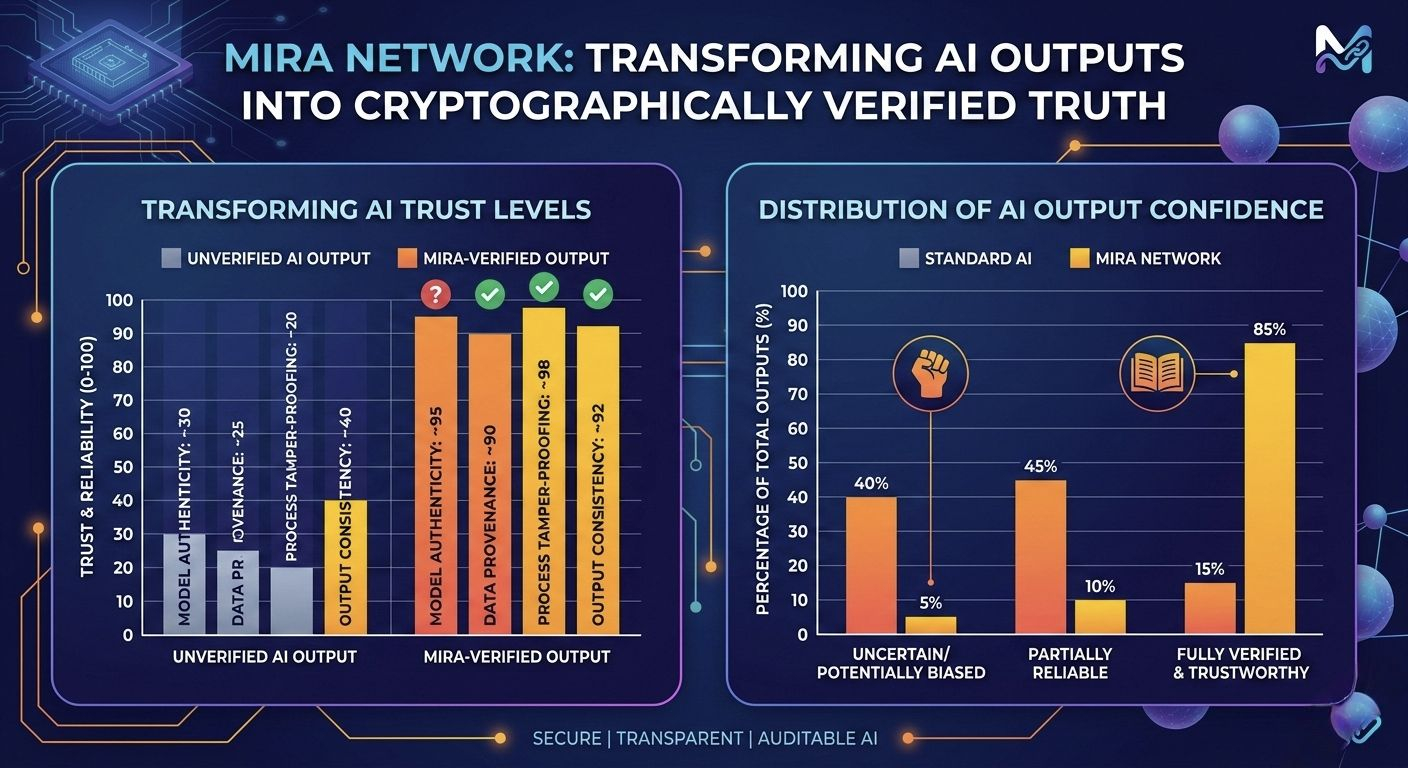
As someone who closely follows innovations in both AI and blockchain, I see Mira Network as a compelling example of how these technologies can complement each other. By decentralizing the verification process and aligning incentives across a global network, the protocol has the potential to reshape how we evaluate and rely on machine-generated information. In a world increasingly driven by artificial intelligence, systems that can prove what is true may become just as valuable as the systems that generate answers in the first place.
@Mira - Trust Layer of AI #Mira $MIRA
