

When I first saw the name @Fabric Foundation appearing in discussions, I honestly didn’t pay much attention. The market is full of new narratives every week, and AI related projects appear almost everywhere. At that time, $ROBO just looked like another name mixed into that noise.
But curiosity got the better of me.
So I started digging deeper. Reading posts, checking explanations from the community, and trying to understand what the project is actually building instead of just looking at the narrative around it.
It took me quite a while to connect the pieces.
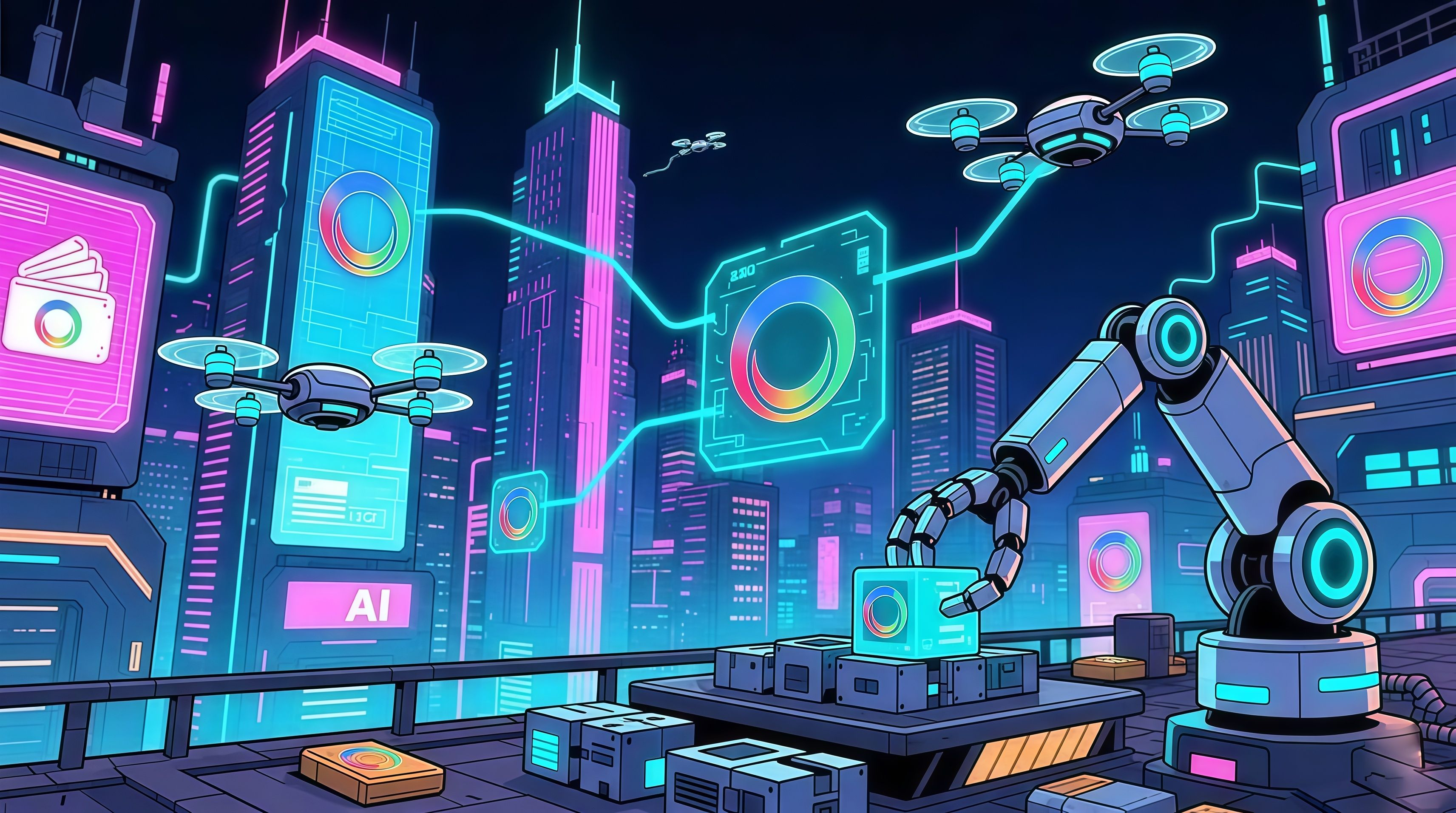
The interesting thing is that once everything clicks, the idea behind the ecosystem becomes much easier to understand than it first appears.
Fabric Foundation is exploring an environment where autonomous digital systems can operate inside decentralized infrastructure. Not simply AI generating content or analyzing data, but systems capable of interacting with networks, services, and resources in a structured way.
That’s where $ROBO starts making sense within the ecosystem.
If automated services or digital agents interact continuously inside a network, there needs to be a clear way to organize incentives, participation, and resource usage. Tokens in these kinds of ecosystems usually exist to support that interaction layer.
Instead of being just another narrative asset, #ROBO is tied to how activity inside the system could eventually be coordinated.
Personally, what I find interesting about projects like this is that they usually don’t attract the biggest attention in the early stage. The market tends to focus first on visible applications, while infrastructure ideas grow more quietly in the background.
But if the ecosystem develops and more participants start interacting with the network, the role of the token becomes clearer over time.
That’s essentially why I spent hours trying to understand this project in the first place.
Hopefully this short breakdown saves you some of that time.