

Fabric Protocol is one of the few projects I’ve looked at lately that didn’t immediately make me feel like I was being sold the same recycled future with different branding.
That reaction matters now. I’m tired. Not in the dramatic way people write on here when they want to sound deep. I mean actually tired of watching crypto keep rewrapping the same empty thing and calling it evolution. For a while it was DeFi infrastructure. Then it was gaming. Then AI agents. Now robotics is getting pulled into the same machine, and you can already feel the usual crowd warming up the same script. Big language. Clean vision. Huge market. Token somewhere in the middle pretending to be the answer to a question nobody has properly asked yet.
So when I started looking at Fabric, I wasn’t interested in the dream they could paint around robots. I wasn’t looking for another shiny future to buy into. I was looking for the weak spot. The thing they were hoping people wouldn’t notice. That’s how I read most of this market now. Not with excitement. With suspicion first. Then maybe attention later if something survives the first pass.
What kept me looking was that Fabric doesn’t really feel like it’s building around the robot as a spectacle. It feels like it’s staring at the mess around machine labor and trying to build rules before that mess gets worse.
That’s a much more serious problem.
Because this whole “robot economy” thing sounds cool until you stop saying it out loud and actually sit with what it means. A machine does a task. Fine. Who verifies it? Who decides whether the task was completed properly? Who gets paid? Who gets penalized if something goes wrong? Who challenges the result? Who defines what counts as fraud, failure, or low-quality work? And if machines are supposed to interact with markets, services, and humans in a meaningful way, what exactly is the system underneath all that supposed to look like?
That’s where most projects start getting vague. They can tell you about the future. They cannot tell you about the rules. And the rules are the only part I really care about anymore.
Fabric seems to understand that. Or at least it understands that without a rule set, robot labor is just a demo with a business model taped on later. Anybody can show a machine moving. That part is not enough. The real problem starts when that machine is doing something tied to money, trust, responsibility, or public coordination. When a robot says it completed work, that claim has to mean something outside the company that deployed it. It can’t just live inside a private dashboard and hope everyone accepts it. That might work for a while in closed systems, but it does not scale into something broader without conflict.
And conflict is where the real world always shows up.
That’s why Fabric caught me. Not because it feels glamorous. Because it doesn’t. It feels like the kind of thing that knows the future, if it comes at all, is going to be uglier than the marketing version. Machines won’t just enter the economy cleanly. They’ll enter through gaps, workarounds, pilot programs, narrow deployments, weird task markets, controlled environments, and half-broken coordination layers. There will be disputes. There will be bad incentives. There will be cheap operators gaming quality. There will be validators or reviewers missing what matters because the measurable thing is not always the meaningful thing. There will be a lot of surface area for failure.
That’s real. That’s also why this has more weight than the average AI-crypto crossover pitch.
Because Fabric is not really selling intelligence. It’s circling legitimacy. That’s different. It’s trying to answer what makes machine work recognizable, challengeable, and economically accountable. That sounds boring if you’re addicted to narrative. But boring is usually where the actual foundation sits. Most of crypto still wants the visible thing. The meme. The chart. The robot clip. The little hit of future theater. But systems do not survive because they looked futuristic in a post. They survive because the ugly mechanics were handled before scale arrived.
Still, I don’t want to romanticize this. Crypto people are very good at doing that with anything that sounds foundational. The second something has the words coordination, verification, incentives, or governance around it, everyone starts acting like they found the base layer of civilization. Usually they found a prettier spreadsheet with a token attached.
That risk is here too.
Because the second you bring a token into something like this, the whole thing can drift. The market stops caring about whether the mechanism makes sense and starts caring about what can be priced. A serious infrastructure layer can get turned into a speculation shell almost overnight. Then the incentives bend around that instead of the original purpose. I’ve seen that happen too many times to ignore it. Useful things get swallowed by financial behavior all the time in this space. Sometimes before they even have a chance to prove themselves.
And robotics makes that tension worse, not better.
Physical systems don’t give you the luxury of pretending performance is the same as reality. A robot can look operational and still fail in ways that matter. It can finish the route but damage the payload. It can complete the inspection but miss the only fault that counted. It can satisfy the metric and still fail the job. That’s what makes verification in machine economies harder than people want to admit. Not impossible. Just much less clean than the pitch version.
So if Fabric is trying to build the layer where machine behavior becomes legible to markets and other participants, that matters. But it also means they’re walking straight into one of the most annoying and difficult parts of the entire stack. Not the fun part. Not the viral part. The part where you have to design around incentives, disputes, trust boundaries, governance drift, and the simple fact that useful systems still fail if the adoption path is wrong.
And adoption could easily be wrong.
That’s another thing I keep thinking about. Good ideas do not automatically win. Crypto especially does not reward usefulness in a clean way. Sometimes it ignores what matters because what matters is too early, too technical, too quiet, or too hard to trade as a story. Fabric feels exposed to that. It’s trying to define something fundamental before the market has fully decided it wants to value that layer. Maybe that becomes an advantage later. Maybe it becomes dead weight now.
I can see both.
Because the people who might actually need this sort of framework the most are not always the people most eager to adopt open systems. Companies like control. Operators like private margins. Closed platforms like owning the rules. Public coordination sounds nice until somebody has to surrender discretion. So even if Fabric is aiming at a real fracture point, there is still the ugly question of whether the actors involved actually want the kind of transparency and accountability being implied here.
A lot of them probably don’t.
That doesn’t make the idea weaker. It just makes the path harder. Which is usually what the optimistic version leaves out.
And I think that’s why I keep coming back to this project with caution instead of excitement. It doesn’t read like a solved thing to me. It reads like an attempt to build terms around a future that may arrive in a much messier form than people are pretending. A future where machines do perform real economic work, but not in some smooth science-fiction way. More likely in fragments. Under pressure. Through layered trust systems. With humans still hovering over the whole thing, correcting, challenging, validating, and cleaning up what the machine could not fully resolve.
That feels much closer to reality than the usual robot mythology.
I don’t know if Fabric becomes important. I don’t know if the market will reward the kind of infrastructure it seems to be reaching for. I don’t know if a project like this can stay disciplined enough to remain about rules instead of sliding into pure token gravity like everything else. Those are real doubts. I’m keeping them.
But I do think it’s looking in the right direction.
Not at the machine itself. At the system around it.
And that’s probably the only reason I’m still paying attention. Not because I’m convinced. Because I’m not. Because I’ve seen too much in this space to confuse a smart idea with a durable outcome. But every now and then you come across something that is at least trying to solve the right problem, even if the market would rather chase the louder wrong one.
Fabric feels like that kind of project to me right now.
Not clean. Not proven. Not something I’d dress up in heroic language just to make it sound bigger than it is. Just a serious attempt to think through what happens when machines stop being novelty and start needing rules.
And honestly, that might matter more than the machine part itself.
Or maybe the market stays too impatient for something like this. Maybe the incentives get messy. Maybe the token pulls the focus away from the framework. Maybe adoption lands slower than expected and the whole thing sits in that painful zone where it makes sense on paper but never fully captures the behavior it was built for.
That happens too.
So I’m not ending here with conviction. I don’t trust conviction that comes too early. I’m just watching closely enough to admit that most of the noise around robotics feels shallow, and this, at least, feels like it’s dealing with a deeper layer.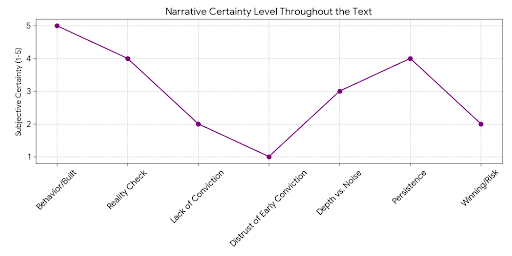
Sometimes that’s enough to keep looking.
Sometimes it still isn’t enough to win.