
I’ve been around crypto long enough to notice when a project feels familiar and when something about it makes me pause for a moment. When I came across the Fabric Foundation leaderboard campaign, my first reaction wasn’t excitement or skepticism. It was more like curiosity. I’ve seen hundreds of campaigns, airdrops, and community quests over the years, so normally I scroll past them pretty quickly. But the way Fabric talks about robots, autonomous systems, and blockchain working together made me stop and read a little more carefully.
The idea behind Fabric Protocol is actually pretty simple if you strip away the technical wording. It’s trying to build an open network where robots, humans, and software agents can coordinate and interact through blockchain infrastructure. Instead of machines just being tools controlled by people, the idea is that they could eventually become participants in digital economies themselves.
I’ve seen versions of this idea before. A few years ago there was a lot of talk about IoT devices paying each other automatically. Smart cars paying for charging stations, sensors buying data from other sensors, things like that. It sounded interesting back then, but most of those projects never really went anywhere. The technology was early and the real-world demand just wasn’t there yet.
What Fabric seems to be trying is slightly different. The focus is less about small devices and more about robots and autonomous systems. The protocol talks about verifiable computing and agent-native infrastructure, which basically means machines being able to prove what they did, how they did it, and whether their actions followed certain rules. Using a public ledger to record that information could make coordination between humans and machines more transparent.
Of course, right now the project is still in a very early stage. The leaderboard campaign is something I’ve seen many times before in crypto. Users complete tasks, interact with the ecosystem, post about the project, and earn points that might later translate into rewards. It’s a common strategy for building early community attention.
From experience, I know that these campaigns attract all kinds of participants. Some people are genuinely curious about the technology, but many are simply there because they expect an airdrop. That’s just how crypto works. Incentives bring people in first, and only later do we find out who actually stays.
Fabric recently launched its token, ROBO, which is meant to power the network’s ecosystem. Like many new tokens, only a portion of the supply is circulating right now while the rest is reserved for future growth, community incentives, and ecosystem development. That structure is very typical in the early phases of a crypto project.
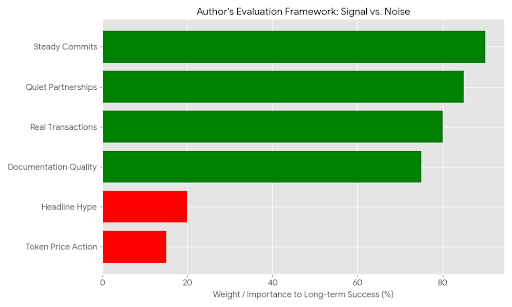
I’ve also noticed that early trading activity often creates a lot of noise around new tokens. Volume increases, price movements get attention, and suddenly people start talking about the project everywhere. But I’ve seen enough cycles to know that early market activity doesn’t always tell us much about long-term adoption.
What really determines whether a protocol survives is whether people actually build on it and use it for something meaningful.
And that’s where things get interesting with a project like Fabric. Robotics and automation don’t move at the same speed as crypto markets. Developers working with physical machines operate on much longer timelines. Hardware development, testing, safety standards, and regulations can take years, not months.
So even if the vision makes sense, it’s not something that will suddenly appear overnight.
At the same time, I’ve also learned that some infrastructure projects quietly grow in the background before anyone notices them. Early communities experiment, developers test ideas, and gradually something useful starts to form. Sometimes those early stages look messy and uncertain, but they’re still important.
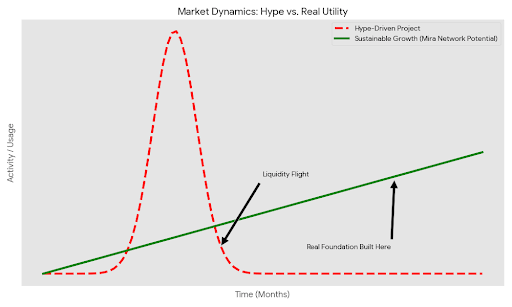
Right now Fabric feels like it’s somewhere in that exploratory phase. The community is forming, people are participating in campaigns, and the basic narrative around machine economies is starting to circulate again. Whether that turns into a real ecosystem or fades away like earlier attempts is still an open question.
Personally, I try not to rush conclusions with projects like this. I’ve seen too many strong narratives appear and disappear depending on market cycles. The real test usually comes later, when the early excitement fades and the incentives slow down.
If developers keep building and if real activity eventually shows up on the network, then the idea might start to prove itself. If not, it may end up being another interesting concept that arrived before the market was ready.
For now, it’s simply something I’m watching from the sidelines. Not rushing to judge it, not dismissing it either. Just observing how it develops over time and waiting to see whether real usage eventually follows the vision.